

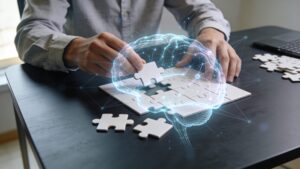
Neuroscience of Problem Solving
Every puzzle you encounter—whether it’s a riddle, a strategy game, or a real-world challenge—begins and ends in the brain. The neuroscience of problem solving explores how networks of neurons fire, connect, and adapt as we search for answers, recognize patterns, and experience those sudden “aha” moments. It’s a dynamic process where logic meets creativity, memory meets intuition, and focus meets imagination. Within milliseconds, your brain filters information, tests possibilities, and
Cognitive Benefits of Puzzles
Puzzles are more than clever distractions—they are workouts for the mind, turning curiosity into sharper thinking with every clue, pattern, and breakthrough. The cognitive benefits of puzzles reach across memory, focus, reasoning, creativity, and emotional resilience, making them one of the most enjoyable ways to keep the brain active. Whether you are solving a crossword, decoding a logic grid, arranging a jigsaw, or tackling a brain teaser, your mind is
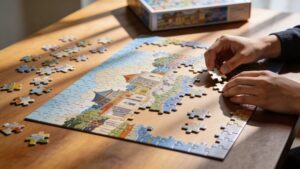
Puzzles & Memory
Step into the fascinating world of Puzzles & Memory, where curiosity meets cognition and every challenge sharpens the mind. This dynamic corner of Puzzle Streets is dedicated to exploring the art and science of thinking—whether you’re piecing together intricate jigsaw landscapes, cracking logic riddles, or strengthening your recall with clever memory exercises. Here, puzzles aren’t just pastimes—they’re powerful tools that train focus, boost problem-solving skills, and unlock new levels of
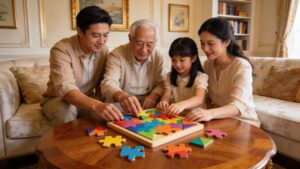
Puzzles & Aging
Puzzles & Aging explores the powerful connection between play, focus, memory, and lifelong mental sharpness. As we grow older, puzzles become more than simple entertainment—they become joyful tools for keeping the mind active, curious, and engaged. From crosswords and jigsaws to logic games, word searches, brain teasers, and pattern challenges, every puzzle invites the brain to stretch, adapt, and stay alert. This page brings together articles that celebrate puzzles as

Puzzles & Mental Health
Puzzles have become far more than simple entertainment. Across every age group, people are discovering how jigsaw puzzles, crosswords, logic games, brain teasers, and strategy challenges can create moments of calm, focus, and mental clarity in an increasingly fast-moving world. “Puzzles & Mental Health” explores the fascinating connection between problem-solving and emotional wellness, uncovering how puzzle-based activities can help reduce stress, encourage mindfulness, improve concentration, and provide a rewarding sense
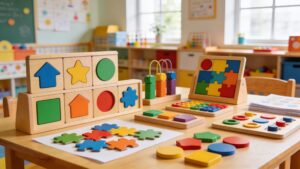
Puzzles & Learning Development
Puzzles are powerful learning tools disguised as play. From colorful jigsaws and pattern games to logic challenges, word puzzles, number grids, and hands-on brain teasers, puzzles help learners build essential skills while staying curious, focused, and engaged. “Puzzles & Learning Development” explores how puzzle-based activities can strengthen memory, improve problem-solving, encourage patience, and support creative thinking across every stage of growth. At Puzzle Streets, this category brings together articles that