
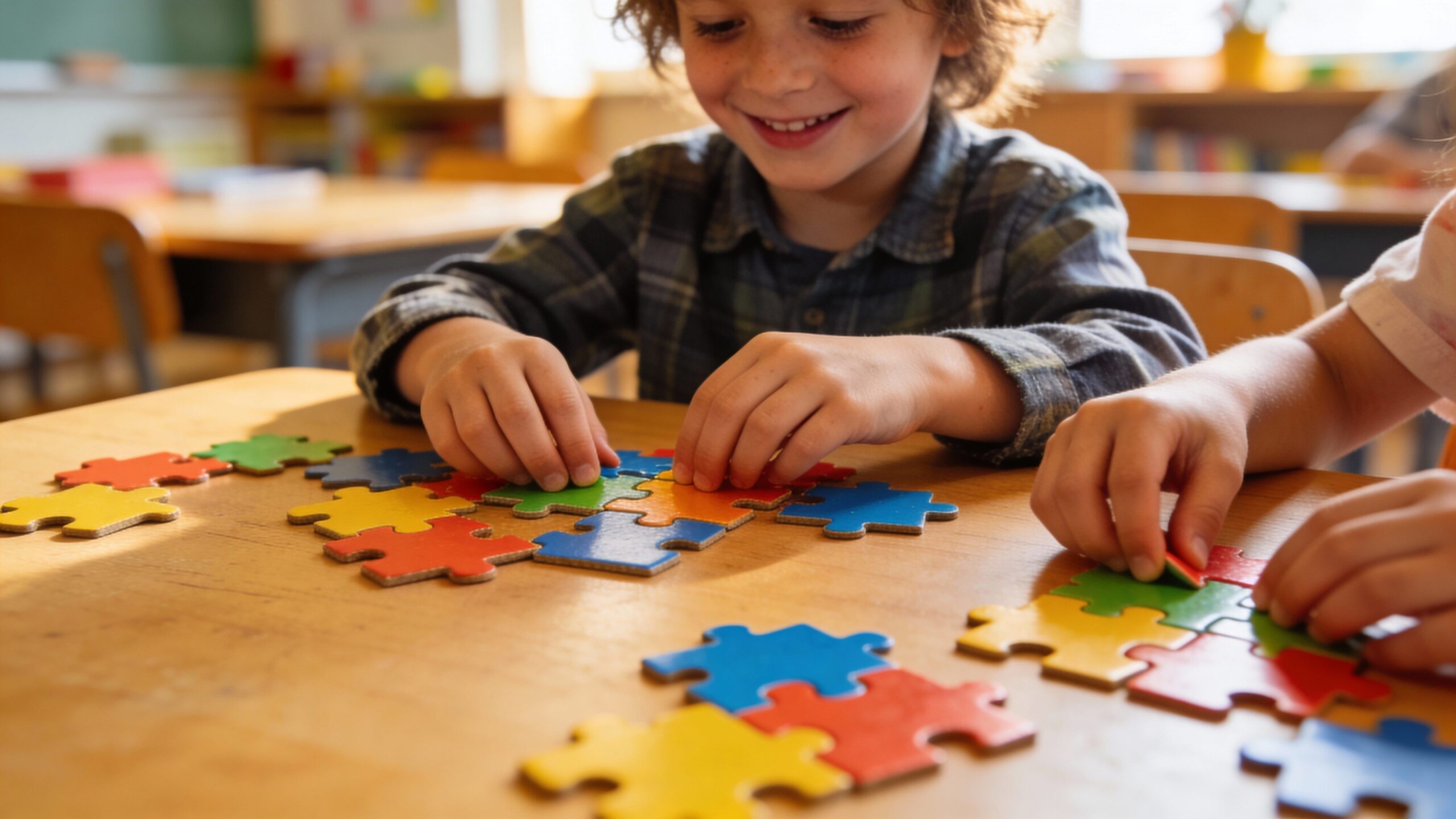
Kids Puzzle Learning is where curiosity, play, and thinking skills come together. This space is designed to show how puzzles help children explore ideas, build confidence, and learn through joyful challenge. From simple matching games and picture puzzles to beginner logic, word play, and number challenges, puzzles give kids a safe and exciting way to practice problem-solving without pressure. Here, learning happens naturally. As kids experiment, make guesses, and try again, they develop focus, patience, memory, and creative thinking. Puzzles encourage children to slow down, notice patterns, and celebrate progress—whether that’s finishing a puzzle on their own or working together with friends or family. Every small success helps build resilience and a love of learning. Kids Puzzle Learning highlights puzzles that support early education, classroom activities, and at-home play. These articles explore age-appropriate challenges that grow with children, turning mistakes into discoveries and questions into confidence. It’s not about getting the answer fast—it’s about enjoying the journey and helping young minds learn that thinking can be fun, empowering, and endlessly rewarding.
A: Start with matching, sorting, and simple picture puzzles that give quick wins.
A: 5–15 minutes is great—stop while it’s still fun to keep kids excited.
A: Offer a gentle hint, switch sections, or take a short break and return.
A: Help with questions, not answers—guide their thinking without taking over.
A: They build focus, memory, reasoning, language skills, and confidence through play.
A: Model one step, then let them try the next step independently.
A: Yes—turn-taking puzzles build communication and cooperation naturally.
A: Pick puzzles where your child can make progress without constant help.
A: Often yes—short daily puzzle routines can strengthen focus over time.
A: Praise effort and strategies—sorting, noticing patterns, and trying again.