
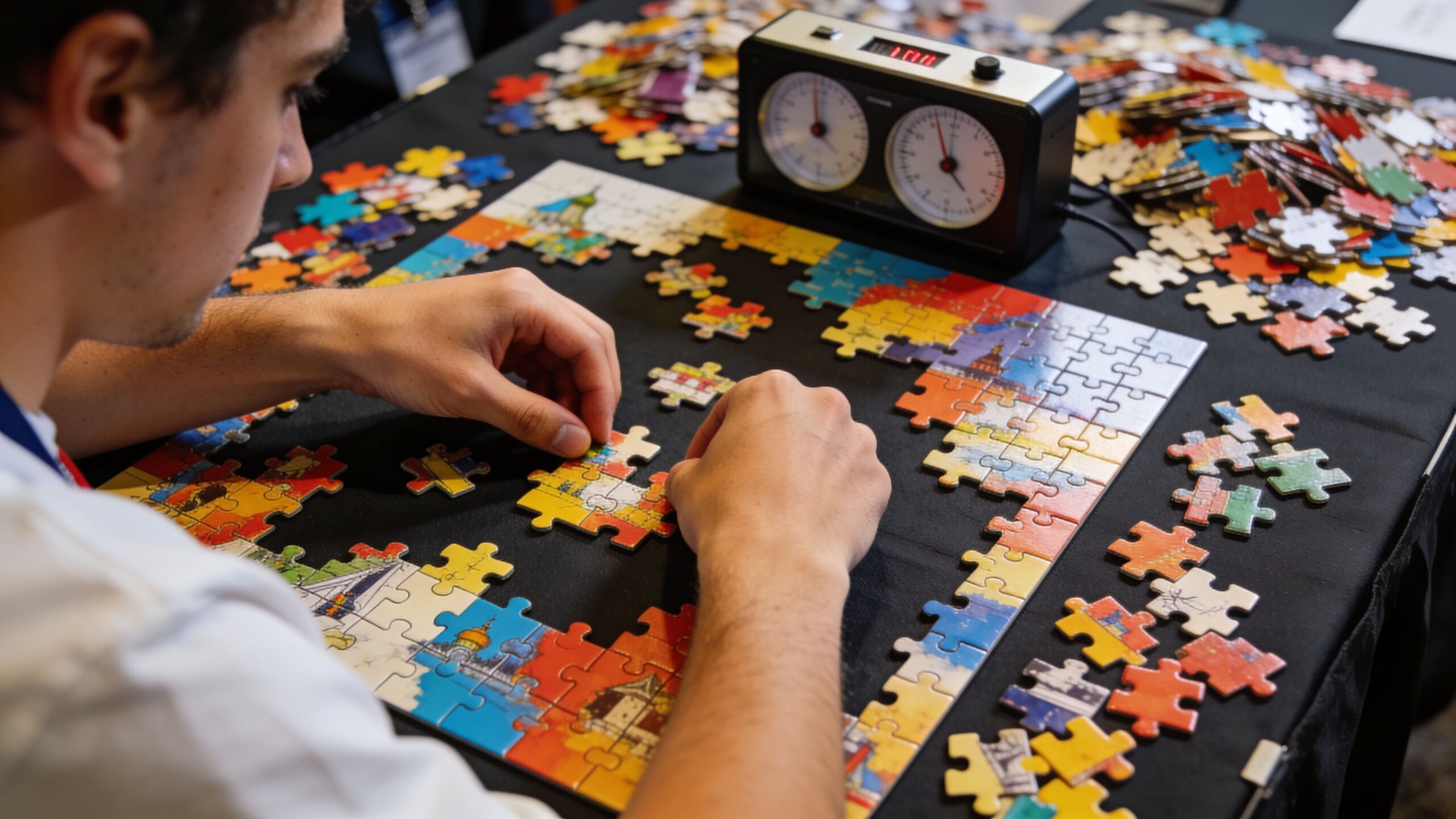
Competitive puzzle solving transforms a quiet hobby into a thrilling mental sport. On Puzzle Streets, the Competitive Puzzle Skills hub explores the techniques, strategies, and mindsets that separate casual puzzlers from elite problem-solvers. From lightning-fast jigsaw assembly to logic puzzle tournaments and speed-cubing challenges, puzzle competitions reward sharp observation, pattern recognition, memory, and strategic thinking. Whether you’re racing the clock to complete a complex brainteaser or learning how professionals train their minds for high-pressure puzzle events, this section dives into the skills that matter most. You’ll discover how competitive puzzlers develop faster scanning techniques, improve spatial reasoning, and maintain intense focus during timed challenges. Many top solvers treat puzzles like athletes treat sports—training regularly, studying strategies, and refining their methods to shave seconds off their best times. Here, you’ll find articles that explore puzzle-solving techniques, competition strategies, famous tournaments, and the science behind cognitive performance. If you enjoy testing your limits, sharpening your thinking, and discovering new ways to master complex challenges, you’re in the right place. Welcome to the world where curiosity meets competition—and every solved puzzle is a victory.
A: Practice with a timer weekly and refine one repeatable process (sort → build → verify).
A: Do a quick edge/corner pass, then sort by the most distinctive features for that puzzle.
A: Use a “two-cue rule”—confirm both shape fit and pattern/line continuity before locking in.
A: Switch sections for 30–60 seconds, then return with fresh eyes and a narrower search.
A: Often yes—if roles are clear and everyone follows the same sorting language.
A: Do repeated 15-minute sprints: build edges, assemble one section, and review your bottleneck.
A: They memorize patterns and strategies, not specific puzzles—recognition transfers across sets.
A: Very—clean layout and trays reduce searching and piece handling time.
A: Re-sort remaining pieces by micro-features (tiny colors, texture, line direction) to reduce options.
A: Accuracy—mistakes trigger backtracking, and backtracking is the biggest time killer.