A Cooperative Puzzle Makes Thinking Visible
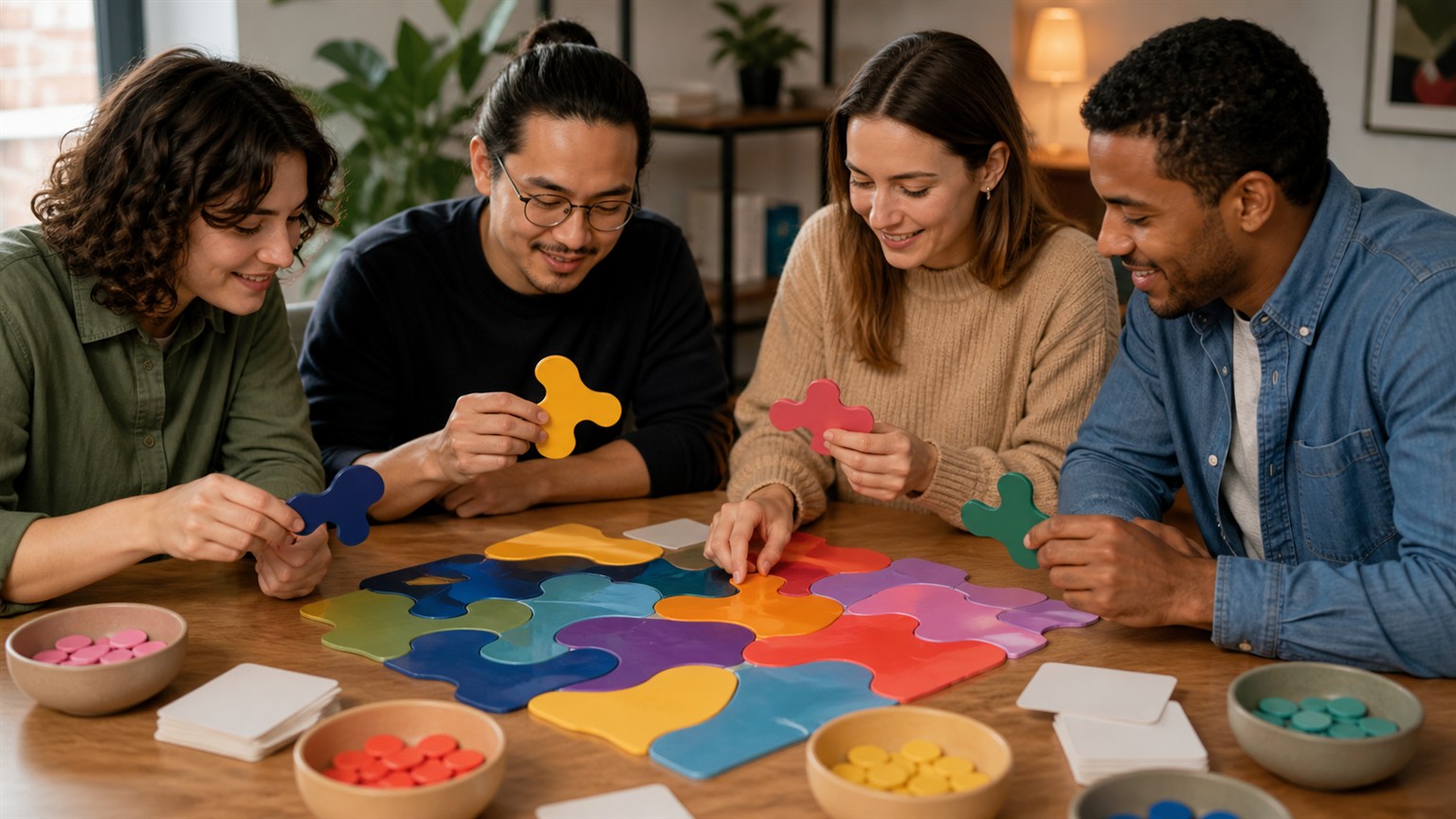
Cooperative puzzles build communication and teamwork because they make thinking visible. Players have to describe what they notice, ask for missing information, compare interpretations, and repair misunderstandings. A good team puzzle does not reward the loudest solver for sprinting ahead. It rewards the group for building a shared picture of the problem. That is why cooperative puzzle play can be useful for families, classrooms, teams, couples, and friends who want more than entertainment from the table.
A: Identify the goal, list the given information, and look for the clearest constraint.
A: Testing is useful; unsupported guessing is usually less helpful than narrowing possibilities.
A: Use one after you have tried several fair approaches and no longer have a testable idea.
A: The answer should make earlier clues feel purposeful once explained.
A: Change methods: sort, draw, reread, explain aloud, or step away briefly.
A: Not always. The best puzzle is the one whose difficulty fits the solver and setting.
A: Teams combine observation, memory, organization, and different puzzle habits.
A: Clear goals, fair constraints, useful feedback, and an earned breakthrough.
A: They can practice specific skills, especially when the challenge is varied and sustained.
A: Notice which clues mattered, which assumptions failed, and which method helped most.
Shared Information Is the Core Skill
A cooperative puzzle asks players to move information from private attention into shared attention. One person sees a pattern, another remembers a clue, and another notices that two pieces belong together. The team improves when those observations are spoken clearly and gathered in one place.
This is why cooperative puzzles are useful beyond the table. Many teamwork problems are not caused by a lack of intelligence. They happen because information remains scattered, assumed, or poorly described.
Good Teams Separate Facts From Guesses
Puzzle teams often get stuck when guesses are treated as facts. A player thinks a symbol means one thing, the group builds on it, and several minutes disappear. Strong teams learn to label uncertainty: this might connect, I am not sure, or we have not tested that yet.
That language protects the team from false confidence. It also makes disagreement easier because people are debating evidence, not personal authority.
Role Clarity Prevents Crowding
Cooperative puzzles can become chaotic when everyone tries to do everything. Simple roles help: organizer, reader, tester, note keeper, builder, observer, or communicator. These roles do not need to be rigid, but they give attention somewhere to go.
Role clarity is especially useful for mixed-experience groups. A beginner may contribute more when given a concrete job than when expected to jump into an expert's solving flow.
Listening Is an Active Puzzle Move
Listening in a cooperative puzzle is not passive. A listener compares descriptions, catches contradictions, asks clarifying questions, and remembers details that may matter later. Good listening can unlock a puzzle as surely as spotting a hidden clue.
This makes cooperative puzzles a useful communication practice. They reward the kind of listening that changes what the group can do next.
Misunderstandings Become Repair Practice
Every cooperative puzzle creates misunderstandings. Someone describes a piece vaguely, moves an object too soon, forgets to share a clue, or interprets a rule differently. The team's response matters more than the mistake itself.
Repair might mean restating the known facts, asking what changed, or taking a calm pause. Teams that repair quickly keep energy available for the puzzle instead of spending it on blame.
Why Debriefing Makes the Learning Stick
A short debrief turns a fun solve into a teamwork lesson. Ask what communication helped, where the team lost information, and which role made a difference. Keep the tone curious rather than evaluative.
The debrief does not need to be long. Two minutes can be enough to name a habit worth repeating. Without that moment, the team may enjoy the puzzle but miss the lesson inside it.
Cooperative Puzzles in Families
Families can use cooperative puzzles to practice patience and shared attention. Children can search, sort, match, or explain what they see. Adults can model how to ask for help and admit uncertainty without taking over.
The best family puzzles give younger players real contributions. If children only watch adults solve, the cooperative value disappears.
Cooperative Puzzles in Work Settings
Work teams often use puzzles as icebreakers, but the strongest value comes when the activity mirrors real teamwork. Split information, time pressure, role clarity, and communication repair all resemble workplace problem solving in a low-stakes form.
The facilitator should avoid turning the puzzle into a test of intelligence. The goal is to reveal and practice team behaviors, not rank people publicly.
Designing Better Group Solves
A better group solve begins before the puzzle starts. Agree to share discoveries, keep clues visible, invite quieter voices, and ask for hints before frustration dominates. These norms make the team more resilient.
During play, pause occasionally to summarize. What do we know? What remains unsolved? What has not been tried? A shared summary can save a group from circling the same confusion.
The Puzzle Gives Immediate Feedback
Team communication advice can feel abstract, but a cooperative puzzle gives immediate feedback. If the description is unclear, the other player cannot act. If a clue is hidden, the group stalls. If assumptions are not named, the solution drifts.
That immediacy makes the lesson memorable. The team feels the cost of communication gaps and the relief when clarity returns.
Psychological Safety Matters
Players communicate better when mistakes are safe. If every wrong idea is mocked, people stop sharing tentative observations. Cooperative puzzles work best when the group treats early guesses as material for testing, not as personal flaws.
This safety can be established simply: thank people for noticing, separate guesses from facts, and praise useful corrections. The tone of the table shapes the quality of thinking.
Shared Notes Externalize the Mind
Shared notes turn group thinking into something visible. A whiteboard, paper, tile area, or central clue layout helps the team see what it knows. This reduces repeated debate and prevents important details from living in one person's memory.
Externalizing the problem is one of the strongest teamwork lessons puzzles teach. Good teams do not rely only on recall; they build a shared workspace.
The Best Lesson Is Transferable
A cooperative puzzle ends, but the habit can transfer. Ask for missing information. Name uncertainty. Invite quieter voices. Repair tone early. Summarize before acting. These moves help in meetings, classrooms, families, and creative projects.
The transfer is not automatic. It becomes more likely when the team names the behavior after the game and chooses one habit to carry forward.
Observation Before Interpretation
Teams improve when they separate observation from interpretation. I see three blue shapes is different from I think blue means water. Both statements are useful, but they carry different certainty. Cooperative puzzles make that distinction visible.
This habit can change the quality of discussion. Teams become less likely to chase a confident but unsupported story.
Why Quiet Players Often Notice Key Details
Quiet players may spend more time observing while others debate. Cooperative puzzles benefit when the group actively invites those observations. A quiet player may have noticed the mismatch, missing piece, or alternate interpretation that unlocks the solve.
The invitation needs to happen before the final panic. Build it into the rhythm: what have we not said yet, and what is anyone seeing that has not been used?
Role Rotation Builds Empathy
When players rotate roles, they learn what each role demands. The note keeper sees how hard it is to track scattered clues. The builder learns why clear descriptions matter. The leader learns when to step back.
That empathy is useful teamwork practice. It makes people more patient with the work they do not usually perform.
Debrief One Habit, Not Everything
A teamwork debrief can become too broad if the group tries to analyze every moment. Choose one habit to carry forward: clearer descriptions, earlier summaries, better role rotation, or faster tone repair.
One habit is easier to remember. The next puzzle becomes a place to practice it deliberately.
Cooperation Can Be Practiced Playfully
The value of cooperative puzzles is that they let people practice serious skills without making the room feel heavy. Communication, listening, shared memory, and conflict repair happen inside play.
That playful frame lowers defensiveness. People can notice patterns in how they work together while still enjoying the challenge.
Puzzles Reveal Communication Defaults
A cooperative puzzle quickly reveals defaults. Some people act before explaining. Some wait too long to share partial ideas. Some organize naturally. Some jump to conclusions. These patterns are easier to discuss when they appear inside play.
The puzzle creates enough distance for honesty. Instead of accusing anyone, the group can point to a moment and ask how the communication could work better next time.
Teams Need Shared Pauses
A shared pause can save a cooperative solve. When the group is scattered, someone can call a reset: what do we know, what is unsolved, and what has changed? This pause turns noise back into structure.
Shared pauses are useful outside puzzles too. Meetings, projects, and family decisions often need the same move. Stop, summarize, and choose the next test.
Leadership Should Move Around
In strong cooperative puzzle teams, leadership shifts. The person who understands the current clue leads briefly, then hands off when another player has better information. This flexible leadership keeps expertise close to the problem.
Fixed leadership can slow a team when the official leader lacks the relevant observation. Puzzles teach that leadership is often situational.
Repair Builds More Trust Than Perfection
A team that never misunderstands each other is rare. A team that repairs quickly is powerful. Cooperative puzzles let players practice that repair in a low-stakes environment: clarify, apologize if needed, restate the clue, and keep moving.
Trust grows when people see that confusion does not have to become conflict. The group can wobble and recover.
Use the Puzzle as a Mirror
The puzzle is not a personality test, but it can be a mirror. It shows how the group shares attention, handles pressure, and responds to being wrong. That mirror is useful only when interpreted kindly.
The best lesson is not that one person is good or bad at teamwork. It is that the group can choose better habits together.
A Good Puzzle Lowers the Stakes
Teamwork practice can feel awkward when it is discussed directly. A cooperative puzzle lowers the stakes by giving everyone an external problem to focus on. The group can practice communication without feeling like the conversation is only about personal flaws.
That lower-stakes frame is why puzzles work well for mixed groups. The lesson arrives through action.
Use Constraints to Practice Clarity
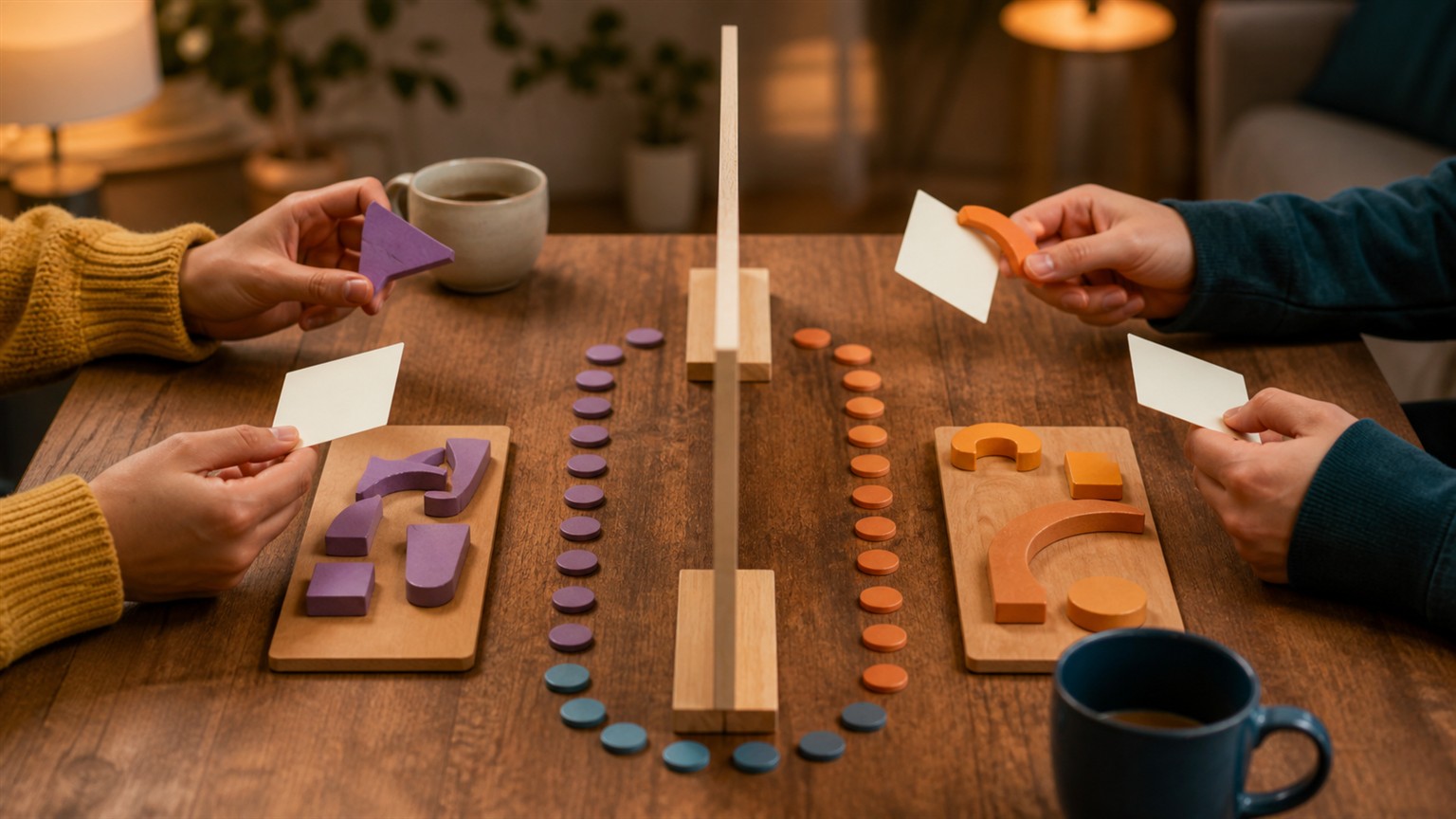
Communication constraints can make teamwork skills visible. Ask one player to describe without pointing, have another build without seeing the original, or require the group to summarize before testing. These constraints turn clarity into the challenge itself.
Use them lightly. The constraint should sharpen communication, not make players feel trapped or mocked.
End With Appreciation
After a cooperative puzzle, name one useful contribution from each player. Someone organized pieces, someone noticed an inconsistency, someone kept morale steady, and someone explained a clue clearly. Appreciation makes teamwork visible.
This ending matters because it reinforces participation. Players are more likely to communicate next time when they know their contributions were seen.
Repeat the Same Puzzle With New Norms
A repeated cooperative puzzle can show growth. Play once with no special norms, then replay with clearer sharing, role rotation, or scheduled summaries. The contrast makes teamwork habits visible.
This is useful for classrooms and teams because improvement becomes concrete. The group can feel the difference better communication makes.
Conclusion: Teamwork Is a Solvable Skill
Cooperative puzzles build communication and teamwork by making collaboration concrete. Players can see when information is hidden, when assumptions spread, when roles help, and when repair brings the group back.
That concreteness is powerful. A team does not merely talk about communication; it practices it under a shared, playful goal. The puzzle becomes a mirror for how the group thinks together.