When the Puzzle Is an Object You Can Hold
Mechanical puzzles are satisfying because the problem lives in your hands. Instead of reading a clue or filling a grid, you turn, slide, lift, separate, align, balance, and listen for tiny changes in resistance. The best mechanical puzzles reward curiosity through touch. They make you ask what can move, what is blocked, what is hidden, and what order matters. For hands-on problem solvers, that physical conversation is the appeal. A well-made object can be elegant, stubborn, beautiful, and surprisingly personal because every discovery comes from careful handling.
A: Identify the goal, list the given information, and look for the clearest constraint.
A: Testing is useful; unsupported guessing is usually less helpful than narrowing possibilities.
A: Use one after you have tried several fair approaches and no longer have a testable idea.
A: The answer should make earlier clues feel purposeful once explained.
A: Change methods: sort, draw, reread, explain aloud, or step away briefly.
A: Not always. The best puzzle is the one whose difficulty fits the solver and setting.
A: Teams combine observation, memory, organization, and different puzzle habits.
A: Clear goals, fair constraints, useful feedback, and an earned breakthrough.
A: They can practice specific skills, especially when the challenge is varied and sustained.
A: Notice which clues mattered, which assumptions failed, and which method helped most.
The Appeal of Physical Problem Solving
Mechanical puzzles give thinking weight, texture, and resistance. A solver can feel a false assumption because the object refuses to move. That feedback is immediate and honest. It makes the puzzle feel less like an abstract test and more like a conversation with a crafted thing.
This physicality changes the emotional rhythm. A grid puzzle may ask for deduction on paper, but a mechanical puzzle asks for exploration. You turn the object, test a panel, notice a seam, and wonder whether a tiny movement matters. The solution often arrives through a blend of observation and touch.
Major Types of Mechanical Puzzles
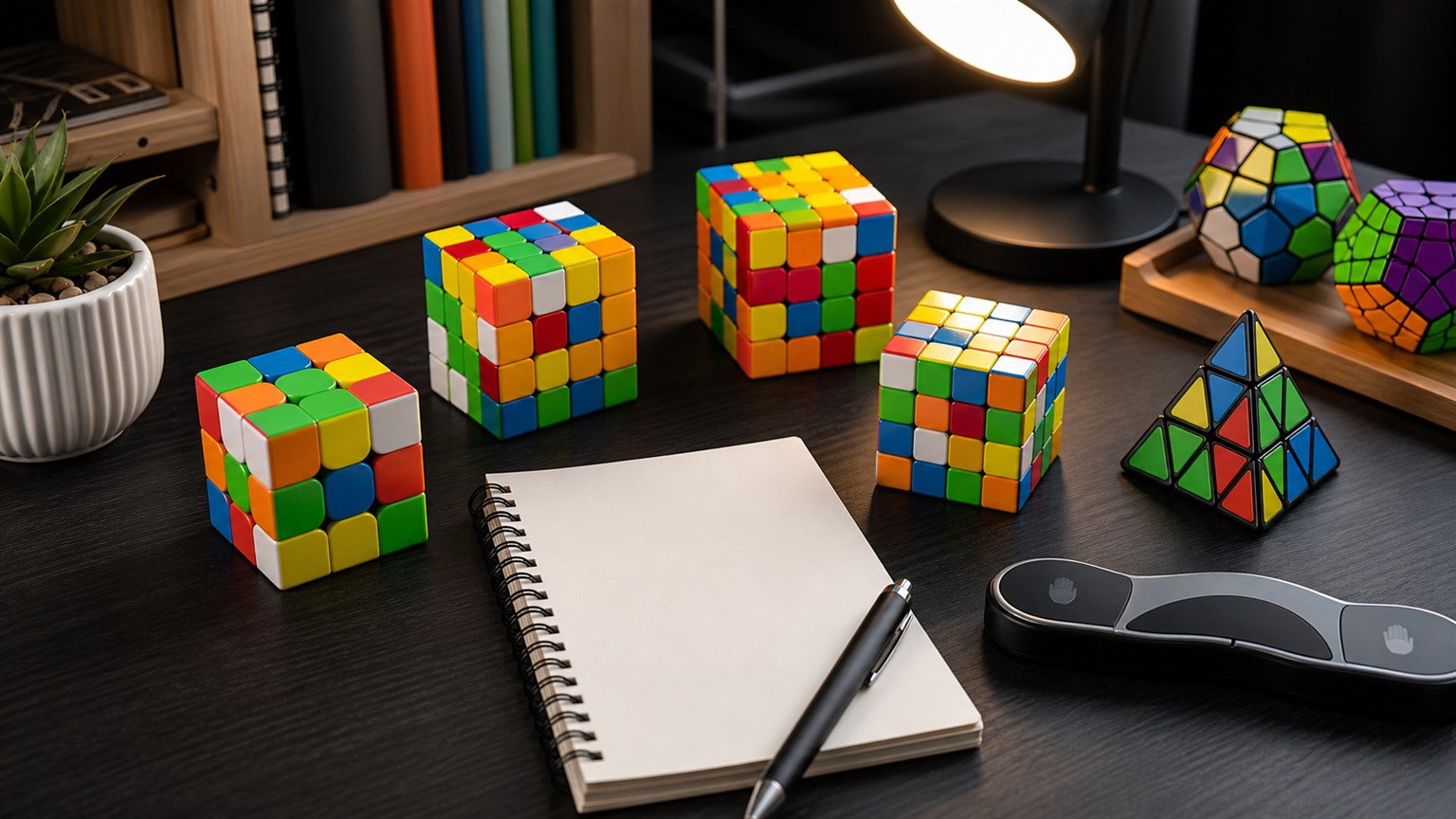
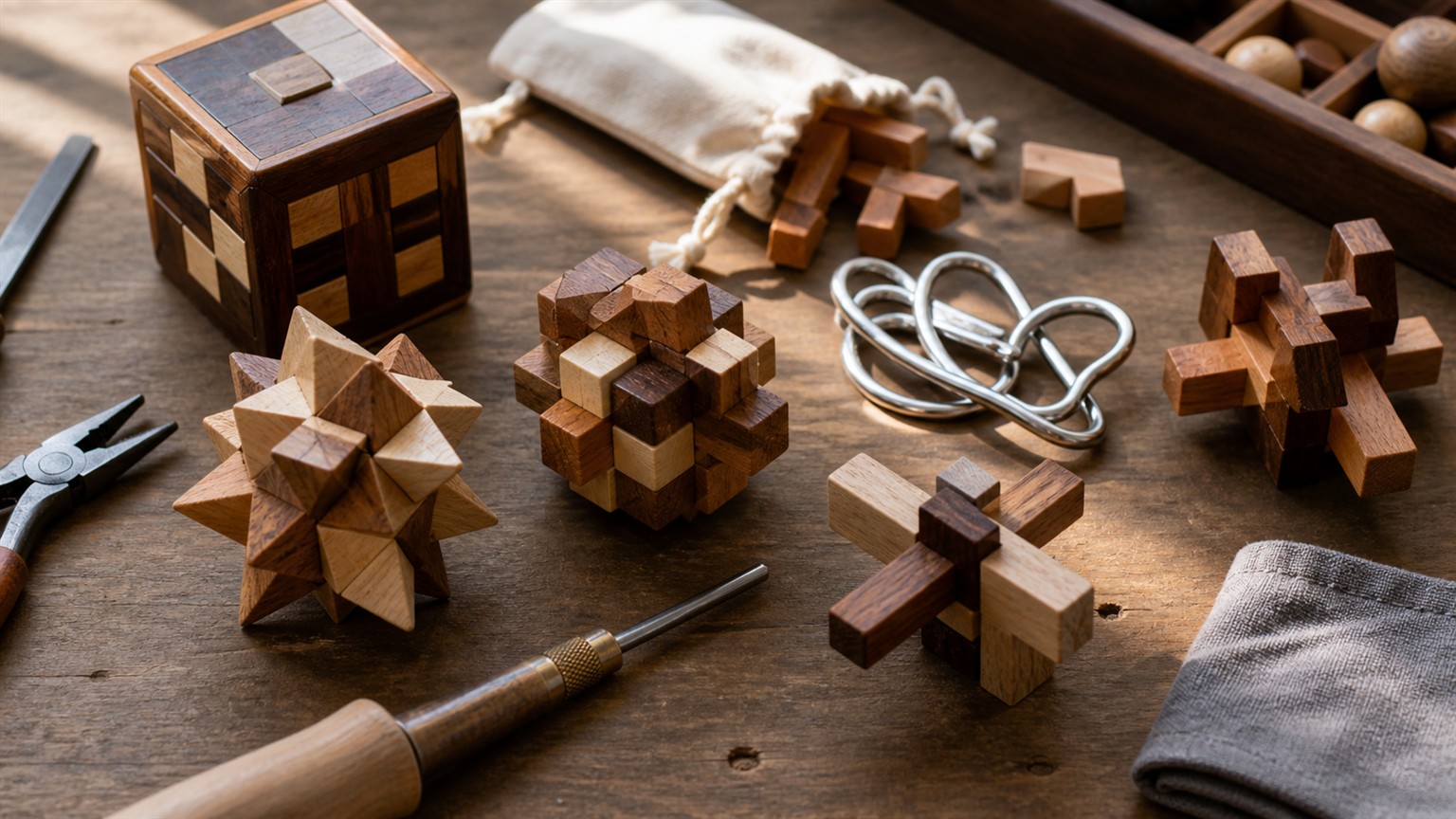
Burr puzzles use interlocking pieces that must be removed in a particular order. Puzzle boxes hide openings behind sliding panels, magnets, pins, or disguised mechanisms. Wire puzzles ask the solver to separate shapes by finding a path through loops. Packing puzzles challenge you to fit pieces into a container or frame. Twisty puzzles use rotations and algorithms to transform a scrambled state into order.
Each type rewards a different habit. Burr puzzles reward spatial memory. Puzzle boxes reward patient inspection. Wire puzzles reward path imagination. Packing puzzles reward efficient use of negative space. A hands-on solver can learn a lot by trying several families rather than mastering only one.
Observation Before Movement
The best first move is often not a move at all. Study the object. Look for seams, repeated parts, asymmetry, wear marks, hidden gaps, or pieces that wiggle differently from their neighbors. Mechanical puzzle designers often hide information in plain sight. The solver who slows down may save a lot of blind pushing.
Observation also protects the puzzle. Many mechanical puzzles are built with precise tolerances. If something does not move, the answer is rarely more force. It may require alignment, a release step, a different orientation, or a sequence you have not discovered yet.
Why Force Usually Fails
Force is tempting because the puzzle is physical, but force often moves the solver farther from the intended path. A bent wire, chipped wooden edge, or jammed slider turns a fair puzzle into a damaged object. Good mechanical solving uses gentle pressure, careful testing, and respect for the maker's design.
If a movement almost works, pause. Ask what would need to be true for it to work cleanly. Is another piece blocking it? Does gravity need to shift a pin? Does the object need to be rotated? This kind of question keeps the solve mechanical rather than muscular.
Choosing a Mechanical Puzzle
Beginners should look for puzzles with clear goals and durable materials. A simple disentanglement puzzle, small packing puzzle, or entry-level puzzle box can teach the feel of mechanical solving without overwhelming the solver. Smooth movement matters because friction should not be confused with difficulty.
More advanced solvers may enjoy sequential discovery puzzles, high-level burrs, complex take-apart objects, or handcrafted boxes. At that level, part of the pleasure is the craftsmanship. The puzzle is not only a challenge; it is an object worth handling carefully.
Learning From the Reset
A mechanical puzzle is not fully understood when it opens once. Resetting it teaches the solution in reverse and reveals whether the solver truly followed the mechanism. This is especially true for burr puzzles, puzzle boxes, and assembly challenges. Rebuilding the starting state can be as educational as reaching the solved state.
If you plan to share a puzzle, learn the reset before handing it over. Some puzzles are easy to scramble into states that confuse new solvers or even risk damage. A good reset habit keeps the object playable for everyone.
The Difference Between Exploring and Forcing
Mechanical puzzle solving begins with exploration. Exploration asks what the object wants to do. Forcing assumes the solver already knows and tries to make the object obey. That difference is crucial. A puzzle box may need a panel to slide only after a hidden pin drops. A wire puzzle may separate only when a loop follows a precise path. A burr puzzle may release only after one piece moves a few millimeters in the right direction.
The more elegant the puzzle, the more important this distinction becomes. Good mechanical puzzles often hide their solutions behind small permissions. They do not reward strength; they reward attention. If your hands are tense, slow down. If a move feels violent, stop. The puzzle may be telling you that another discovery belongs before that motion.
Materials Change the Experience
Wood, metal, plastic, acrylic, and mixed-media puzzles each create a different solving experience. Wood feels warm and organic, but it can respond to humidity. Metal feels precise and durable, but it can be slippery or unforgiving. Acrylic can reveal mechanisms or create beautiful transparency, though it may scratch. Plastic twisty puzzles can be fast, adjustable, and accessible.
Material is not only an aesthetic choice. It affects feedback. A wooden burr may give subtle friction clues. A metal disentanglement puzzle may require careful orientation because the pieces slide so freely. A puzzle box may rely on weight, sound, or texture. Hands-on solvers often develop preferences because the feel of the object becomes part of the reasoning process.
How Difficulty Really Works
Mechanical puzzle difficulty is not just the number of moves. A puzzle with three moves can be difficult if the first move is well hidden. A puzzle with many moves can be approachable if each step gives clear feedback. Difficulty comes from visibility, precision, sequence length, false affordances, and how much the puzzle reveals as it changes.
This is why ratings can be inconsistent. One solver may find a wire puzzle intuitive and a puzzle box baffling. Another may excel at hidden mechanisms but struggle with spatial assembly. The best way to choose difficulty is to read descriptions of the mechanism family, not only the rating number. Ask what kind of thinking the puzzle demands.
Building a Hands-On Puzzle Habit
A good mechanical puzzle habit includes variety and rest. Solve a wire puzzle when you want path reasoning. Try a packing puzzle when you want spatial efficiency. Open a box when you want sequential discovery. Work on a burr when you want interlocking structure. Changing families keeps your hands and mind from expecting every object to behave the same way.
Rest matters because tactile puzzles can create tunnel vision. After twenty minutes of the same failed motion, the hands may repeat themselves without learning. Set the puzzle down. Return later. Often the next useful observation appears in the first minute back, when your assumptions have loosened and the object looks new again.
Why Mechanical Puzzles Feel Personal
Mechanical puzzles often feel personal because the solve path is private and physical. Two people can open the same box but remember different discoveries. One noticed a seam. Another heard a rattle. Another found the release by changing orientation. The final solution may be the same, but the route feels individual.
That personal quality is why mechanical puzzles make memorable gifts and desk objects. They invite handling, conversation, and repeated attempts. A good one does not merely occupy time. It creates a small relationship between solver and object, built from curiosity, frustration, surprise, and eventual respect.
Reading Feedback Through the Hands
Mechanical puzzles communicate through tiny feedback signals. A panel shifts slightly. A ring catches at one angle and clears at another. A wooden piece moves farther after a neighboring piece is withdrawn. These signals are easy to miss when the solver is impatient, but they are often the puzzle's main language.
Good hands-on solving means becoming sensitive to that language. Do not only ask whether a move works. Ask how it feels. Is the resistance springy, blocked, gritty, magnetic, or clean? Does movement improve when the object is rotated? Does a sound suggest something inside has changed? Touch becomes a form of observation.
Sharing Mechanical Puzzles Well
Mechanical puzzles are fun to share, but they need thoughtful handoff. Tell a new solver the goal, whether force is allowed, and whether the puzzle has loose parts. Avoid giving away the first move unless they ask. A small amount of framing prevents damage while preserving discovery.
It also helps to know the reset. A puzzle box left half-open or a burr puzzle left partly disassembled may be harder for the next person to enjoy. The owner becomes a caretaker of the experience. A good shared puzzle should remain fair, intact, and inviting after many hands have tried it.
Documenting the Solve Without Spoiling It
Mechanical puzzles often benefit from private notes. A quick sketch, a sequence of movements, or a reset reminder can save frustration later. The trick is to keep notes for yourself without spoiling the experience for the next solver. A sealed card, a hidden phone note, or a labeled reset sheet can preserve the solution while keeping the puzzle mysterious.
Notes are especially useful for sequential discovery puzzles and complex boxes. After the thrill of opening them, it is easy to forget the exact order. Recording the path helps you respect the object and share it responsibly.
When a Puzzle Becomes a Display Object
Many mechanical puzzles are beautiful enough to display, but display should not replace solving entirely. Handling the object is how its design becomes meaningful. A puzzle box on a shelf is attractive; a puzzle box that has surprised you is memorable. The same is true of polished metal disentanglements, wooden burrs, and carved packing puzzles.
If you collect, try to balance appearance with mechanism. A varied collection includes objects that twist, slide, separate, assemble, open, and pack. That variety keeps the collection intellectually alive rather than simply decorative.
The Best Mindset for Hard Objects
Hard mechanical puzzles require humility. The object may be small, but it can still know something you do not. Treat each failed attempt as information. A blocked movement says something about sequence. A tiny wiggle says something about possibility. A repeated dead end says your assumption may be wrong.
That mindset keeps difficulty enjoyable. Instead of fighting the object, you investigate it. The puzzle becomes less an opponent and more a carefully made question.
Conclusion: Let the Object Teach You
The best mechanical puzzles reward hands that are curious, patient, and gentle. They ask you to notice movement, sequence, shape, resistance, and hidden structure. They are satisfying because the solution is not only understood; it is felt.
For hands-on problem solvers, mechanical puzzles offer a special kind of discovery. The object begins as a mystery, then slowly reveals its rules through touch. When the final piece slides, opens, separates, or fits, the answer feels earned in the most literal way.