A Word Puzzle for Every Kind of Solver
Word puzzles are wonderfully elastic. They can be gentle enough for a child finding hidden words, quick enough for a coffee break, or intricate enough to occupy an expert for an entire evening. The best word puzzle is not simply the hardest one. It is the one that fits the solver's vocabulary, patience, curiosity, and appetite for clues. Once you understand how different formats behave, choosing the right puzzle becomes easier. A beginner can build confidence without feeling lost, a casual player can find a satisfying daily rhythm, and an advanced solver can chase wordplay that feels genuinely elegant.
A: Identify the goal, list the given information, and look for the clearest constraint.
A: Testing is useful; unsupported guessing is usually less helpful than narrowing possibilities.
A: Use one after you have tried several fair approaches and no longer have a testable idea.
A: The answer should make earlier clues feel purposeful once explained.
A: Change methods: sort, draw, reread, explain aloud, or step away briefly.
A: Not always. The best puzzle is the one whose difficulty fits the solver and setting.
A: Teams combine observation, memory, organization, and different puzzle habits.
A: Clear goals, fair constraints, useful feedback, and an earned breakthrough.
A: They can practice specific skills, especially when the challenge is varied and sustained.
A: Notice which clues mattered, which assumptions failed, and which method helped most.
Start With the Solver, Not the Puzzle
The phrase best word puzzle depends on who is solving. A child learning spelling, an adult relaxing after work, and a tournament crossword fan do not need the same challenge. Skill level includes vocabulary, reading stamina, tolerance for ambiguity, and familiarity with puzzle conventions. A puzzle that feels brilliant to one person may feel unfair to another if the format assumes techniques they have never learned.
Before choosing a puzzle, ask what kind of satisfaction you want. Some people want a quick win. Some want a slow literary unraveling. Some want a competitive clock. Matching the puzzle to the solver prevents frustration and makes improvement more natural, because the challenge feels chosen rather than imposed.
Beginner Formats That Build Confidence
Word searches remain popular because they train attention without demanding much rule knowledge. They are especially useful for younger solvers and adults who want a gentle entry point. Simple anagrams, mini crosswords, letter ladders, and fill-in grids add a little more reasoning while keeping the path visible.
The key for beginners is feedback. A found word, a completed mini grid, or a solved ladder creates momentum. These early wins teach solvers that language can be explored playfully. They also introduce core habits such as scanning for patterns, using known letters, and checking whether an answer actually fits the clue.
Beginner puzzles should still feel thoughtfully made. A dull puzzle with obvious answers can make wordplay seem flat. The best easy word puzzles have clear rules, fair vocabulary, and at least a few moments of surprise.
Intermediate Puzzles Add Choice
Intermediate word puzzles ask solvers to decide where to spend attention. A standard crossword may contain easy fill, tricky theme entries, and clues that depend on puns or cultural references. A codeword puzzle may begin slowly until one letter unlocks several others. A daily guessing game may require restraint because the most tempting word is not always the most informative one.
Advanced Word Puzzles Reward Technique
Advanced puzzles are not just longer versions of easy puzzles. They often require specialized reading. Cryptic crosswords split clues into definition and wordplay. Metapuzzles hide a final answer beyond the grid. Diagramless puzzles make the shape of the puzzle part of the challenge. These formats are thrilling when the solver understands the contract.
The best way into advanced wordplay is gradual exposure. Learn common clue indicators, solve with annotations, and read explanations after finishing. At first, advanced clues may feel like private jokes. Over time, they become a second language, full of misdirection, compression, and clever construction.
Daily Games Create Reliable Practice
Daily word games are powerful because they are small enough to repeat. A five-minute puzzle can teach pattern recognition, vocabulary recall, and decision-making without requiring a special occasion. The ritual matters. When a solver returns each day, familiar structures become easier to read and mistakes become easier to notice.
The danger is treating streaks as more important than learning. If a daily game becomes stressful, slow down and review the solve instead of chasing speed. A missed answer can be more useful than an easy win when it reveals a blind spot.
Rotating among daily formats keeps practice broad. One day might emphasize deduction, another association, another spelling, and another clue interpretation. That variety helps word skill feel alive.
Use Crossings, Patterns, and Sound
Good word solvers rarely rely on definition alone. They use crossings, letter shapes, word endings, sounds, and category expectations. If a crossword answer ends in ING, the clue likely has a matching grammatical shape. If an anagram has unusual letters, possible word families narrow quickly. If a riddle uses sound, the answer may be hiding in pronunciation rather than spelling.
Make Word Puzzles Social When It Helps
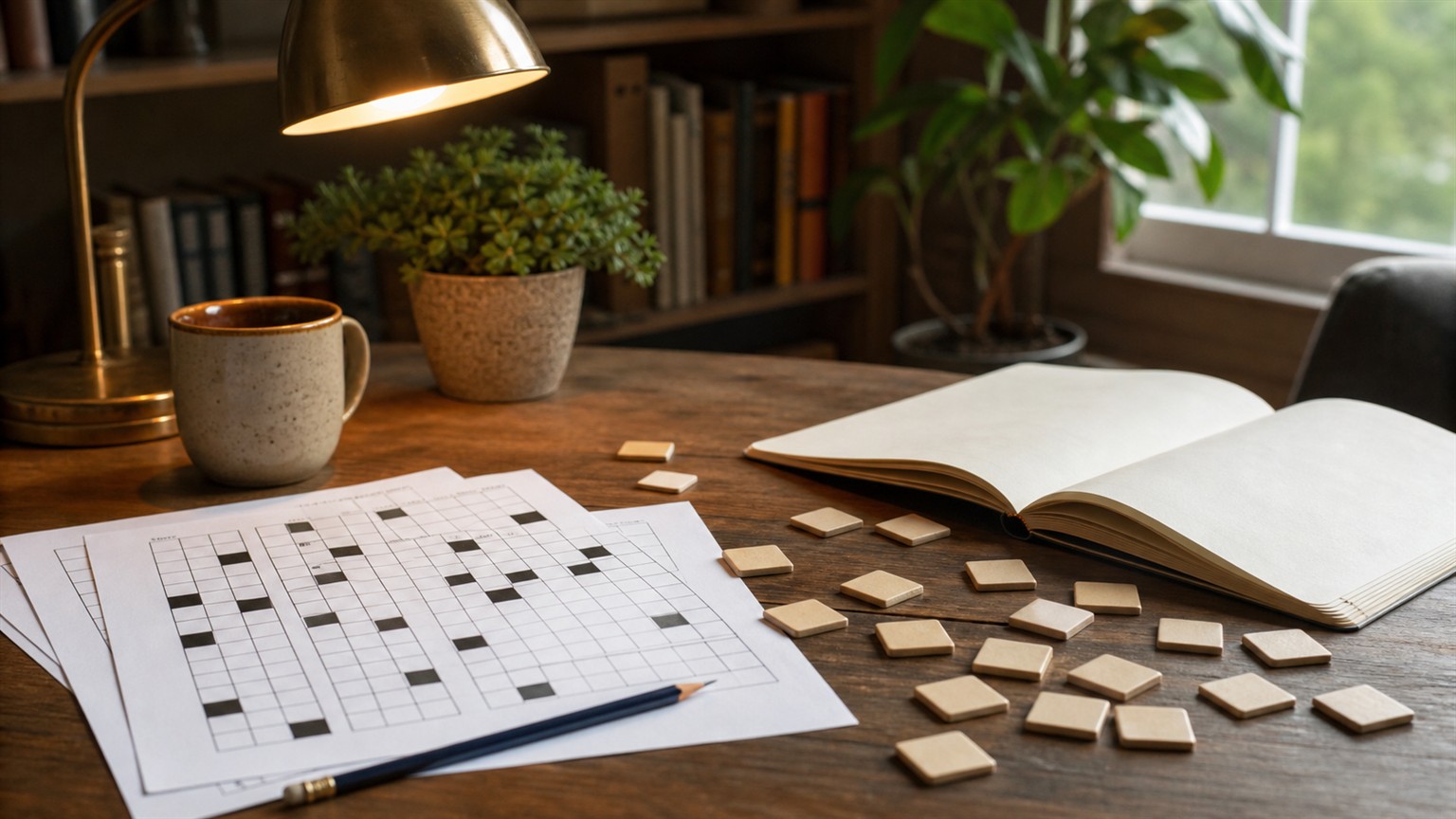
Word puzzles can be solitary, but they do not have to be. A group crossword at a table can become a conversation about memory, culture, jokes, and language. One person may know a sports reference while another sees a pun. The puzzle becomes a shared map of what everyone notices.
Group solving works best when people explain their thinking. Calling out answers without reasons can turn the puzzle into a race. Explaining the clue helps newer solvers learn the moves behind the answer. It also makes the final grid feel jointly earned.
How Skill Levels Actually Change the Experience
A beginner word puzzle usually makes the route visible. The solver can find an answer through recognition, a crossing letter, a clear category, or a familiar phrase. Intermediate puzzles add more choice. The clue may have two possible meanings, the answer may require a less common synonym, or the theme may ask the solver to notice a pattern across several entries. Advanced puzzles go further by making the surface of the clue almost deceptive, though still fair. The same solver may enjoy all three levels on different days because difficulty changes the emotional texture of the solve.
This is why word puzzle recommendations should not be treated like a ladder everyone climbs in the same order. Some people love cryptograms but dislike crosswords. Some enjoy anagrams but have no patience for word searches. A strong puzzle habit respects that preference while still leaving room for growth. If you want to improve, choose puzzles with one unfamiliar demand at a time: a new clue style, a larger grid, a trickier theme, or a slightly wider vocabulary range.
The best sign of a good difficulty match is not speed. It is engagement. A puzzle that takes twenty minutes but keeps you curious is a better choice than a five-minute puzzle that feels empty or a two-hour puzzle that feels hostile. Skill grows when the challenge invites attention instead of demanding endurance for its own sake.
Building a Balanced Word Puzzle Routine
A balanced routine might include a quick daily puzzle, a relaxed weekend grid, and an occasional stretch format such as a cryptic, acrostic, or metapuzzle. The quick puzzle keeps language nimble. The longer puzzle builds persistence. The stretch puzzle introduces new clue logic. Together they create a healthier learning pattern than repeating only the format you already know well.
It also helps to review one clue after each session. Choose a clue you missed or admired and ask why it worked. Maybe the answer depended on a hidden definition, a pun, a common abbreviation, or a phrase you half remembered. This small review turns solving into learning without making the hobby feel like school. Over time, those reviewed moments become a private library of clue behavior.
Moving Between Comfort and Stretch
A useful word puzzle habit has both comfort puzzles and stretch puzzles. Comfort puzzles are the ones that make you feel fluent. They might be minis, word searches, straightforward crosswords, or familiar daily games. They keep the habit pleasant, which matters more than many solvers admit. If every puzzle feels like a test, the routine will eventually collapse. Comfort puzzles remind you that language play can be light, quick, and satisfying.
Stretch puzzles are different. They ask for a new clue convention, a wider reference pool, a stranger grid, or a more patient style of thinking. They are not supposed to feel smooth right away. A cryptic clue, a dense acrostic, or a metapuzzle may require explanation before it becomes enjoyable. That does not mean you are failing. It means the puzzle is teaching a dialect you have not fully learned yet.
The healthiest approach is to move back and forth. Solve something friendly when you want rhythm. Try something harder when you want growth. If the harder puzzle leaves you tired, return to a format you enjoy and bring one lesson with you. Improvement in word puzzles is rarely dramatic in a single sitting. It is a slow widening of what feels readable, fair, and fun.
Tracking Progress Without Draining the Fun
Progress in word puzzles can be hard to measure because every puzzle brings different vocabulary and references. Instead of judging only by time or completion, notice the smaller signs. You may recover from stuck clues faster. You may recognize a pun signal sooner. You may use crossings more calmly or spot an anagram indicator that once slipped past you. These are real improvements, even when a puzzle still has blanks.
Keep the tracking light. A notebook full of statistics can be motivating for some solvers, but for many people a simpler approach works better: write down one new word, one clever clue, or one mistake worth remembering. That tiny record preserves the lesson without turning the hobby into homework. The best word puzzle habit keeps curiosity at the center.
Matching Puzzle Format to Energy
Energy matters as much as ability. A tired solver may enjoy a word search or mini crossword more than a dense cryptic, even if they are capable of the harder puzzle. A social evening may call for a group-friendly word game rather than a solitary acrostic. A quiet weekend morning may be perfect for a larger themed crossword. Choosing by energy keeps word puzzles from becoming a chore.
This kind of self-matching also prevents false conclusions about skill. Disliking a hard puzzle after a long day does not mean you are bad at wordplay. It may mean the format asked for more concentration than you had available. The best solvers learn to keep several puzzle types nearby so they can meet the moment honestly and still enjoy language.
Let Vocabulary Grow Naturally
Word puzzles are one of the gentlest ways to expand vocabulary because new words arrive with context. A clue, crossing letters, and theme can make an unfamiliar answer feel discoverable rather than random. When a new word appears, look at how the puzzle introduced it. Was the clue direct, playful, historical, or built from word parts? That context makes the word easier to remember.
Do not pressure yourself to memorize every obscure answer. Notice recurring words, useful roots, and clue-friendly phrases. Over time, the vocabulary of puzzles becomes familiar in the same way a neighborhood becomes familiar: one repeated landmark at a time.
Conclusion: Choose the Puzzle That Keeps You Curious
The best word puzzles for every skill level are the ones that preserve curiosity. Beginners need fair starts and visible progress. Casual players need satisfying formats that fit real life. Advanced solvers need depth, surprise, and craftsmanship. None of these needs is better than the others.
A healthy word puzzle habit can include all of them. Solve a mini when time is short, a word search when you want calm, a crossword when you want range, and a cryptic when you want language to turn strange and brilliant. The more formats you explore, the larger the world of words becomes.