Single-Tasking in a Multi-Tab World
Deep focus is difficult because modern attention is constantly invited to switch. Puzzles create a different kind of environment. They reward staying with one problem, one clue, one grid, one piece field, or one set of rules long enough for the details to become meaningful. Single-task concentration does not mean never shifting attention within the puzzle. It means the shifts serve the task rather than escaping it. A well-chosen puzzle can train this kind of focus by making concentration active, measurable, and satisfying.
A: It is staying oriented to one meaningful task while shifting attention only in service of that task.
A: They reward continued attention with feedback, progress, and clearer structure.
A: No, switching sections or strategies can be useful when it serves the same problem.
A: Jigsaws, logic grids, cryptics, nonograms, and mechanical puzzles can all work well.
A: Long enough to engage fully, but short enough that attention does not collapse.
A: Timers can protect a session boundary, though they should not create frantic pressure.
A: Use notes, trays, and visible marks to preserve the puzzle state.
A: Yes, through age-appropriate puzzles with short, clear goals.
A: Not always; it can be effortful, but the effort may still feel satisfying.
A: Choose one puzzle, clear competing inputs, and commit to one small session.
Deep Focus Is Not Blank Stillness
Deep focus is active. The solver compares, tests, remembers, and revises. The mind is not empty; it is organized around one task. Puzzles are useful because they give that organization a visible form.
This distinction matters. A person may think they are bad at focus because they cannot sit with nothing. A puzzle gives focus something to do.
Why Task Switching Breaks Puzzle Context
Many puzzles depend on context. A solver remembers which clues are uncertain, which pieces have been tested, and which rule is currently active. Switching away too often breaks that context.
When the solver returns, they may spend several minutes rebuilding the state of the problem. This makes the session feel harder than it needs to be. Protecting single-task time protects the context that concentration depends on.
The Puzzle as a Bounded World
A puzzle creates a bounded world. The rules, pieces, clues, or grid define what matters. That boundary is one of the reasons puzzles can support deep focus. The solver does not have to attend to everything, only to the world of the puzzle.
The boundary can be comforting. It reduces the infinite feeling of open-ended work. Within the puzzle, attention has a limited landscape to explore.
This is also why clear instructions are so important. A fuzzy boundary makes focus harder.
Attention Control and Inhibition
Single-task concentration requires inhibition. The solver must resist checking the phone, jumping to the answer key, or abandoning a hard section too quickly. The inhibition is not harsh; it is simply the choice to keep attention with the task a little longer.
Puzzles train this gently when the reward is near enough to matter. A small breakthrough gives the mind a reason to stay.
How Physical Materials Help
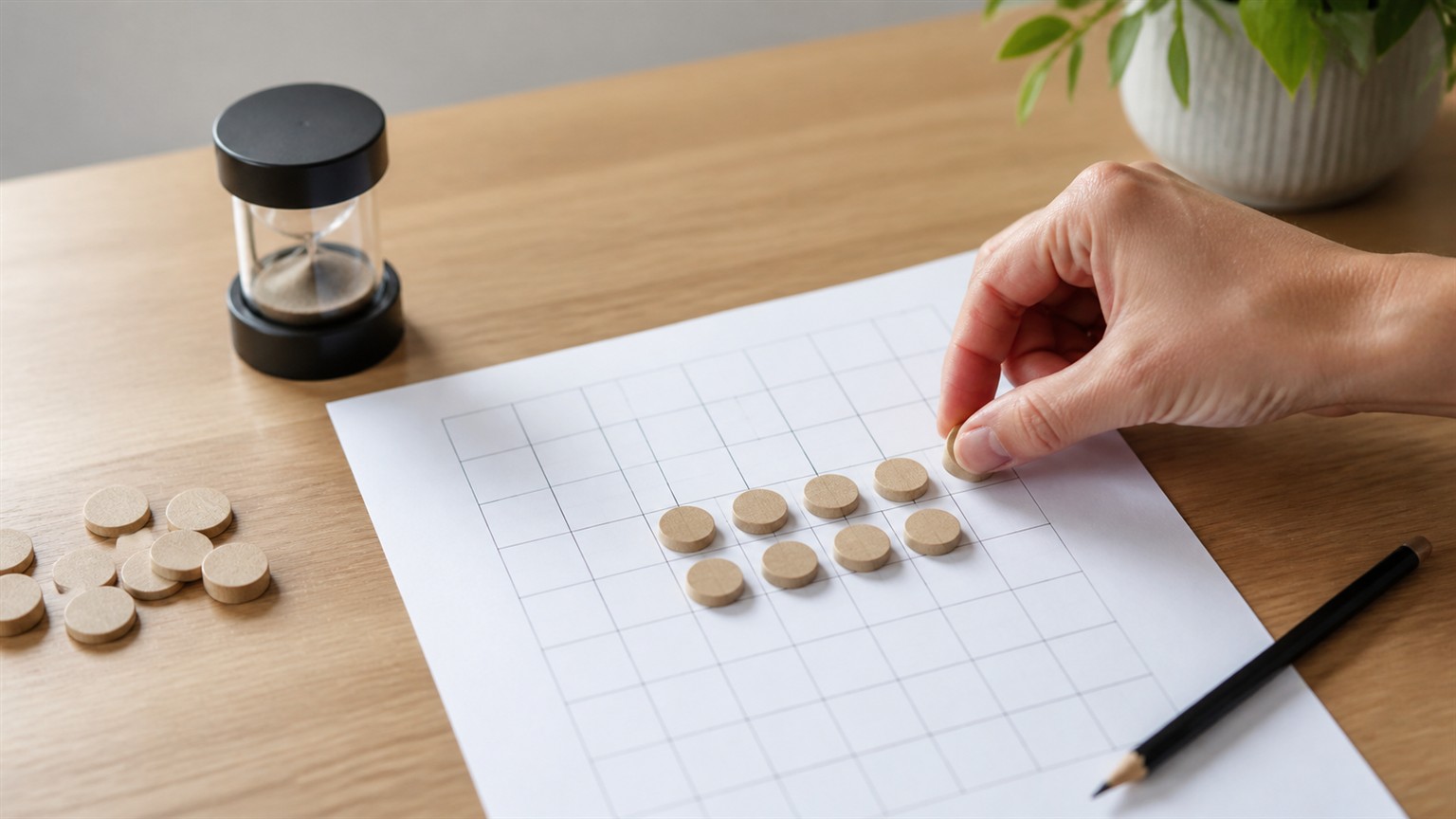
Physical puzzle materials can reduce the abstraction of focus. Pieces, pencils, grids, and tiles give attention something to touch and arrange. The workspace becomes a map of the solver's thinking.
This is useful for deep focus because external structure reduces mental clutter. The solver can see progress and return to it after a pause.
The Role of Difficulty
Deep focus needs depth, but depth is not the same as punishment. A puzzle should be complex enough to reward sustained attention and clear enough that effort produces information.
If the puzzle is too easy, attention becomes restless. If it is too hard, attention may fragment. The best focus training happens when the challenge asks for patience while still offering feedback.
A Single-Task Puzzle Routine
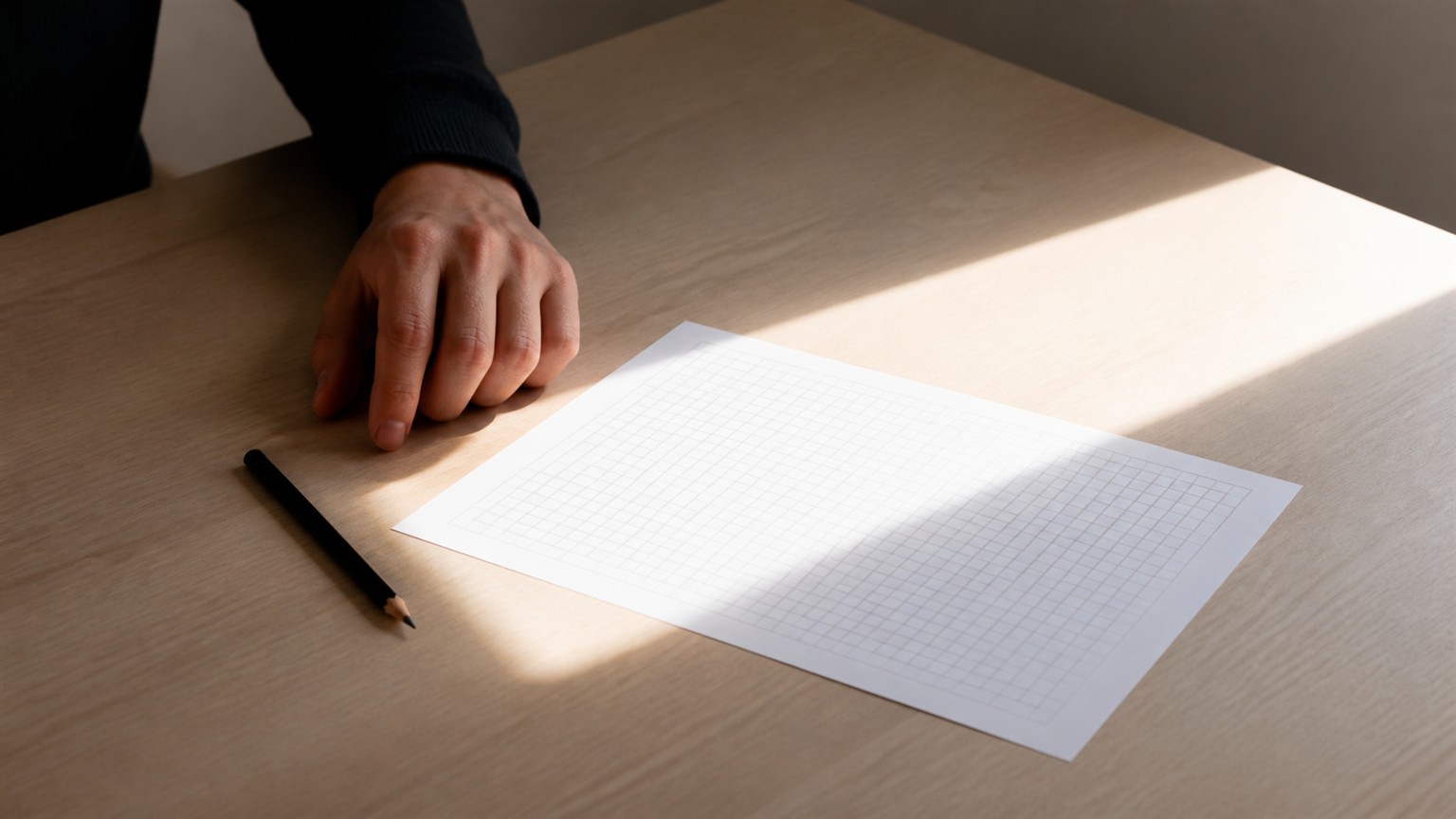
A routine can begin with a small commitment: one puzzle, one surface, one session. Put away unrelated tabs and devices. Decide whether the goal is a section, a clue set, a time block, or a number of moves.
At the end, leave a trace for the next session. Mark the next area to try or write a note about the current obstacle. This protects continuity and makes returning easier.
When Deep Focus Becomes Strain
Deep focus should not become strain disguised as discipline. If the body is tense, the mistakes are multiplying, or the puzzle has stopped producing information, a break may be more productive than forcing another hour.
Stepping away is not a failure of focus. It can be part of protecting focus for the next attempt.
Why Review Strengthens the Habit
After a deep-focus session, review what helped. Was it the clean desk, the physical pieces, the timer, the quiet, or the puzzle format itself? Naming the condition makes it easier to recreate.
This review turns focus from an accident into a practice. The solver learns which environments and puzzle types make single-task concentration most available.
Why Single-Tasking Feels Unfamiliar
Single-tasking can feel unfamiliar because many daily environments reward rapid switching. Messages, tabs, alerts, and background media train the mind to expect new input constantly. A puzzle asks for a different rhythm: stay, compare, test, and continue.
At first, that rhythm may feel slow. The solver may reach for a distraction before the puzzle is truly difficult. Recognizing that impulse is part of the practice. The puzzle becomes a place to notice the urge to switch and choose one more focused step instead.
This does not require heroic willpower. It requires a setup that makes the desired behavior easier than the distraction.
The Cost of Losing the Puzzle State
Deep focus depends on preserving the puzzle state. In a logic grid, the state includes deductions and candidates. In a jigsaw, it includes sorted regions and visual memory. In a crossword, it includes clue interpretations and crossing possibilities.
When attention leaves too often, the state decays. The solver spends energy rebuilding context instead of advancing. This is why interruptions can make a puzzle feel harder than its actual clues.
Single-Tasking Still Includes Strategy Shifts
Single-task concentration does not mean staring at one square forever. A solver may switch from one section of a puzzle to another, from visual scanning to note review, or from guessing to elimination. Those shifts still belong to the same task.
The key question is whether the shift serves the puzzle. Moving to another region because it may unlock the stuck area is strategic. Opening a new distraction because the clue feels uncomfortable is avoidance. Puzzles help solvers learn the difference.
How Ritual Protects Concentration
A focus ritual reduces the number of decisions before the session begins. Same table, same pencil, same tray, same short time block. The ritual tells the mind that the next interval belongs to one task.
This may sound simple, but simplicity is the point. Deep focus becomes easier when the beginning is familiar. The solver does not have to negotiate with the environment every time.
The Role of Boredom
Boredom often appears at the threshold of deep focus. The mind wants novelty before the puzzle has had time to open. If the solver stays a little longer, details may become more interesting because attention has deepened.
Not all boredom is useful. Sometimes it means the puzzle is a poor fit. But brief early boredom is not always a sign to quit. It can be the mind adjusting to a slower reward schedule.
Leaving a Trail for Tomorrow
Deep-focus puzzles often last longer than one session. Leaving a trail helps the next session begin quickly. Mark the stuck clue, sort pieces into clear groups, or write a short note about the current theory.
This trail protects continuity. Instead of spending the next session reconstructing the old state, the solver can re-enter the puzzle world with less friction.
Deep Focus Requires a Protected Boundary
A deep-focus puzzle session needs a boundary around it. The boundary can be time, space, materials, or intention. Without one, the session may dissolve into checking messages, reorganizing supplies, or jumping between unrelated tasks.
The boundary does not have to be rigid. Fifteen minutes at a clear table can be enough. What matters is that the solver knows this interval belongs to one problem world.
How Clues Become More Visible Over Time
Deep focus changes perception. At first, a puzzle may look like clutter. After sustained attention, patterns begin to separate. The solver notices a repeated shape, a clue rhythm, a color transition, or a rule hidden in the examples.
This is one of the rewards of single-task concentration. Some information becomes visible only after the mind has stayed long enough to compare details. Quick switching prevents that slow visibility from developing.
The puzzle teaches patience by making patience useful.
The Difference Between Rest and Distraction
Rest supports deep focus; distraction interrupts it. A short pause to stretch, breathe, or look away can preserve concentration. A scroll through unrelated alerts may scatter the puzzle state and make return harder.
This difference matters because deep focus is not endless intensity. The mind needs breaks. The useful break is the one that restores the ability to continue the same task, not the one that replaces the task with a new stream of demands.
Why Single-Task Practice Feels Satisfying
Single-task practice can feel satisfying because the solver experiences continuity. One move leads to another. Earlier observations remain relevant. The puzzle becomes a small world with history.
That continuity is often missing in fragmented attention. When every few minutes bring a new input, the mind rarely feels the pleasure of staying with something long enough to watch it open. Puzzles offer that pleasure in a compact form.
Adapting Deep Focus to Daily Life
A puzzle habit can teach practical lessons for other work. Clear the space. Define the task. Preserve notes. Reduce interruptions. Pause before fatigue. Return with a plan. These habits are not limited to puzzles.
The transfer should not be exaggerated, but the parallels are real. A person who learns what helps them focus at a puzzle table may discover useful clues about focus elsewhere.
Why Deep Focus Needs Recovery
Deep focus uses energy. A strong puzzle session can feel satisfying and tiring at the same time. Recovery protects the next session by giving the mind time to rest, consolidate, and return with interest.
This is why breaks, sleep, and ordinary downtime belong in a focus routine. The goal is not to concentrate endlessly. The goal is to build a rhythm where attention can become deep and then recover enough to become deep again.
Measuring Deep Focus Without Turning It Into a Score
Deep focus can be noticed without turning it into another performance metric. Ask whether the session felt less fragmented, whether you returned after distraction, and whether the puzzle state remained clear. These signs may matter more than the number of clues solved.
If measurement becomes stressful, simplify it. One sentence after the session is enough: what helped me stay with the puzzle today? Over time, those notes reveal useful patterns.
One Puzzle at a Time
Working on one puzzle at a time can feel surprisingly different from sampling several. The single puzzle gathers history as the session continues. Earlier observations remain useful, and the solver begins to feel the shape of the whole problem rather than chasing novelty from one new prompt to another.
Conclusion: Focus Learns Through Use
Puzzles train single-task concentration by giving attention a bounded world, useful feedback, and a reason to stay. They do not remove distraction from life, but they create practice in returning to one meaningful task.
The best deep-focus puzzle habit is deliberate and humane. Clear the space, choose the challenge, protect the session, and let the puzzle teach attention to remain.