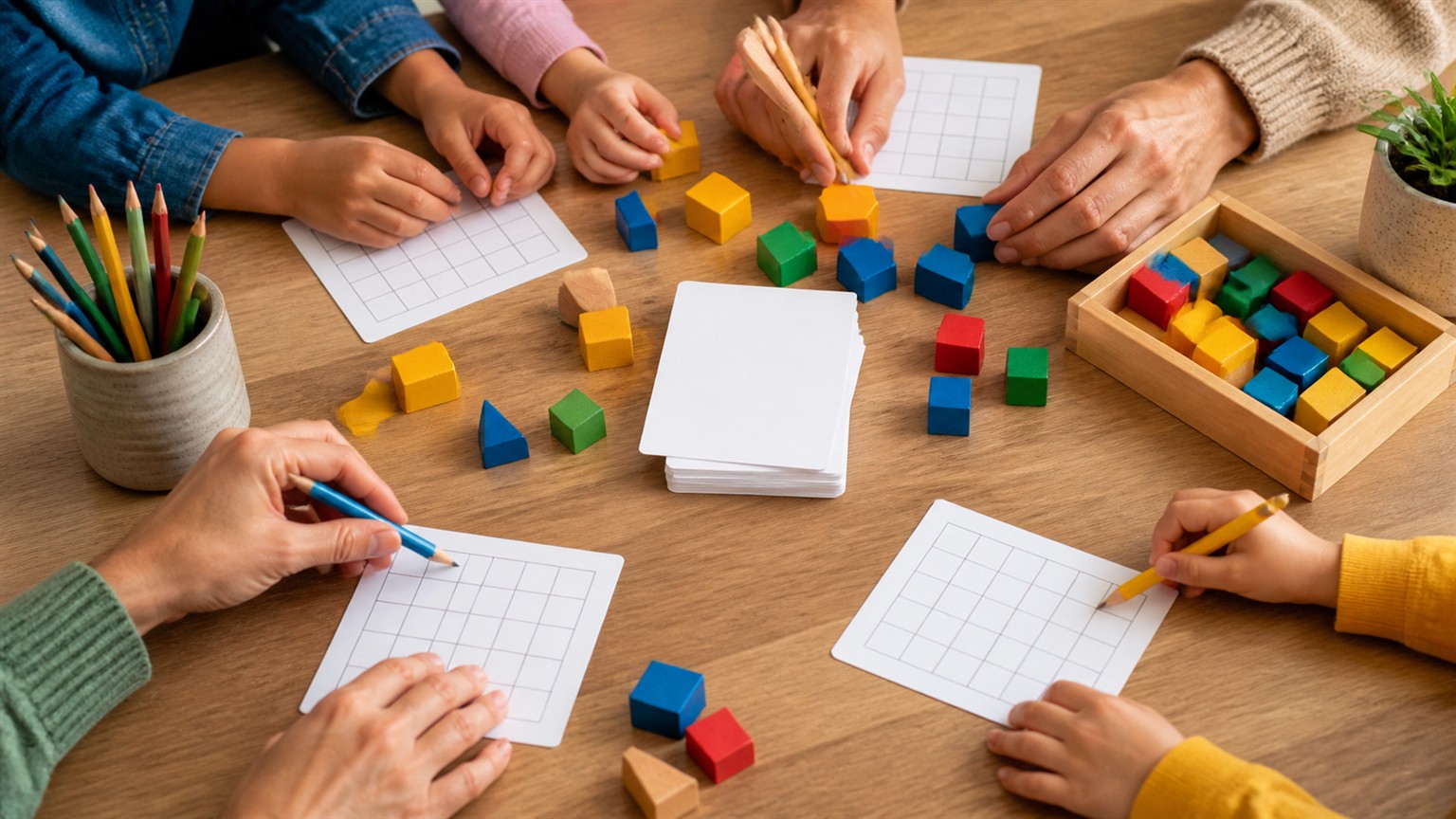
Logic puzzles are one of the most satisfying ways to challenge your mind. They begin with uncertainty, offer a handful of clues, and invite you to discover the answer through reasoning. Unlike trivia questions, logic puzzles do not ask what you already know. Instead, they ask how carefully you can think. At their best, logic puzzles feel like miniature mysteries. You may be given a group of people, a set of objects, a strange situation, or a pattern that seems incomplete. Somewhere inside the clues is a path to the solution. Your job is to follow that path without jumping too quickly, ignoring important details, or making assumptions the puzzle never gave you. For beginners, logic puzzles can seem intimidating at first. The word “logic” may sound formal or mathematical, but most beginner logic puzzles are built around everyday reasoning. If you have ever figured out who sat where at dinner, matched missing items to their owners, solved a riddle, noticed a pattern, or worked out what must have happened from a few clues, you have already used the same skills logic puzzles require. This beginner’s guide will explain what logic puzzles are, how they work, why people love them, and how to start solving them with confidence. Whether you are exploring puzzles for fun, classroom learning, family game night, or brain training, logic puzzles are a rewarding place to begin.
A: Identify the goal, list the given information, and look for the clearest constraint.
A: Testing is useful; unsupported guessing is usually less helpful than narrowing possibilities.
A: Use one after you have tried several fair approaches and no longer have a testable idea.
A: The answer should make earlier clues feel purposeful once explained.
A: Change methods: sort, draw, reread, explain aloud, or step away briefly.
A: Not always. The best puzzle is the one whose difficulty fits the solver and setting.
A: Teams combine observation, memory, organization, and different puzzle habits.
A: Clear goals, fair constraints, useful feedback, and an earned breakthrough.
A: They can practice specific skills, especially when the challenge is varied and sustained.
A: Notice which clues mattered, which assumptions failed, and which method helped most.
What Is a Logic Puzzle?
A logic puzzle is a problem that can be solved through reasoning. The puzzle gives you information, usually in the form of clues, and the answer can be reached by thinking carefully about what those clues mean. The key idea is that the solution should follow from the information provided.
Some logic puzzles are simple and quick. For example, you might be told that three friends each chose a different dessert, and a few clues reveal who chose cake, pie, or ice cream. Other logic puzzles are larger and more complex, using grids, categories, multiple conditions, and layered clues. Even then, the basic process is the same: gather facts, eliminate impossibilities, and identify what must be true.
Logic puzzles often use deduction. Deduction means starting with known information and reaching a conclusion that cannot be false if the clues are true. If the puzzle says Maya did not choose the red box, and there are only two boxes left, red and blue, then Maya must have chosen blue. That is deduction in its simplest form. A good logic puzzle should feel fair. You should not need secret knowledge or random guessing. The clues should be enough to solve the puzzle, even if the answer is hidden behind clever wording or a tricky arrangement.
Why Logic Puzzles Are So Popular
Logic puzzles are popular because they offer a rare kind of entertainment: they are playful and mentally rewarding at the same time. They make you feel curious, challenged, and clever. When the answer finally clicks, the experience can be surprisingly exciting.
Part of the appeal comes from the journey. At the beginning, the puzzle may look confusing. You may not know where to start. Then one clue connects to another. One possibility disappears. A pattern emerges. Suddenly the puzzle feels less like a wall and more like a door opening. Logic puzzles also give solvers a sense of control. In many games, success depends on speed, luck, or outside information. In logic puzzles, success depends mostly on attention and reasoning. That makes them accessible to many ages and skill levels.
They are also easy to enjoy in different settings. A single logic puzzle can be a quiet solo challenge, a classroom activity, a family discussion, a party game, or a daily brain workout. Because they come in so many forms, there is always another style to try.
Common Types of Logic Puzzles
Logic puzzles come in many varieties, which is part of what makes them so enjoyable. Some are word-based, some are visual, some use numbers, and others use tables or grids. Beginners do not need to master every type right away, but it helps to understand the most common forms.
Logic grid puzzles are among the best-known types. These puzzles give you several categories, such as names, pets, colors, and houses. Your task is to match everything correctly using clues. A grid helps you mark what is true and false until only one arrangement remains.
Ordering puzzles ask you to place people, events, or objects in a sequence. The clues might say that one person arrived before another, someone was not first, or a certain item came immediately after another. These puzzles train you to think about position and relationships. Pattern puzzles ask you to identify what comes next. The pattern might involve numbers, shapes, letters, colors, or words. Some patterns are simple, while others require you to notice changes in more than one feature.
Truth-and-lie puzzles involve statements that may be true or false. Classic examples include guards, suspects, or characters who always tell the truth or always lie. These puzzles are excellent for learning how to test possibilities. Lateral-thinking puzzles are slightly different. They often describe an unusual situation and ask you to explain it. They still use logic, but they also require creative interpretation and careful attention to assumptions.
How Logic Puzzles Work
Most logic puzzles work by controlling information. They give you enough clues to solve the problem, but not so much that the answer is obvious immediately. The challenge is to organize the clues and discover their combined meaning.
A single clue may not solve the puzzle by itself. For example, “Ava did not choose the blue door” only removes one option. But when combined with another clue, such as “Ben chose the red door,” it may become much more powerful. Logic puzzles often depend on this kind of chain reaction.
Another important feature is restriction. A clue becomes useful when it limits what can be true. Positive clues tell you something directly, such as “Jordan owns the cat.” Negative clues rule something out, such as “Riley does not own the dog.” Both types matter. In fact, negative clues are often the backbone of deduction puzzles. Many puzzles also rely on contradiction. If one possibility causes two people to have the same item when the puzzle says each person has a different item, that possibility must be wrong. Learning to spot contradictions is one of the biggest steps in becoming a stronger solver.
The Beginner’s Mindset
The best mindset for solving logic puzzles is patient curiosity. Beginners often feel pressure to solve quickly, but logic puzzles reward careful thinking more than speed. A rushed answer is often based on an assumption. A thoughtful answer is based on evidence. When starting a puzzle, resist the urge to guess immediately. Instead, ask what the puzzle tells you for certain. What facts are clearly stated? What can you eliminate? Which clue seems the most direct? Which clue has the strongest restriction?
It also helps to accept that feeling stuck is part of the process. Being stuck does not mean you are bad at puzzles. It usually means you have not found the right clue connection yet. Sometimes the breakthrough comes from rereading the puzzle slowly and noticing a word you skipped the first time. A strong puzzle solver is not someone who never makes mistakes. A strong puzzle solver is someone who checks assumptions, changes direction when needed, and keeps following the clues.
How to Solve Logic Puzzles Step by Step
The first step is to read the puzzle all the way through without trying to solve it instantly. This gives you a general sense of the situation. Notice the categories, the goal, and any conditions that stand out.
Next, identify what the puzzle is asking. Are you trying to find one answer, complete a full arrangement, identify a person, finish a sequence, or explain a strange event? Knowing the goal helps you decide which clues matter most.
Then look for direct clues. These are the clues that place something immediately or remove a major possibility. If a puzzle says “Mia owns the green notebook,” that is a direct placement. If it says “The red house is not first,” that is a direct elimination.
After that, combine clues. This is where logic puzzles become exciting. One clue may tell you that Noah arrived before Olivia. Another may tell you that Liam arrived after Noah. Together, they begin to build an order. The puzzle becomes clearer as relationships stack together. Finally, check your answer. A correct solution should fit every clue. If even one clue does not work, the answer needs to be revised. This final check is important because many wrong answers feel convincing until tested.
The Power of Elimination
Elimination is one of the most useful strategies in logic puzzles. Instead of trying to find the answer immediately, you remove what cannot be true. As impossible options disappear, the correct answer becomes easier to see.
Imagine a puzzle with three friends and three drinks: tea, juice, and water. If Sam does not drink tea, and Taylor drinks tea, then Sam must drink juice or water. If another clue says Jordan does not drink juice, you may be able to place everyone. Each eliminated option narrows the puzzle.
This strategy is especially helpful for beginners because it reduces mental clutter. Rather than holding every possibility in your head, you steadily cross off choices. You are not guessing; you are clearing away what the clues forbid. Elimination also makes puzzles feel less overwhelming. Even if you do not know the answer yet, you can make progress. Every crossed-out possibility is a step forward.
Reading Carefully Matters
Many logic puzzles are built around precise wording. A small phrase can completely change the answer. Words like “only,” “always,” “never,” “before,” “after,” “between,” “exactly,” and “at least” deserve special attention. For example, the statement “one of the coins is not a nickel” does not mean neither coin is a nickel. It means at least one coin is not a nickel. That kind of wording can trick fast readers, but it is perfectly logical.
Careful reading also protects you from assumptions. If a puzzle says a person entered a room, it may not say they walked. If a puzzle says someone saw two objects, it may not say those were the only objects present. Beginners often lose puzzles not because the reasoning is too hard, but because they add details that are not in the puzzle. A helpful habit is to reread the question before answering. Make sure you are solving the exact problem being asked.
Why Some Logic Puzzles Feel Tricky
Some logic puzzles feel tricky because they guide your mind toward a familiar assumption. The puzzle may describe a situation that seems ordinary, and your brain fills in missing details automatically. The solution often depends on noticing that those details were never actually stated.
This is not necessarily unfair. In fact, it is one of the pleasures of logic puzzles. They teach you to notice the difference between what you know and what you assume. That skill is valuable far beyond puzzle solving.
Other puzzles feel tricky because multiple clues interact. A clue that seems unimportant early in the puzzle may become essential later. This is common in grid puzzles and ordering puzzles, where small restrictions add up gradually. The trick is to stay flexible. If your first approach is not working, the puzzle may be asking you to think from a different angle.
Logic Puzzles and Brain Training
Logic puzzles are often described as brain training because they exercise several mental skills at once. They encourage concentration, memory, pattern recognition, reading comprehension, and problem-solving. They also build persistence. A puzzle may not reveal its answer immediately, so solvers learn to sit with uncertainty. That patience is part of the value. Instead of giving up when something is unclear, you learn to look again, test possibilities, and search for connections.
For students, logic puzzles can support learning by making reasoning feel playful. For adults, they can be a refreshing break from passive entertainment. For families, they create conversation and shared discovery. While no single puzzle can transform your mind overnight, regular puzzle solving can make careful thinking feel more natural and enjoyable.
Beginner Mistakes to Avoid
One common beginner mistake is guessing too early. A guess may be right, but if you cannot explain why it must be right, you have not truly solved the puzzle. Logic puzzles are about proof, not luck. Another mistake is ignoring negative clues. Many beginners focus only on what is directly true, but “not” clues are just as important. A clue that rules something out may be the key to unlocking the entire puzzle. A third mistake is failing to check the final answer. Even experienced solvers can overlook a clue. Before declaring victory, compare your solution with every condition in the puzzle. The final mistake is assuming that being stuck means the puzzle is impossible. Often, it just means you need to reorganize the information or reread the wording more carefully.
How to Practice Logic Puzzles
The best way to practice is to start small and build gradually. Short beginner puzzles help you learn the basic moves without becoming overwhelmed. Once you feel comfortable, you can try larger puzzles with more categories or deeper clue chains.
It is also useful to solve different types of puzzles. Pattern puzzles train one kind of thinking. Grid puzzles train another. Trick questions, ordering puzzles, and truth-and-lie puzzles each strengthen a different part of your reasoning.
When you finish a puzzle, do not simply move on. Take a moment to understand the solution path. Ask which clue mattered most. Ask where you got stuck. Ask what you would notice faster next time. That reflection turns every puzzle into practice.
Final Thoughts
Logic puzzles are more than clever questions. They are structured adventures in thinking. They challenge you to slow down, notice details, connect clues, and find certainty inside confusion. For beginners, the most important thing is to start with curiosity rather than pressure. You do not need to be a genius to enjoy logic puzzles. You only need a willingness to read carefully, think patiently, and follow evidence wherever it leads.
Once you understand how logic puzzles work, they become much less intimidating and much more exciting. Each puzzle is a small mystery waiting to be solved. Each clue is a doorway. Each answer is a reward for clear thought. On Puzzle Streets, logic puzzles are a perfect starting point for anyone who wants to sharpen the mind while having fun. Whether you are solving your first simple riddle or preparing for a challenging logic grid, the path begins the same way: read the clues, trust the reasoning, and enjoy the moment when everything finally clicks.