A Sticky Puzzle Habit Needs a Cue and a Kind Standard
A daily puzzle habit sticks when it has a reliable cue, a small enough starting point, and a standard that survives imperfect days. Many people try to build the habit by choosing ambitious puzzles and demanding perfect streaks. That can work briefly, but it often turns puzzle solving into pressure. A better habit is designed for return. It makes starting easy, keeps the first step clear, and treats missed days as normal interruptions rather than proof that the routine is over.
A: They often start too large, rely on motivation, or treat missed days too harshly.
A: The cue you already do daily, such as coffee, lunch, or an evening reset.
A: Small enough that it feels almost too easy to skip.
A: Only if it stays engaging; many people do better with a small rotation.
A: Change difficulty, format, setting, or session length before abandoning the habit.
A: It can be, but returning after a miss is the stronger habit skill.
A: Track whichever supports the goal without creating pressure.
A: Yes, if difficulty and timing are chosen kindly.
A: Design the start, not just the outcome.
A: Make the routine easy to resume and pleasant enough to protect.
Design the Start First
People often design the fantasy version of a habit: the completed puzzle, the long streak, the impressive routine. The practical version starts earlier. Where is the puzzle? What is the cue? What is the first action? How long does it take to begin?
A sticky habit makes the start almost automatic. Open the book after coffee. Place one jigsaw piece after dinner. Solve one clue before checking messages. The first action should be clear enough that the brain does not negotiate.
Use an Existing Routine
New habits attach best to old routines. A daily puzzle can follow coffee, lunch, a commute, a work shutdown, or an evening drink. The existing routine becomes the signal that puzzle time is beginning.
This is stronger than waiting for motivation. Motivation changes with mood and energy. A cue repeats because life already contains it.
Keep the Standard Humane
A sticky puzzle habit needs a minimum standard that can survive bad days. That might be five minutes, one clue, one Sudoku row, one edge section, or one attempt at a mechanical move. The minimum is not the whole ambition. It is the anchor.
On good days, the solver can continue. On hard days, the anchor preserves identity: I am still someone who returns to puzzles.
Prepare for Missed Days in Advance
Missed days are not exceptions; they are part of habit life. Travel, illness, deadlines, guests, and fatigue will interrupt even a good routine. Decide in advance what happens next: resume with the same cue and an easy puzzle.
This removes the drama. A missed day does not require punishment, doubling up, or redesigning the entire plan. The recovery move is already chosen.
Choose Enjoyment Without Losing Challenge
A habit that is only easy may become dull. A habit that is always hard may become heavy. The goal is a routine that contains both pleasure and stretch. That balance keeps puzzle time alive.
One useful rhythm is easy, medium, easy, medium, hard, playful, rest. The exact pattern can change, but the principle remains: effort should vary.
Make Progress Visible
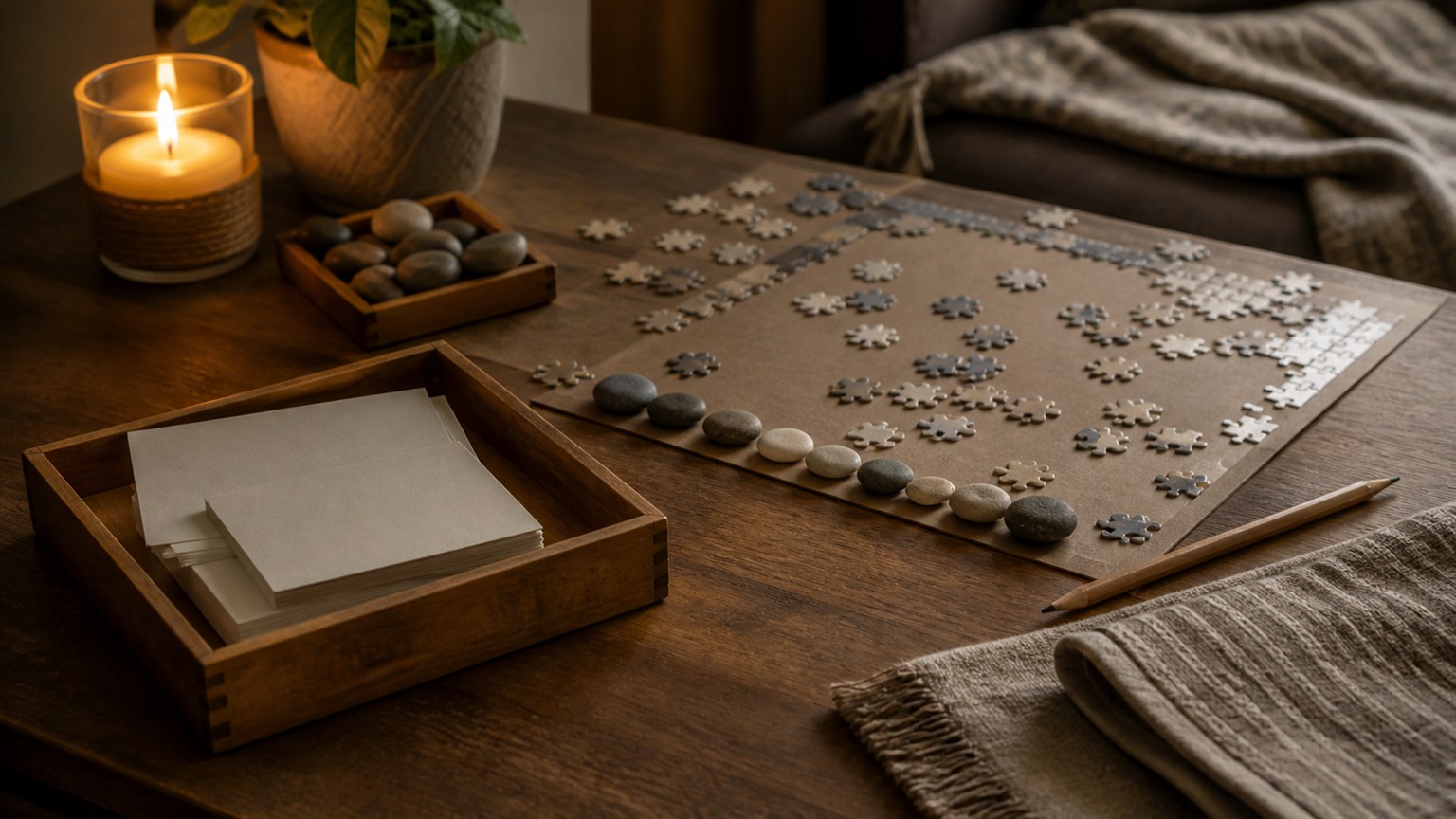
Visible progress helps habits stick. A completed grid, a marked page, a growing jigsaw border, or a tray of solved mechanical states gives the brain evidence that time spent mattered. The feedback does not need to be public.
Progress markers should support confidence, not pressure. If tracking starts to feel like surveillance, simplify it. A single check mark may be enough.
Reduce Choice Overload
Too many puzzle options can make the habit harder. If every day begins with searching for the perfect puzzle, starting becomes a task of its own. Keep a short menu ready: one quick option, one standard option, and one deeper option.
This small menu preserves freedom without creating decision fatigue. The solver can match energy while staying inside the routine.
Protect the Ending
How a puzzle session ends affects whether the solver wants to return. Ending in anger, exhaustion, or shame makes tomorrow harder. Ending with a note, a saved state, or a small success creates a doorway back.
For hard puzzles, stop at a useful pause: after identifying the next question, organizing pieces, or writing a clue to yourself. Future-you will thank you.
Let the Habit Change Seasons
A daily puzzle habit may look different in summer, winter, school months, travel weeks, or busy work periods. A routine that sticks is allowed to change size. The cue may stay while the format adjusts.
Seasonal flexibility prevents false failure. The habit is the return to puzzle attention, not one exact ritual repeated forever.
Use Environment Before Willpower
Environment beats willpower more often than people expect. Put the puzzle where the cue happens. Keep the pencil with the book. Leave the jigsaw tray ready. Make the desired action easier than the distraction.
A well-shaped environment makes the habit feel less like a debate. The puzzle is simply there, waiting at the right moment.
Decide What Counts
A habit needs a clear definition of done. Does one clue count? Does ten minutes count? Does setting up the puzzle count on a chaotic day? Decide in advance so the tired version of you does not have to negotiate.
A clear standard also protects against perfectionism. The habit can be small and still real.
Pair Challenge With Comfort
Comfort helps the brain approach challenge. A favorite chair, warm drink, quiet playlist, or clean table can make daily puzzle time feel like a reward instead of an obligation.
This comfort does not make the habit unserious. It makes the serious part sustainable. People return to rituals that feel good to inhabit.
Build a Recovery Script
A recovery script is a sentence you use after missing a day: yesterday was full, today I do the small version. That line prevents the mind from turning one miss into a dramatic story.
The script works because it is decided before discouragement arrives. It gives the habit a bridge back.
Use Identity Gently
Identity can help a habit stick when it is gentle. Saying I am someone who returns to puzzles is more useful than saying I must never miss. The first identity is flexible. The second is brittle.
A gentle identity makes recovery easier. It invites the next solve instead of judging the last miss.
Plan for Travel and Disruption
Travel breaks many routines because the cue disappears. A sticky puzzle habit has a travel version: a small book, offline app, folded printout, or tiny mechanical puzzle. The travel version should be lighter than the home version.
The point is continuity, not full performance. A small solve on the road keeps the habit familiar until normal conditions return.
Avoid the Upgrade Trap
It is tempting to respond to a new habit by buying many puzzle books, apps, tools, and accessories. Too much upgrading can become a substitute for solving. The routine needs action more than gear.
Start with one reliable source. Add variety only when the habit is already stable or genuinely stale.
Use Rewards That Do Not Replace the Puzzle
Rewards can help, but they should not make the puzzle feel like a chore endured for a prize. The best reward is often built into the ritual: a pleasant drink, a quiet chair, a check mark, or the satisfaction of stopping at a clean point.
When the reward supports the experience, the habit remains centered on solving.
Let Hard Puzzles Have Parking Lots
A parking lot is a place to keep puzzles that are too hard for today but still interesting. Instead of abandoning them or letting them poison the daily routine, set them aside for a longer session.
This protects daily consistency. The hard puzzle remains respected, but it does not block the habit's doorway.
Use a Starting Ritual
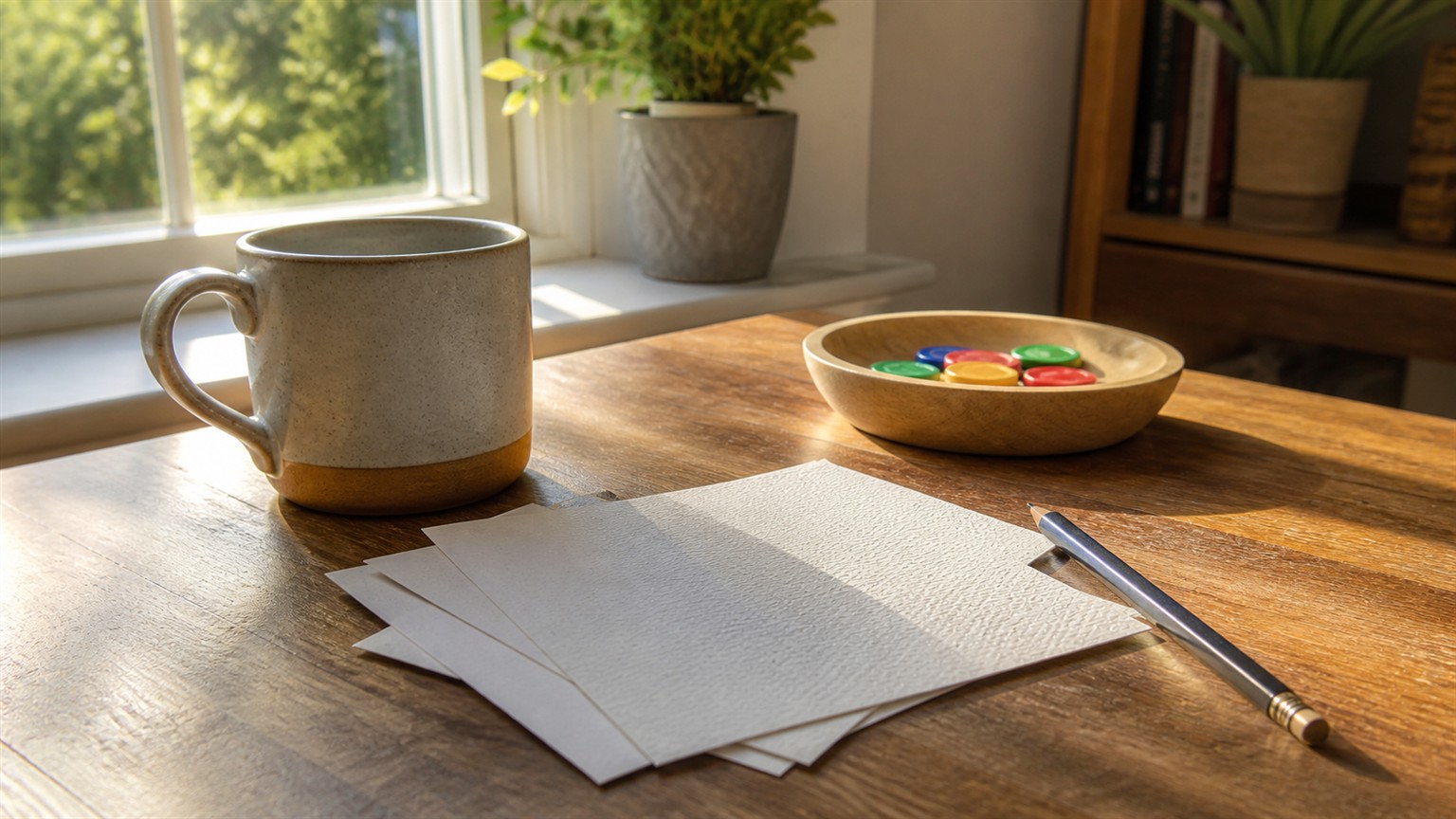
A starting ritual signals that the mind is entering puzzle mode. It might be clearing the table, sharpening a pencil, turning over a blank card, opening the same book, or setting a mug beside the puzzle. The ritual should be small and repeatable.
Over time, the ritual reduces resistance. The body begins to recognize the sequence before motivation has to speak.
Let the Habit Be Private Enough
Some habits thrive in public, but others need privacy. If sharing scores makes the puzzle feel performative, keep the routine personal. A private habit can be more honest because it does not need to impress anyone.
Privacy also makes experimentation easier. The solver can try harder puzzles, fail, use hints, or stop early without turning the session into a report.
Design a Pleasant Stopping Point
A sticky habit needs a good stopping point. Stop after one completed puzzle, one section, one useful clue, or one clear note about where to resume. Ending deliberately makes tomorrow easier.
Stopping in a state of total confusion can create avoidance. If the puzzle is unsolved, leave future-you a breadcrumb.
Use Variety as Maintenance
Variety is not only for boredom. It can maintain the habit by giving different kinds of energy somewhere to go. A restless day might need a physical puzzle. A quiet day might fit a crossword. A sharp day might welcome deduction.
This flexibility makes the routine feel responsive rather than rigid. The habit remains daily, but the doorway can change.
Measure Return More Than Perfection
The most meaningful habit metric is not the longest perfect streak. It is how quickly and kindly the solver returns after disruption. Return is the skill that keeps a routine alive across months and years.
When return becomes normal, missed days lose their power. The puzzle habit becomes part of life rather than a fragile performance.
Create a Two-Minute Entry
A two-minute entry makes the habit resilient. Commit to opening the puzzle, reading the first clue, sorting the first handful of pieces, or setting up the board. After two minutes, continuing is optional.
This approach works because starting is often the true obstacle. Once the puzzle is open, curiosity may carry the session further.
Use Hints Without Breaking the Habit
Hints can protect a daily habit when used thoughtfully. A small hint may keep a puzzle from turning into a wall that blocks tomorrow's session. The aim is not to avoid effort, but to keep effort productive.
Decide hint rules in advance. For example, allow one hint after ten focused minutes or when frustration replaces curiosity.
Keep the Habit Emotionally Lightweight
A sticky habit should not require a dramatic mood. The solver should be able to begin while tired, distracted, or only mildly interested. That is why the first step and minimum standard matter so much.
When a routine is emotionally lightweight, it can survive ordinary life. It does not need inspiration every day.
Make the Habit Easy to Protect
A habit that matters deserves a little protection. Tell family when the puzzle window is, silence the loudest distractions, or make the session short enough that it does not compete with the whole evening. Protected does not mean rigid; it means noticed.
Let Success Feel Ordinary
The habit has truly started to stick when success feels ordinary. You solve, pause, return, miss, restart, and keep going without turning every day into a verdict. That ordinary rhythm is the quiet win.
Conclusion: Build for Return
A daily puzzle habit sticks when it is designed for return. The cue is clear, the start is small, the standard is kind, and missed days are handled without drama.
Choose a puzzle routine that feels pleasant enough to repeat and flexible enough to survive real life. That is how a small daily solve becomes a lasting practice.