The Best Daily Puzzle Is the One You Return To
A daily puzzle challenge works only if it fits real life. The perfect puzzle on paper may fail if it takes too long, feels too punishing, or requires more setup than the day can bear. The best daily challenges have a clear start, a satisfying finish, and enough variety to keep attention fresh. They turn puzzle solving into a small reliable ritual rather than a dramatic test of willpower. Consistency grows when the routine feels chosen, manageable, and worth protecting.
A: The one that fits your schedule, mood, and skill goal well enough to repeat.
A: Ten to twenty minutes is enough for many routines.
A: Only if it motivates without creating anxiety.
A: Resume the next day without turning one miss into a story of failure.
A: Yes, especially for momentum, relaxation, and habit maintenance.
A: Two or three is often enough to create variety without chaos.
A: A stable cue helps, but flexibility keeps the habit humane.
A: They can support regular focused practice when distractions are reduced.
A: Starting with puzzles so hard that the routine feels punishing.
A: Rotate formats, vary difficulty, and review what still feels engaging.
Start With a Small Promise
Daily routines fail when the promise is too grand. A person decides to solve an hour of difficult puzzles every morning, misses two days, and decides the whole habit is broken. A smaller promise is sturdier: one puzzle, ten minutes, or one focused attempt.
A small promise also lowers the emotional cost of starting. The hardest part of a daily habit is often opening the puzzle. Once the session begins, the mind usually settles into the task.
Choose a Format That Fits the Day
Morning puzzle practice may favor clear, short formats such as mini crosswords, Sudoku, or word games. Evening practice may favor slower jigsaws, visual puzzles, or mechanical objects. A lunch break may need something that can be completed without spreading pieces across a table.
The best daily challenge matches the day instead of fighting it. If the routine requires ideal conditions, it will not survive ordinary weeks.
Use Difficulty as a Dial
Difficulty should be adjustable. Some days call for a gentle puzzle that keeps the ritual alive. Other days can handle deeper challenge. Treat difficulty as a dial rather than a moral test.
This is especially important for long-term consistency. A routine that allows easy days can continue through stress, travel, illness, and busy seasons. Hard days remain available, but they do not own the habit.
Keep Supplies Ready
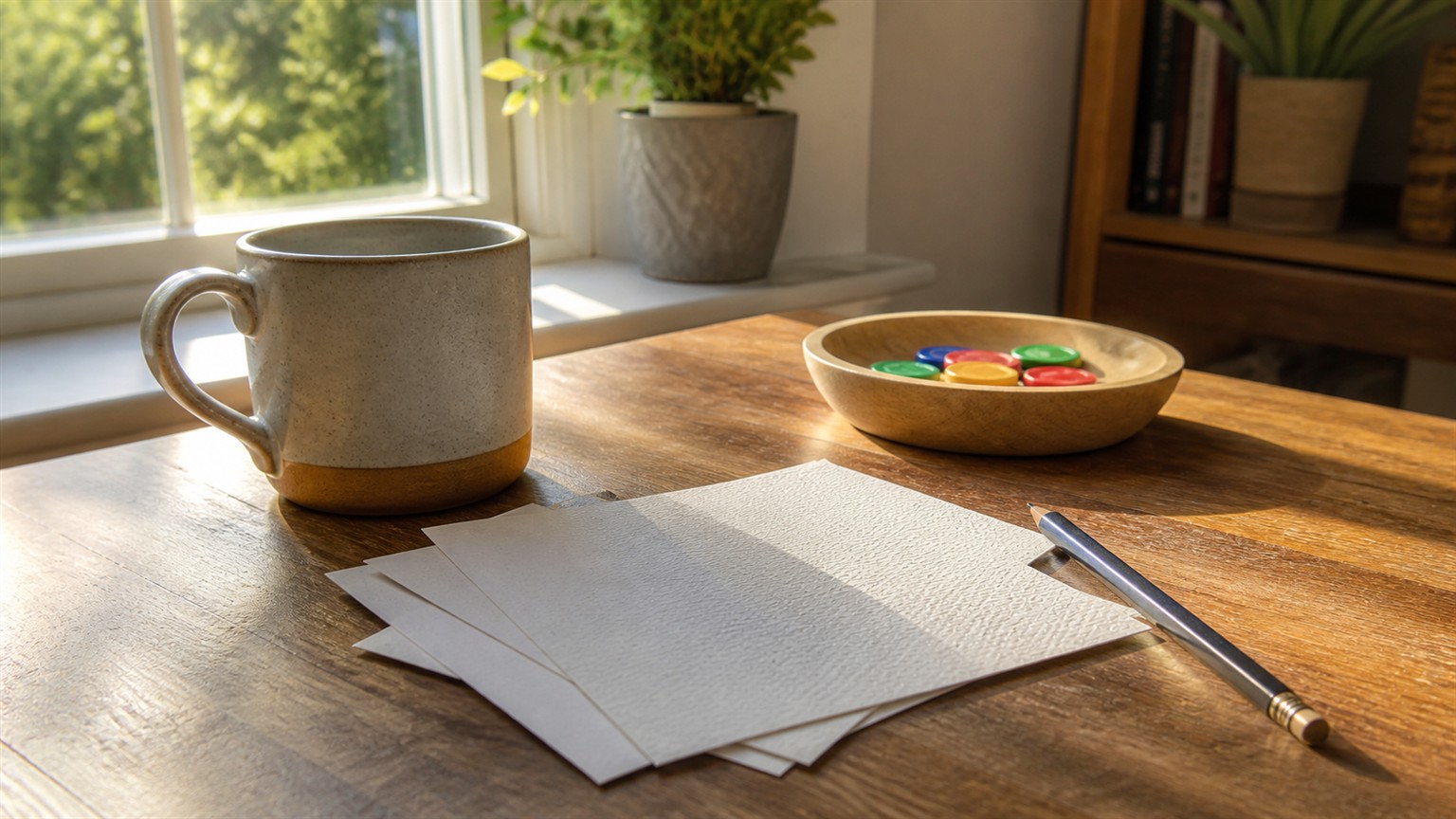
Physical friction matters. If the pencil is missing, the app is buried, the book is in another room, or the jigsaw table is cluttered, the routine becomes easier to skip. Keep daily puzzle materials visible and ready.
A small tray, bookmark, dedicated notebook, or home-screen folder can become the ritual's doorway. The less effort it takes to begin, the more likely the habit is to happen.
Track Lightly
Tracking can help a routine feel real, but too much tracking can turn puzzle time into administration. A simple mark, date, or short note is enough for most people. The goal is awareness, not surveillance.
Useful notes might include puzzle type, difficulty, mood, and one strategy that helped. Over time, those notes reveal which formats actually support consistency.
Rotate Without Scattering
Variety keeps daily challenges interesting, but too many choices can create decision fatigue. A strong routine might rotate between two familiar formats and one occasional novelty. That is enough variety to refresh attention without making every day a new setup problem.
Rotation also supports broader skill practice. Word puzzles, number puzzles, visual puzzles, and logic puzzles ask for different kinds of attention. The mix can be simple and still balanced.
Make Missed Days Boring
A missed day should be emotionally boring. It should not become evidence that the habit failed or that the solver lacks discipline. Life interrupts routines. The best response is to return without ceremony.
This mindset protects consistency better than perfectionism. A routine built on returning can last for years; a routine built on never missing often collapses at the first disruption.
Use Social Sharing Carefully
Sharing daily results can add fun and accountability, but it can also turn a private ritual into comparison. Some solvers enjoy posting scores. Others lose interest when the puzzle becomes public performance.
Choose social sharing based on how it affects the habit. If it makes solving more joyful, keep it. If it creates pressure or embarrassment, let the puzzle stay private.
Review the Routine Monthly
Once a month, ask whether the routine still works. Is the puzzle too easy, too long, too repetitive, or too stressful? Has the goal changed? Does the session still fit the day?
A monthly review prevents quiet drift. The habit can evolve before boredom or resentment takes over.
Match the Challenge to the Cue
A morning cue may support a sharper puzzle because the mind is fresh. An evening cue may need something gentler. A lunch cue may need a puzzle that stops cleanly. Matching challenge to cue makes the routine feel natural.
If the cue and puzzle clash, the habit feels heavier than it should. Adjust the format before blaming discipline.
Use a Weekly Theme
A weekly theme can add variety without daily decision-making. One week might focus on word puzzles, another on visual attention, and another on logic. The theme gives the routine a shape while leaving room for easy and hard days.
Themes are especially useful for solvers who get bored quickly. They create novelty at the weekly level, while each day still has a clear place to begin.
Protect Puzzle Time From Multitasking
Daily puzzles work better when they are given full attention, even briefly. Solving while half-watching a show or checking messages may keep the streak alive, but it weakens the quality of the practice.
A short focused session is often enough. Put the phone aside, close extra tabs, and let the puzzle be the one thing happening for a few minutes.
Let the Routine Have Seasons
A daily challenge can shrink during busy weeks and grow during calmer ones. The routine's identity does not depend on one fixed length. It depends on returning to a puzzle with attention.
Seasonal thinking keeps the habit flexible. The solver can keep the thread alive even when life changes.
Use a Default Puzzle Source
A daily routine benefits from a default source. It might be a newspaper, a book, a puzzle app, a printed stack, or a box on the table. The source removes one decision from the day.
The default does not need to be permanent. It simply gives the habit a home. If the source stops working, change it during review rather than every morning.
Design for Low-Energy Days
Low-energy days reveal whether a routine is realistic. A good daily puzzle plan includes an easy version that still counts: one mini puzzle, five minutes of sorting, or a single clue attempt. This keeps the identity of the habit alive.
The easy version should be chosen before it is needed. When fatigue arrives, the solver should not have to invent a smaller routine from scratch.
Use Difficulty Labels Skeptically
Difficulty labels are helpful, but they are not universal. One source's easy may be another source's medium. A puzzle may also be difficult for one person because of vocabulary, visual clutter, time pressure, or unfamiliar rules.
Track how the puzzle feels to you. Personal difficulty is the one that determines whether the habit continues.
Make the Ritual Pleasant
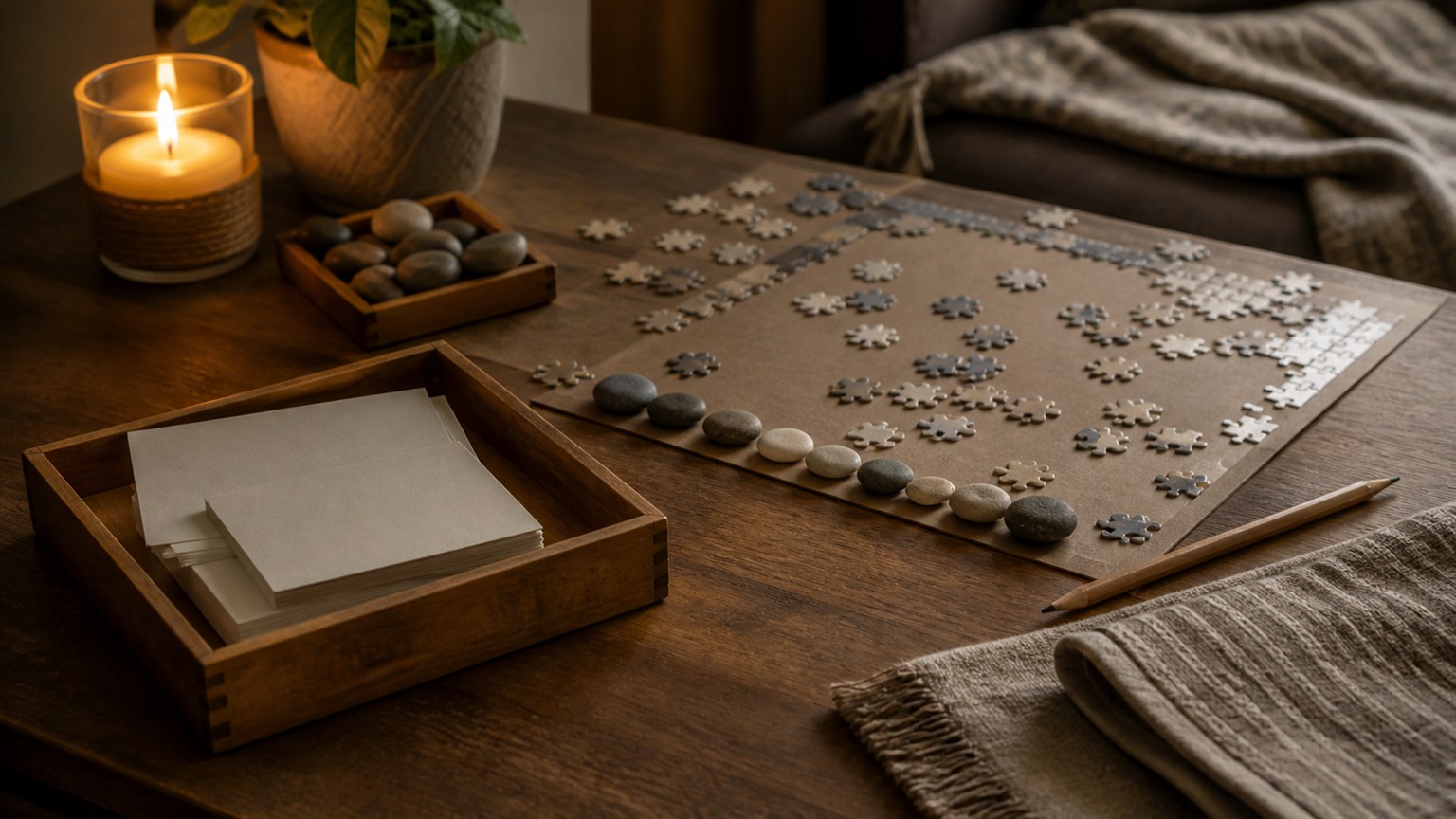
A consistent routine is easier when the surrounding ritual feels pleasant. Light, seating, drink, silence, music, or a tidy table can all shape the willingness to begin. The puzzle is the center, but the setting is the invitation.
This is not decoration. It is habit design. People return to moments that feel good to enter.
Keep Weekend Depth Separate
Daily practice and deep practice do different jobs. A daily challenge keeps contact with puzzles alive. A weekend session can handle bigger jigsaws, harder logic sets, or longer mechanical challenges. Separating the two prevents daily practice from becoming too heavy.
The weekday routine can stay small because depth has another place to live.
Choose a Challenge That Ends Cleanly
Daily challenges need clean endings. A puzzle that can be finished, paused, or clearly saved helps the mind close the session. Without an ending, the routine can feel blurry and unsatisfying.
Clean endings are especially useful on busy days. The solver can complete the ritual and return to life without feeling that the puzzle is nagging from the edge of attention.
Use Backups for Broken Days
A backup puzzle protects consistency when the normal routine is impossible. It might be a tiny crossword, a single riddle, a pocket puzzle, or one jigsaw sorting task. The backup should be so easy to start that it feels almost frictionless.
Backups are not lesser habits. They are continuity tools. They keep the daily thread intact until the fuller routine returns.
Avoid Turning the Routine Into a Scoreboard
Scores, times, and streaks can motivate, but they can also narrow the experience. If the daily puzzle becomes only a number, the solver may stop noticing strategy, mood, or enjoyment. That is a loss.
Use metrics lightly. Let them serve the habit, not define the solver. A slower solve can still be a better session if attention was deeper and frustration was lower.
Let Different Skills Take Turns
A balanced daily routine can let skills take turns across the week. Word recall one day, spatial comparison another, deduction on the next, and relaxed scanning after that. This keeps the mind engaged without demanding a massive daily commitment.
The rotation does not have to be perfectly planned. It only needs enough intention to prevent the same habit from becoming automatic.
Make the Routine Easy to Restart
A routine that sticks is easy to restart. Keep the source visible, the next puzzle obvious, and the minimum standard small. If the habit disappears for a week, the return should still be simple.
This restart design is the quiet secret of consistency. The habit does not need to be unbreakable. It needs to be repairable.
Choose One Main Win
A daily routine works better when each session has one main win. The win might be completion, calm focus, a strategy note, or simply beginning on time. Too many goals make the routine feel crowded.
Naming one win also makes progress easier to notice. The solver knows what mattered today.
Use Physical and Digital Strengths Differently
Digital daily puzzles are convenient, portable, and easy to track. Physical daily puzzles feel tactile, visible, and less tied to notifications. A strong routine can use either or both depending on the season of life.
The key is choosing intentionally. Convenience should not become distraction, and tactile charm should not become setup friction.
Let Solving Be Enough
Not every daily puzzle needs to become self-improvement. Some days, the puzzle can simply be a pleasant focused activity. That enjoyment is not a lesser outcome.
When solving is allowed to be enough, the habit has more emotional room to last.
Keep a Visible Next Step
A daily routine is easier when tomorrow's puzzle is already obvious. Leave the book open to the next page, keep the tray set, or bookmark the next digital challenge. A visible next step shortens the distance between intention and action.
Conclusion: Repeatable Beats Impressive
The best daily puzzle challenge is repeatable before it is impressive. It fits the day, offers a clear finish, and leaves the solver willing to return tomorrow.
Build the routine around a small promise, flexible difficulty, and formats you genuinely like. Consistency is not built by heroic effort. It is built by making the next solve easy to begin.