Local Puzzle Groups Make Solving Less Solitary
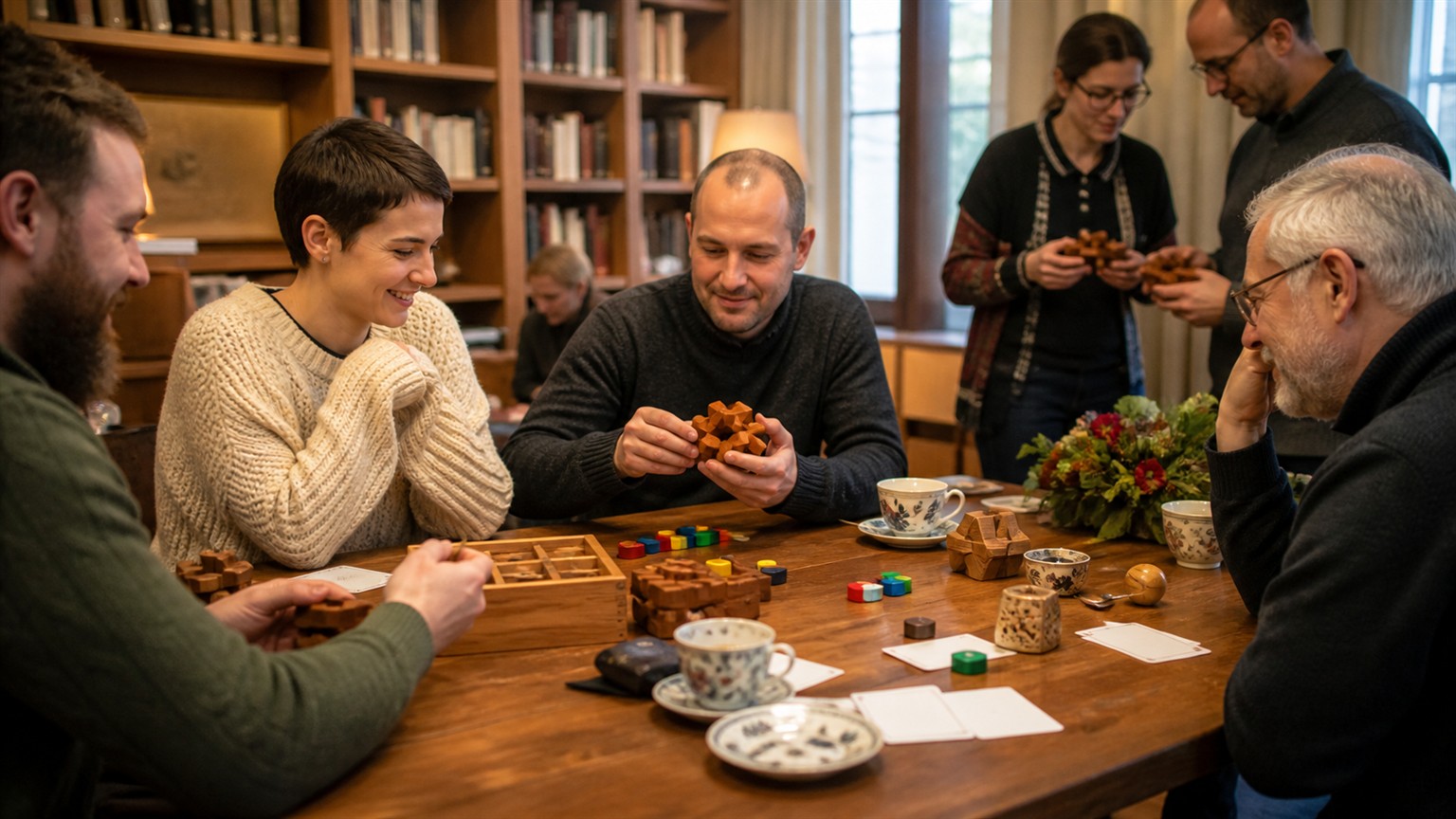
Finding local puzzle groups and meetups near you can turn a private hobby into a community. Many puzzle fans solve alone for years before realizing that nearby people also love crosswords, jigsaws, mechanical puzzles, puzzle hunts, escape rooms, board games, or logic challenges. A good local group offers more than events. It offers shared language, recommendations, encouragement, and the pleasure of sitting with people who understand why a clever clue or satisfying mechanism can brighten an entire day.
A: Identify the goal, list the given information, and look for the clearest constraint.
A: Testing is useful; unsupported guessing is usually less helpful than narrowing possibilities.
A: Use one after you have tried several fair approaches and no longer have a testable idea.
A: The answer should make earlier clues feel purposeful once explained.
A: Change methods: sort, draw, reread, explain aloud, or step away briefly.
A: Not always. The best puzzle is the one whose difficulty fits the solver and setting.
A: Teams combine observation, memory, organization, and different puzzle habits.
A: Clear goals, fair constraints, useful feedback, and an earned breakthrough.
A: They can practice specific skills, especially when the challenge is varied and sustained.
A: Notice which clues mattered, which assumptions failed, and which method helped most.
Start With Existing Community Spaces
Libraries, board game cafes, game stores, community centers, schools, universities, and escape room venues are natural places to look for puzzle people. Even if they do not host a puzzle meetup yet, they may know who does.
Ask directly. A librarian may know a crossword group. An escape room owner may know local enthusiasts. A game store may have customers who enjoy puzzle-heavy games but have never called themselves a puzzle group.
Search by Puzzle Type
General searches for puzzle meetup may miss groups that use more specific labels. Try crossword club, jigsaw night, puzzle hunt team, mechanical puzzle group, escape room meetup, Sudoku club, board game logic night, or brain teaser group. Different communities name themselves differently.
This is especially useful in larger cities where puzzle interests split into subcultures. The group you want may exist under a narrower name.
Use Online Platforms Carefully
Social platforms, local forums, event apps, and group calendars can reveal nearby meetups. Read descriptions for tone, cost, location, and beginner welcome. A group with clear norms is often easier to join than one that assumes everyone already knows the culture.
Be mindful of safety when meeting people from online spaces. Choose public venues for first meetings and let ordinary caution coexist with enthusiasm.
Evaluate Culture Before Committing
A good puzzle group should make newcomers feel oriented rather than tested. Members can be skilled without being dismissive. Organizers can maintain standards without making beginners feel like intruders.
Notice how questions are handled. If people explain kindly, share materials, and respect different skill levels, the group is more likely to become a lasting fit.
Bring Something Easy to Share
For a first meetup, bring a simple puzzle that can be explained quickly. A small mechanical puzzle, a few riddles, a printed logic problem, or a compact co-op game can start conversation without taking over the event.
Avoid bringing a fragile or spoiler-heavy object unless you already know the group norms. First meetings are about connection, not proving the most impressive collection.
Respect Spoiler Norms
Puzzle groups often include people at different stages of solving. A solution that feels old to one person may be a future delight for another. Ask before revealing mechanisms, answers, hunt paths, or escape room details.
Good spoiler etiquette builds trust quickly. It shows that you value other people's discoveries as much as your own.
If No Group Exists, Start Tiny
Starting a local puzzle group does not require a convention. Begin with one small event: a library table, cafe meetup, jigsaw evening, bring-one-puzzle night, or escape room outing. Invite a few people and keep expectations modest.
Consistency matters more than scale. A monthly gathering with six kind people can be more valuable than a large event that happens once and vanishes.
Make the Group Welcoming by Design
Welcoming groups do not rely on friendliness alone. They explain what to bring, how long the event lasts, whether beginners are welcome, what costs exist, and how spoilers are handled. Clear structure lowers the courage required to attend.
If hosting, prepare a few entry-level puzzles and a way for late arrivals to join. Small design choices make the room easier to enter.
Let Online and Local Support Each Other
Some groups thrive as hybrids. Online spaces handle scheduling, recommendations, and follow-up, while local meetups provide the table time. This combination helps people stay connected between events.
A simple group chat or mailing list can keep momentum alive. It also gives shy members a lower-pressure way to participate.
Ask Adjacent Hobby Groups
Puzzle people often gather under adjacent hobbies. Board gamers, escape room fans, speedcubers, crossword solvers, math circles, makers, and library groups may all contain potential puzzle meetup members. If a puzzle-specific group does not appear, search nearby interests.
This wider search is especially useful in smaller cities. The puzzle community may exist, but not under the exact label you expected.
Make First Contact Easy
If you are joining a group, send a short message: I am new, I like these puzzle types, is this event beginner-friendly? A good organizer will answer the practical details and help you know what to expect.
If you are hosting, make first contact easy for others. Publish the time, place, cost, beginner level, and what people should bring. Clear invitations reduce hesitation.
Build Trust With Consistency
Local groups grow through consistency. A monthly meetup at the same place may build more trust than scattered ambitious events. People are more likely to try a new group when they know it will happen again.
Consistency also helps shy members. They may watch for a while before attending. A reliable schedule gives them repeated chances to join.
Mix Puzzle Types Deliberately
A local group can welcome more people by mixing puzzle types. One table can hold jigsaws, another small mechanical puzzles, another printed logic puzzles, and another cooperative games. Variety lets members find their comfort zone.
The mix should not become chaotic. A simple event structure helps people understand where to sit and how to participate.
When to Move From Attendee to Organizer
If you keep wishing a certain local puzzle event existed, that may be the signal to organize it. Start smaller than your dream version. One table, one hour, one puzzle type, and a clear invitation can be enough.
Organizing is also a puzzle. You are designing an experience where people can find each other.
Online Groups Can Lead to Local Tables
A local group may begin online before it becomes a table. A small chat for sharing puzzle recommendations can eventually lead to a library meetup, cafe night, or escape room outing. Community does not have to start fully formed.
If starting online, keep the invitation specific. Name the city, puzzle interests, and a possible first low-pressure event. Specificity helps strangers imagine joining.
Choose Venues That Match the Puzzle
A jigsaw group needs table space and time. A mechanical puzzle group needs good lighting and safe surfaces. A crossword group may need quiet. A social puzzle-game meetup may need flexible seating. Venue choice shapes the group's behavior.
Do not choose only by availability. Choose a space that supports the kind of puzzling you want people to do.
Welcoming Language Matters
The words used in an event listing can either invite or intimidate. Beginner-friendly, no experience needed, bring a puzzle if you like, and drop in anytime all lower the barrier. Expert-only language should be used only when that is truly the event's purpose.
A welcoming listing does not have to be long. It has to answer the anxious newcomer's basic question: will I be out of place?
Shared Ownership Keeps Groups Alive
Local groups last longer when responsibility is shared. One person can start the meetup, but others can bring puzzles, suggest venues, greet newcomers, manage messages, or host occasional themed nights.
Shared ownership prevents burnout. It also makes the group feel like a community rather than an audience for one organizer.
Let the Group's Identity Emerge
A new puzzle group may not know its identity immediately. It might begin as a general meetup and gradually lean toward hunts, jigsaws, mechanical puzzles, or family events. Let that identity emerge from attendance and enthusiasm.
The organizer's job is to notice what creates energy and make more room for it.
Make Attendance Low Commitment
People are more likely to try a new group when the first step is low commitment. A drop-in hour, free library table, casual cafe night, or bring-optional format feels easier than a paid multi-hour event with unclear expectations.
Once trust builds, the group can add deeper events. Start with a doorway, not a maze.
Use Themes to Keep Momentum
Local groups can stay fresh with light themes: word puzzle night, jigsaw swap, mechanical puzzle show-and-tell, escape room planning, beginner logic evening, or cooperative game night. Themes give regulars novelty and newcomers a reason to choose a date.
Keep themes broad enough that people can participate without owning special equipment. Accessibility of entry matters.
Handle Skill Differences Kindly
Skill differences are normal in puzzle groups. Experienced solvers should avoid taking over, and beginners should not be made to feel slow. Mixed tables work best when puzzles are chosen for participation, not only difficulty.
A group culture that values explanation and curiosity will keep more members than one that values showing off.
Know When to Split Tables
As a group grows, splitting tables can improve the experience. One table might solve quietly, another teach beginners, another handle mechanical puzzles, and another plan escape room outings. Split tables let people choose the kind of energy they want.
The split should remain porous. Members can move, observe, and try something new without feeling locked into a category.
Sustain the Group With Small Rituals
Small rituals help local groups feel real: a welcome round, puzzle of the month, shared recommendation list, end-of-night photo without spoilers, or a quick announcement of the next date. Rituals create continuity.
Continuity is what turns a meetup into a community. People come back when they know what kind of warmth and structure to expect.
Partner With Existing Venues
If starting a group, partner with a venue that already gathers curious people. Libraries, cafes, game stores, schools, and community centers may help with space, calendars, and promotion. A venue gives the meetup legitimacy and a predictable home.
The partnership should be simple at first. One table on one recurring date is enough to test interest.
Create a Beginner Path
A local group grows when beginners know where to enter. Offer easy puzzles, explain spoiler norms, pair new attendees with welcoming regulars, and avoid making the first event a high-pressure competition.
A beginner path does not weaken the group. It keeps the community alive by helping new people become regulars.
Notice Who Returns
The shape of a local group is revealed by who returns. If people come back for jigsaws, make more jigsaw space. If they return for escape room planning, build that thread. If they love mechanical show-and-tell, give it a recurring slot.
Sustainable groups listen to attendance. The community votes with its feet, quietly and honestly.
Conclusion: Find the People Who Make You Want to Solve More
Local puzzle groups make solving less solitary by turning private curiosity into shared practice. The right group offers recommendations, encouragement, etiquette, and a place to be happily understood.
Search broadly, attend gently, respect norms, and consider starting small if nothing exists nearby. The best sign of success is simple: you leave wanting to solve more, and with people you want to see again.