Puzzle Events Turn Private Fascination Into Shared Culture
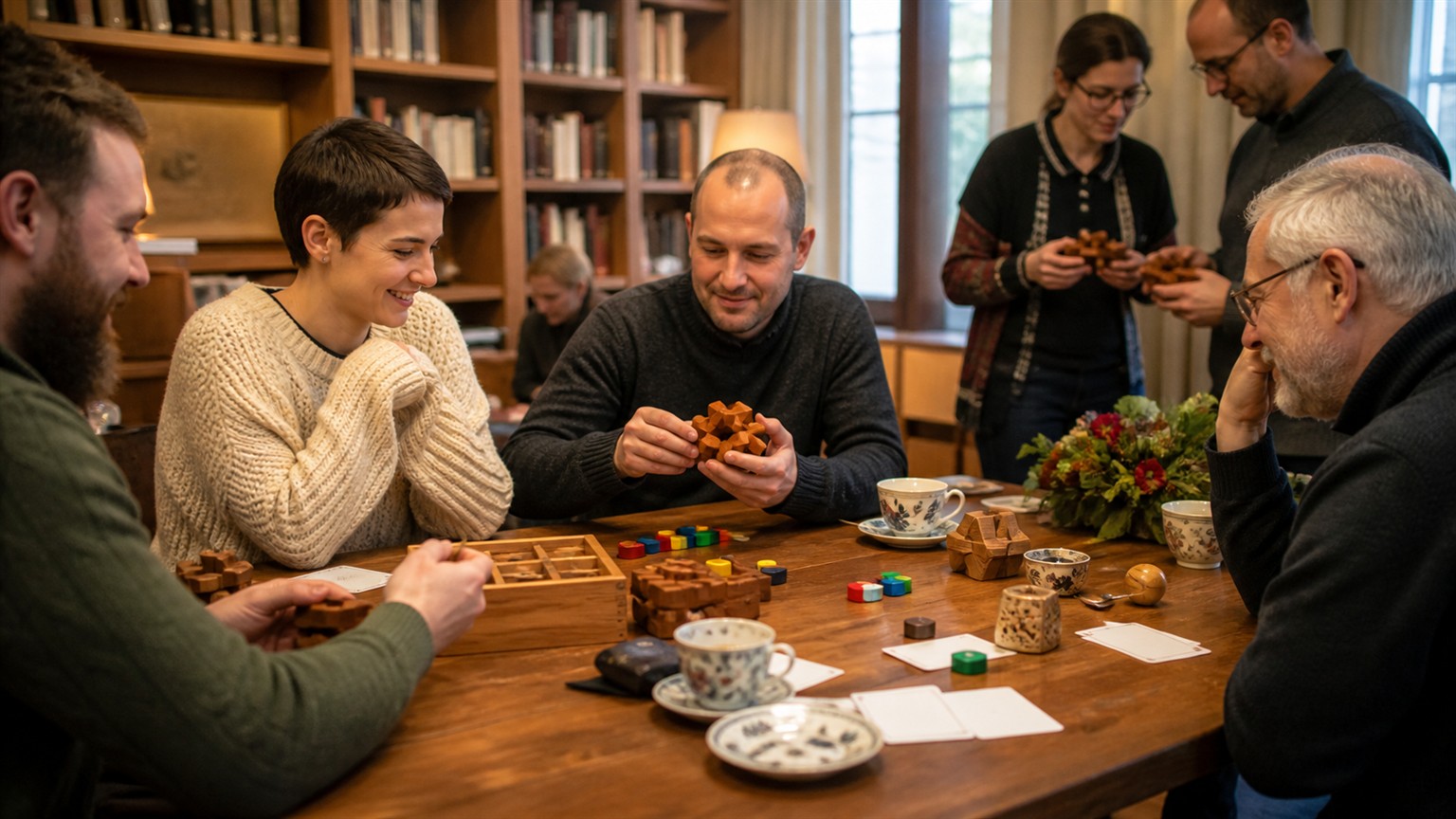
The best puzzle events and conventions around the world give puzzle fans something the home table cannot: a room full of people who understand the obsession. Events may include competitions, lectures, workshops, puzzle hunts, collector exchanges, escape room meetups, mechanical puzzle exhibitions, crossword tournaments, and casual play spaces. What makes an event great is not only the schedule. It is the feeling that curiosity is welcome and that every table might lead to a new puzzle, a new friend, or a new way of thinking.
A: Identify the goal, list the given information, and look for the clearest constraint.
A: Testing is useful; unsupported guessing is usually less helpful than narrowing possibilities.
A: Use one after you have tried several fair approaches and no longer have a testable idea.
A: The answer should make earlier clues feel purposeful once explained.
A: Change methods: sort, draw, reread, explain aloud, or step away briefly.
A: Not always. The best puzzle is the one whose difficulty fits the solver and setting.
A: Teams combine observation, memory, organization, and different puzzle habits.
A: Clear goals, fair constraints, useful feedback, and an earned breakthrough.
A: They can practice specific skills, especially when the challenge is varied and sustained.
A: Notice which clues mattered, which assumptions failed, and which method helped most.
Events Create Puzzle Density
At home, puzzle interests can feel scattered across books, apps, shelves, and online forums. A strong event compresses that world into one place. Tables of objects, scheduled talks, live competitions, and casual conversations create puzzle density.
That density is energizing because discovery becomes constant. A hallway conversation can lead to a new hunt team. A workshop can reveal a construction technique. A vendor table can introduce a puzzle type you had never considered.
Different Events Serve Different Solvers
A crossword tournament, puzzle hunt, mechanical puzzle gathering, and family puzzle festival all serve different needs. Some attendees want competition. Others want craft, community, collecting, teaching, or playful exploration. The best event for one person may be the wrong event for another.
Before traveling, name your purpose. Do you want to compete, learn, buy, meet people, test designs, or simply be surrounded by puzzles? The answer should shape the event you choose.
Beginner Friendliness Matters
A great event makes room for newcomers. Beginner divisions, casual tables, clear schedules, friendly volunteers, and workshops can make a specialized world feel open. Without that welcome, events can become intimidating even when the community is kind.
Beginners should look for events that explain how participation works. If every description assumes insider knowledge, the first trip may require extra preparation.
Workshops Can Be the Hidden Gem
Competitions and exhibitions often get attention, but workshops may provide the deepest value. Learning to write clues, design a hunt puzzle, solve a mechanical mechanism, or construct a fair logic challenge can change how attendees see the hobby.
A workshop turns admiration into skill. It gives participants something to practice after the event ends.
Collector Spaces Need Etiquette
Collector gatherings can display rare, delicate, or expensive puzzles. Etiquette matters. Ask before touching, twisting, opening, photographing, or discussing solutions. A rare puzzle may be playable only under specific conditions.
Respectful behavior builds trust. Puzzle collecting communities often rely on personal relationships, careful handling, and spoiler awareness.
Competitions Add Shared Energy
Live competitions create a special kind of energy. Solvers feel the clock, spectators feel the tension, and the room becomes attentive to progress. Even people who do not compete may enjoy watching skill become visible.
The best competitive events keep scoring clear and sportsmanship strong. A fair contest makes the whole community feel better.
Informal Time Is Not Empty Time
Some of the best event moments happen between scheduled sessions. A meal, hallway table, lobby solve, or late-night conversation can become the reason the trip was worthwhile. Overbooking can crowd out that possibility.
Leave gaps in the schedule. Puzzle events are social ecosystems, not only agendas.
Online Events Expand Access
Online events can connect solvers who cannot travel. Puzzle hunts, talks, livestreamed finals, Discord meetups, and remote workshops can build community across distance. They also reduce cost and accessibility barriers for many people.
Online formats have limits, especially for tactile puzzles and informal browsing. Still, they are an important part of the modern puzzle event world.
Planning the Trip
Plan practical details early: registration deadlines, hotel distance, transportation, accessibility, meals, quiet breaks, and luggage space. Puzzle events can be mentally intense, and travel logistics should not consume all available energy.
If purchases are likely, plan how to carry them safely. Mechanical puzzles, books, and handmade objects deserve protection on the trip home.
Events Reward Wandering
Puzzle events often reward a little wandering. The session you planned may be useful, but the table you stumble upon may be unforgettable. Leave room for unscheduled discovery.
This is especially true at conventions with exhibitions or swap areas. A casual demonstration can introduce an entire branch of puzzling you did not know existed.
How to Be a Good Attendee
Good attendees make events better. Arrive on time for scheduled sessions, respect spoiler rules, ask before handling objects, thank volunteers, and avoid monopolizing designers or collectors when others are waiting.
These manners keep the event generous. Puzzle communities thrive when enthusiasm is paired with care.
Choosing Between Big and Small Events
Large conventions offer variety, famous guests, and dense schedules. Smaller meetups offer intimacy, easier conversation, and less overwhelm. Neither is automatically better.
Choose based on your energy and goals. If you want breadth, go bigger. If you want connection and low-pressure learning, a smaller event may be ideal.
Budget Beyond Registration
Event costs include more than registration. Travel, lodging, meals, local transportation, puzzle purchases, shipping, and time away from work can matter. A realistic budget prevents stress from shadowing the trip.
It also helps with purchase decisions. Decide in advance whether you are browsing, collecting, or buying one special object.
Accessibility Should Be Checked Early
Puzzle events can involve crowded rooms, long walks, loud spaces, small objects, timed competitions, and dense schedules. Accessibility needs should be checked before registration when possible.
A strong event communicates access details clearly and responds to questions respectfully. That clarity helps more solvers participate.
Designers Should Attend Differently
Puzzle designers can attend events with a different lens. They can watch where solvers struggle, which explanations land, which objects attract hands, and which rules create confusion. Events offer live feedback that online comments rarely capture.
Designers should still respect the social space. Not every conversation needs to become user research. The best learning often comes from listening casually and noticing patterns.
Collectors Should Plan Their Priorities
Collectors can be overwhelmed by event abundance. Rare objects, limited editions, swaps, and informal sales can create pressure to buy quickly. A priority list helps: makers to meet, puzzle types to inspect, budget limits, and transportation constraints.
A good collecting trip leaves the attendee happy with what they chose, not haunted by every object they could not bring home.
Families Need Event Fit
Family-friendly puzzle events need more than a few easy puzzles. They need safe materials, flexible timing, patient facilitators, and space for children to participate without being shushed constantly. The best family events make curiosity feel welcome at every age.
Parents should check age guidance and session length before attending. A brilliant adult event may not be built for younger attention spans.
Remote Participation Has Its Own Etiquette
Online puzzle events still need etiquette. Respect spoiler channels, avoid posting answers in general chat, mute when appropriate, and remember that tone can be harder to read through text. Remote community is real community.
Good online etiquette makes events accessible and enjoyable for people who cannot travel.
After the Event, Capture the Sparks
The days after a puzzle event are a good time to capture ideas. Write down puzzles to try, people to contact, techniques to practice, and events to watch for next year. Otherwise, the inspiration can blur.
This follow-up turns event energy into ongoing hobby growth. The convention becomes a beginning rather than a closed weekend.
How to Choose Sessions
A dense schedule can make every session look essential. Choose a mix: one skill-building session, one community session, one exploratory session, and one open block. This gives the event structure without removing surprise.
If two sessions conflict, ask which one you could not reproduce later. A live workshop or rare demonstration may be worth more than a talk likely to appear online.
Meeting People Without Feeling Awkward
Puzzle events make conversation easier because the objects do some of the work. Ask what someone is solving, what event they recommend, or how they got into the hobby. Shared curiosity lowers the pressure of introduction.
You do not need to network aggressively. A few genuine conversations can be more valuable than collecting dozens of names.
Respecting Different Puzzle Cultures
Crossword solvers, speedcubers, mechanical collectors, hunt teams, escape room fans, and puzzle designers may all bring different norms. Some communities are highly spoiler-sensitive. Others are competition-focused. Others are workshop-oriented.
A good attendee observes before assuming. Ask how things are usually handled and follow the room's etiquette.
Bringing Ideas Home
After a convention, choose one idea to act on within a week. Try a new puzzle type, email a new contact, join a group, build a prototype, or register for a local event. Acting quickly keeps momentum from fading.
The goal is not to transform your whole hobby overnight. It is to let the event change one real thing.
Volunteer Energy Shapes Events
Many puzzle events depend on volunteers, organizers, constructors, judges, and community members who give enormous time. Attendees benefit from noticing that labor. Patience, gratitude, and helpfulness make the event better for everyone.
If you love an event, consider volunteering in a future year. It is one of the fastest ways to become part of the community rather than only a visitor.
Spoiler Management Is Community Care
Puzzle events often include hunts, unpublished puzzles, prototypes, and rare mechanisms. Spoiler management is not fussiness; it protects discovery. Use spoiler channels, ask before discussing solutions, and avoid photographing sensitive materials.
The more puzzle-dense the event, the more important this care becomes. A single careless reveal can affect many people's experience.
Choose One Social Goal
If meeting people feels intimidating, choose one small social goal. Ask one designer about their process, join one casual table, trade one recommendation, or introduce yourself to one organizer. One real connection is enough.
This keeps the event human-sized. You do not need to become instantly outgoing to belong.
Plan for Sensory Recovery
Puzzle events can be loud, crowded, and mentally dense. Even enthusiastic attendees may need quiet breaks. Schedule pauses for food, water, fresh air, or a quiet corner before fatigue turns into irritability.
Recovery time is not wasted event time. It helps the next session feel alive.
Follow Up While Names Are Fresh
After meeting someone interesting, follow up soon while the conversation is still clear. Send the promised link, puzzle recommendation, or thank-you note. Puzzle communities grow through these small continuations.
A convention contact becomes a real connection when the conversation survives the trip home. That follow-up is often where future teams, trades, and friendships begin.
Let One Event Lead to Another
A first puzzle event often points toward the next one. You may discover a local group, a regional tournament, an online hunt, or a workshop series that fits your interests better than the original trip.
This chain is part of the fun. Events expand the map of the hobby.
Conclusion: Go Where Curiosity Gets Company
The best puzzle events and conventions make curiosity social. They gather solvers, designers, collectors, teachers, competitors, and newcomers into a shared space where puzzles become culture.
Choose events that match your interests and leave room for surprise. The schedule matters, but the real value is often the person, puzzle, or idea you did not expect to find.