Sudoku for Beginners Is About Constraints, Scanning, and Calm Step-by-Step Reasoning
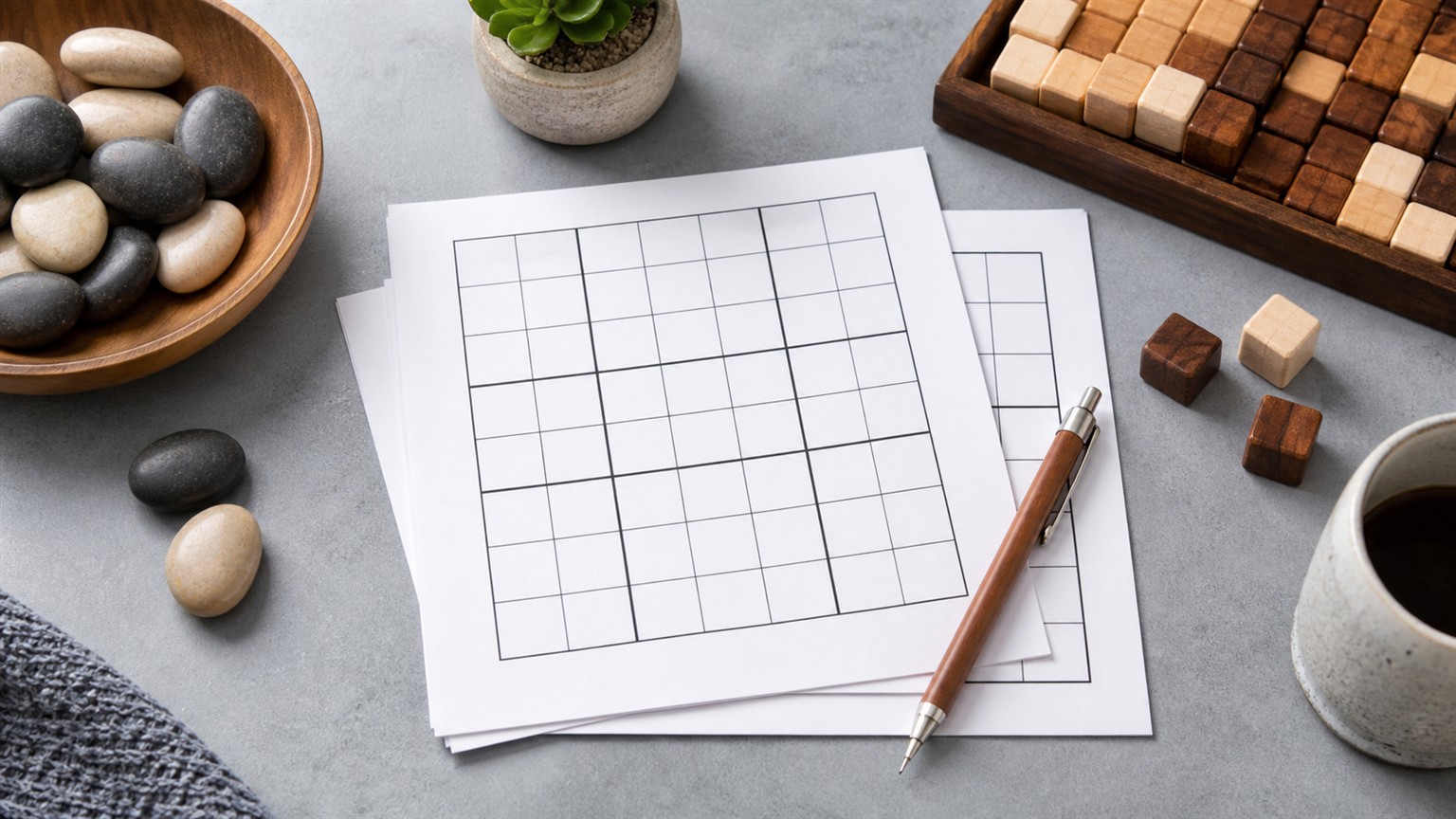
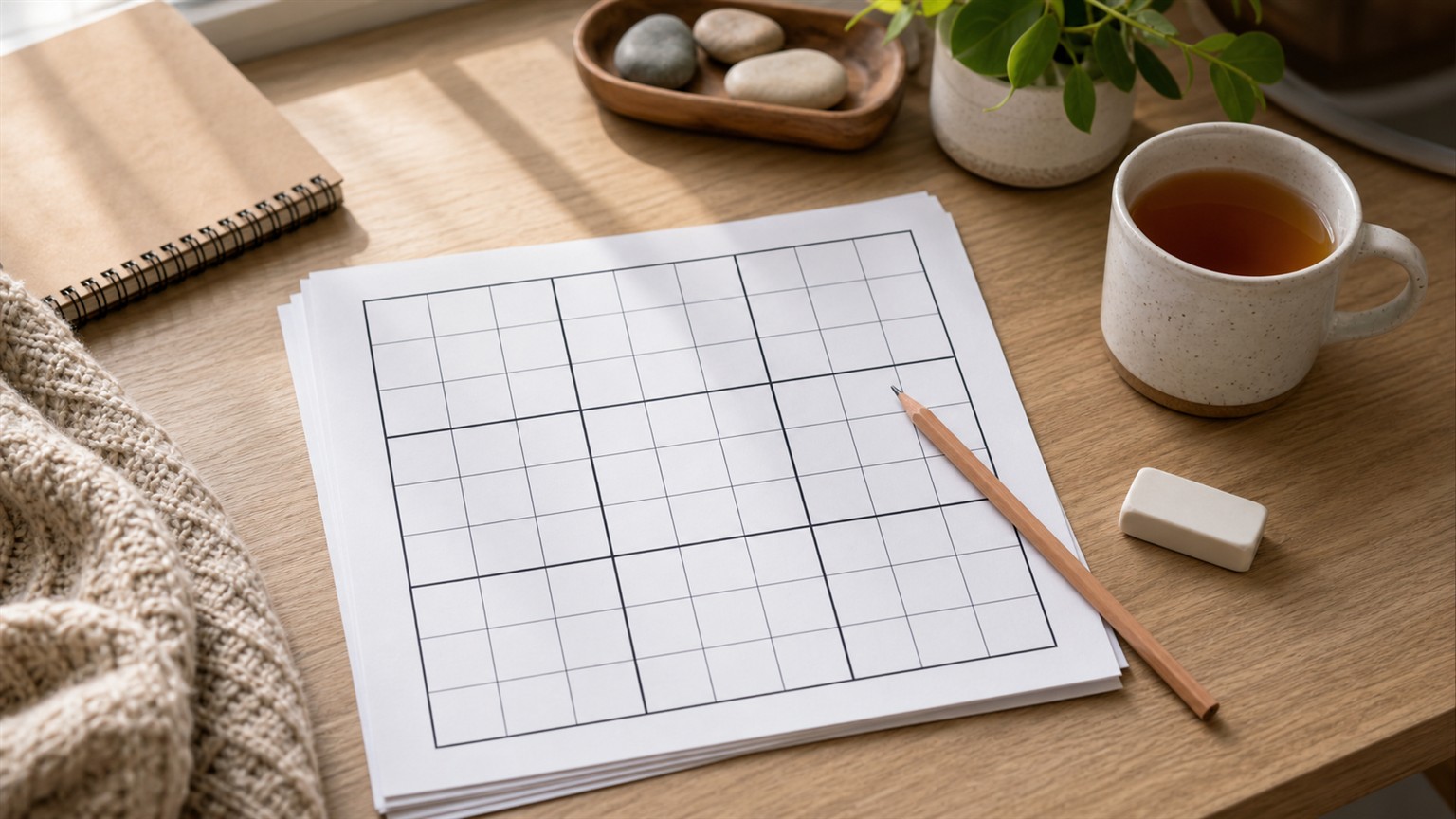
Sudoku is a number puzzle, but beginner solving is less about math and more about logic. The goal is to fill a 9-by-9 grid so each row, column, and 3-by-3 box contains the numbers 1 through 9. A good beginner approach teaches scanning, candidates, elimination, and patience so the puzzle feels structured rather than mysterious.
A: Identify the goal, list the given information, and look for the clearest constraint.
A: Testing is useful; unsupported guessing is usually less helpful than narrowing possibilities.
A: Use one after you have tried several fair approaches and no longer have a testable idea.
A: The answer should make earlier clues feel purposeful once explained.
A: Change methods: sort, draw, reread, explain aloud, or step away briefly.
A: Not always. The best puzzle is the one whose difficulty fits the solver and setting.
A: Teams combine observation, memory, organization, and different puzzle habits.
A: Clear goals, fair constraints, useful feedback, and an earned breakthrough.
A: They can practice specific skills, especially when the challenge is varied and sustained.
A: Notice which clues mattered, which assumptions failed, and which method helped most.
Understand the Basic Rules
Each row must contain the numbers 1 through 9. Each column must also contain those numbers. Each 3-by-3 box follows the same rule.
The given numbers are fixed. The solver’s job is to use those fixed numbers to determine where the missing numbers can go.
For Sudoku for beginners, the understand the basic rules question is practical because a puzzle lives or dies in the moment someone tries to use it. Strong evaluation watches the actual sequence of actions: what gets noticed first, where progress stalls, what confirms a theory, and whether the final step feels connected to the clues already in view.
That kind of detail is especially important for Sudoku for beginners because puzzle quality is often felt through small moments rather than one dramatic reveal. The first useful clue, the first corrected mistake, and the point where the solution begins to organize itself all show whether understand the basic rules has been designed with care.
Start With Obvious Singles
An obvious single appears when only one number can fit in a cell, row, column, or box.
Beginners should look for rows, columns, or boxes that already have many numbers because they leave fewer possibilities.
The same standard helps separate taste from design quality. Someone may prefer one theme, format, or difficulty level, but start with obvious singles can still be judged by how clearly the challenge sets expectations, rewards careful attention, and avoids making accidental friction look like depth.
A balanced approach also protects enjoyment. If start with obvious singles is too thin, the puzzle may feel random; if it is too heavy, the experience may feel like homework. The strongest version gives enough structure to guide attention while still leaving room for personal discovery.
Use Scanning
Scanning means checking where a number can appear across rows, columns, and boxes. For example, if a 5 already appears in certain rows, those rows cannot take another 5.
This technique helps beginners find placements without guessing.
This part of the experience also affects trust. When use scanning is handled cleanly, solvers are more willing to slow down, revise assumptions, and keep working through uncertainty because the puzzle has shown that careful effort is likely to matter.
This is also where comparison helps. Looking at similar puzzles in the same format can reveal whether use scanning is ordinary, unusually elegant, overly complicated, or poorly supported by the materials. Context keeps the judgment from depending on one first impression.
Try Pencil Marks Carefully
Pencil marks, or candidates, show which numbers might fit in an empty cell. They are useful when the puzzle no longer has obvious singles.
Too many candidates can become messy, so beginners should add them methodically and update them whenever a number is placed.
A useful test is to imagine the solve being explained after completion. If try pencil marks carefully can be described in plain language and the important details still make sense, the design is usually stronger than one that depends on surprise alone.
Solvers often forgive difficulty when they can see the reason for it. They are less forgiving when try pencil marks carefully creates confusion that does not lead anywhere. A good puzzle lets effort accumulate so that even wrong turns teach something useful.
Avoid Guessing Too Early
Guessing can break the learning process because it hides why a number belongs. Beginner Sudoku is best solved by evidence.
If stuck, reread the grid. Often a newly placed number has opened a row, column, or box that was not useful before.
The buying or review decision becomes easier when avoid guessing too early is tied to a real use case. A family table, classroom, collector shelf, escape-room night, travel bag, or solo evening can change which strengths matter most.
For buyers, this detail can prevent waste. A puzzle that handles avoid guessing too early well is more likely to be finished, shared, displayed, or remembered. A puzzle that handles it poorly may sit half-open even if the basic idea sounded appealing.
How to Get Better Fast
Improvement comes from solving puzzles at the right level. A puzzle that is too easy teaches little, while one that is too hard encourages guessing.
Beginners should practice scanning, singles, pairs, and candidate cleanup before moving into advanced techniques.
Good puzzle judgment also leaves room for different skill levels. How to get better fast may feel simple to an expert and demanding to a newcomer, so the better question is whether the puzzle gives each person a fair way to understand what kind of work is being asked.
For designers, the same point becomes a build note. Testing how to get better fast with people who have not seen the answer can expose missing cues, unclear wording, awkward handling, or a difficulty spike that the maker stopped noticing after repeated work.
How to Use Sudoku for Beginners in Real Solving
The practical value of sudoku for beginners appears when someone has to choose, solve, teach, or discuss a puzzle without relying on marketing copy. A useful article gives that person a set of checks they can apply immediately: what the puzzle asks for, how progress appears, what kind of difficulty is present, and whether the materials support the idea.
This matters because puzzle enjoyment is easy to misread from the outside. A box, screenshot, or display photo can show theme and style, but it cannot fully show pacing, frustration, clue quality, or the moment when the solution begins to make sense. Sudoku for beginners becomes more useful when it connects those hidden parts of the experience to visible buying or solving choices.
Another practical habit is comparison. Looking at two similar puzzles side by side often reveals which one has cleaner rules, better feedback, stronger components, or a more satisfying difficulty curve. The comparison does not need to declare one puzzle universally better; it only needs to show which puzzle fits a specific person or occasion.
That perspective is useful for both casual solvers and dedicated puzzle fans. Casual solvers need help avoiding frustration, while experienced solvers often want to know whether a puzzle offers a new mechanism, cleaner clue chain, stronger object quality, or a more elegant way to think. Sudoku for beginners can serve both groups when it names the actual experience instead of leaning on hype.
The final test is whether the puzzle creates a good memory after the answer is known. A strong challenge leaves people talking about the insight, the craft, the surprise, or the way the pieces came together. A weak challenge is remembered mostly for confusion. That difference is why careful puzzle evaluation is worth doing before time, money, or group attention is spent.
When that standard is applied consistently, sudoku for beginners becomes easier to trust. The article gives people enough context to choose, compare, solve, and explain puzzles with more confidence.
Bottom Line on Beginner Sudoku
Sudoku beginners improve by learning rules, scanning for constraints, using candidates carefully, and avoiding unsupported guesses.
The puzzle becomes more enjoyable when each number is placed for a reason the solver can explain.
Practical Ways to Apply Sudoku for Beginners
Sudoku for Beginners becomes more useful when it changes what someone does next. A solver can use the ideas here to choose a better challenge, ask clearer questions, organize notes, protect spoilers, or explain why a particular puzzle felt satisfying or frustrating.
That practical angle also helps buyers and groups avoid vague expectations. Instead of hoping that a puzzle will simply be clever, they can look for fit, clarity, fair difficulty, useful feedback, and a format that matches the amount of time and attention available.
For makers and reviewers, Sudoku for beginners is a reminder to test the experience with fresh eyes. The important question is not whether the concept sounds interesting in isolation, but whether a real person can enter the challenge, make progress, recover from mistakes, and understand why the solution works.
Common Mistakes With Sudoku for Beginners
One common mistake is treating difficulty as the only measure of quality. A harder puzzle is not automatically better if the path is unclear, the materials interfere, or the final answer does not justify the work.
Another mistake is overlooking context. The same puzzle can succeed in a quiet solo setting and fail at a noisy group table, or work beautifully on a large screen while becoming frustrating on a phone. Setting changes the experience.
A third mistake is skipping the post-solve explanation. Talking through what worked, what misled people, and what could be tried next turns a completed challenge into a stronger foundation for the next one.
A Simple Checklist for Sudoku for Beginners
A useful checklist starts with the audience. Name who the puzzle is for, how much time they have, whether they want solo focus or shared activity, and whether the format asks for reading, spatial thinking, memory, dexterity, observation, or teamwork.
Next, check the path of progress. A strong challenge gives solvers a way to begin, a way to test ideas, a way to notice when they are wrong, and a way to confirm that the final answer is more than a lucky guess.
Finally, look at what remains after the solve. A worthwhile puzzle may leave a new method, a good story, a reusable object, a better understanding of a puzzle type, or a shared memory that makes people want to try another challenge.
That closing check keeps sudoku for beginners grounded in real use. The article is strongest when it helps someone move from curiosity to a better decision, a cleaner solve, or a more thoughtful conversation about why the puzzle worked.
Review Notes for Sudoku for Beginners
A careful review also watches for avoidable friction. Confusing setup, weak labels, vague rules, poor contrast, missing reset instructions, or unclear hint boundaries can make a good idea feel worse than it needs to feel.
When those details are named plainly, solvers can decide whether the tradeoff matters. Some people will accept a rough edge for a brilliant idea, while others need a smoother experience that fits a gift, class, stream, or relaxed evening.
That honesty is useful because puzzles ask for attention before they give anything back. A review that respects the solver’s time makes it easier to choose challenges that feel demanding in the right way today.
One more practical check for sudoku for beginners is whether the idea helps after the first read. A strong guide should give solvers language they can reuse when they choose a challenge, explain a stuck point, compare formats, or decide whether a puzzle treated their attention fairly.
That reusable value matters because puzzle knowledge grows by repetition. Each clear term, example, and distinction makes the next solve easier to discuss without making the next answer obvious.
How to Apply Sudoku for Beginners
Sudoku for Beginners becomes more useful when it helps someone make a choice, not just understand a definition. A solver can use the ideas here to decide what to try next, what kind of puzzle fits the moment, or why one challenge feels fair while another feels frustrating.
That practical use is important because puzzle quality is experienced in small steps. The first clue, the first wrong turn, the first confirmation, and the final explanation all shape whether people want to keep solving.