The Greats Teach You How to Think
The best digital puzzle games of all time do more than present obstacles. They teach players a new way to think, then keep expanding that language with elegance and surprise. Some classics are built around physics, portals, grids, words, time, perspective, programming, or environmental observation. What unites them is not one mechanic. It is the feeling that the game is a patient teacher: it introduces an idea, lets you test it, complicates it, and then rewards the moment when the pattern finally becomes clear.
A: A strong mechanic, fair teaching, satisfying escalation, and memorable discovery.
A: They matter when they clarify mood and rules, but elegance matters more than spectacle.
A: No; difficulty is valuable only when it serves insight.
A: Often, because classics tend to teach core puzzle languages clearly.
A: Solving by observing the world itself, not only a visible puzzle board.
A: Their rules remain clear and their discoveries still feel fresh.
A: Yes, especially when built around elegant short-session design.
A: Unfair clueing, poor controls, or confusion that does not lead to insight.
A: Yes, when story motivates attention without smothering the mechanic.
A: A game whose main idea genuinely makes them curious.
Great Puzzle Games Build a Language
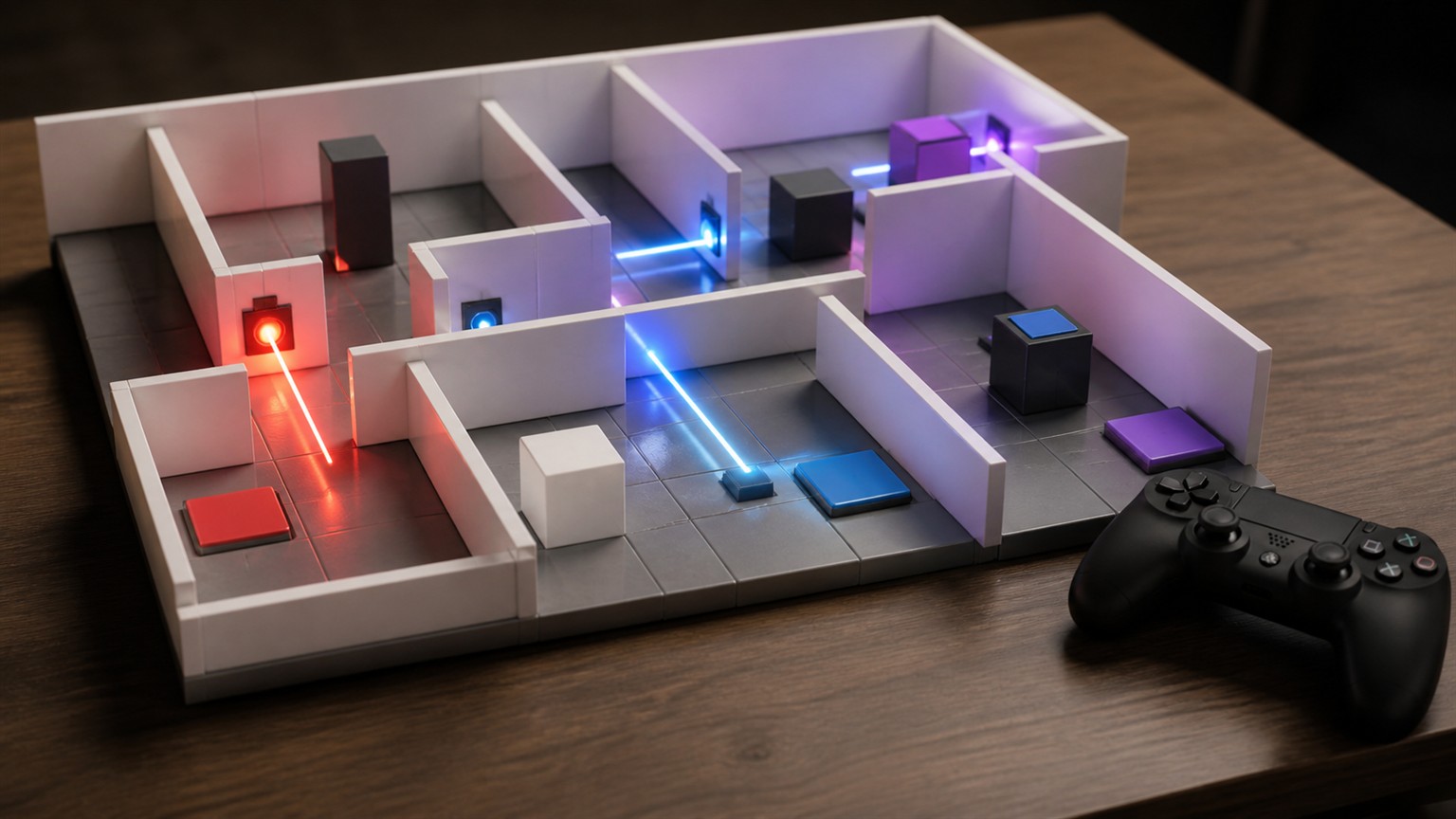
A great digital puzzle game teaches a language. At first, the player learns a basic rule: move a block, connect a path, change a word, redirect a beam, bend space, or observe a symbol. Then the game adds grammar. Rules combine, exceptions appear, and old assumptions become unstable.
This teaching process is why the best games feel generous even when they are difficult. The player is not being asked to guess. They are being invited to understand a system deeply enough that surprising solutions become possible.
The Interface Should Disappear
Digital puzzle games depend on interface clarity. If the player fights the controls, camera, cursor, or menus, the puzzle loses focus. The best designs make interaction feel inevitable. You can concentrate on the idea because the input method is not stealing attention.
This is true across genres. A physics puzzle needs reliable manipulation. A grid puzzle needs clean selection. A first-person puzzler needs movement that does not cause confusion. Interface polish is not cosmetic; it is part of puzzle fairness.
Teaching Without Lecturing
Many great puzzle games teach through level order rather than explanation. A safe early puzzle isolates one rule. A later puzzle combines that rule with another. A final puzzle asks the player to notice a hidden consequence of what they already know.
This creates a powerful sense of ownership. The player feels they discovered the rule, even though the designer carefully prepared the discovery. That is one of digital puzzling's special strengths.
Atmosphere Can Sharpen Attention
Atmosphere matters because puzzle solving is emotional. A quiet island, sterile test chamber, cozy grid, eerie mansion, or playful word world changes how the player pays attention. Mood can create patience, urgency, curiosity, or unease.
The best games make atmosphere serve the puzzle. They do not merely decorate the screen. They make players look more carefully, listen differently, or care more about reaching the next insight.
Difficulty Should Escalate With Trust
Players accept hard puzzles when they trust the designer. Trust grows when earlier puzzles were fair, feedback was readable, and solutions made sense in hindsight. Without that trust, difficulty feels like hostility.
All-time great puzzle games usually earn their hardest moments. They train the player first, then ask for brilliance. That sequence is the difference between challenge and confusion.
Why Variety Is Dangerous and Necessary
A puzzle game needs variety to stay alive, but variety can dilute the central idea. Too many mechanics can make a game feel like a sampler. Too little variety can make it feel like homework.
The strongest games vary the consequences of their core mechanic rather than abandoning it every few minutes. They keep asking, what else can this idea do? That question creates depth.
Replay Value Comes From Understanding
Puzzle games are sometimes seen as one-and-done experiences because solutions can be remembered. Yet many classics reward replay through mastery, speed, alternate solutions, hidden puzzles, co-op, community levels, or simply the pleasure of watching the teaching again.
A replay can reveal design craft that was invisible during the first struggle. You notice how early puzzles prepared later insights and how carefully the game managed attention.
Digital Puzzles and Physical Puzzles Differ
Digital games can simulate impossible spaces, instant resets, dynamic feedback, and systems that would be impractical on a table. Physical puzzles offer touch, weight, and social presence. Neither replaces the other.
The best digital puzzle games use what software does uniquely well. They create worlds where rules can shift instantly and where the environment itself can become part of the puzzle.
How to Choose Your Next Classic
Choose based on what kind of thinking you want to practice. If you want spatial reasoning, look for perspective or physics. If you want deduction, look for constraint systems. If you want creativity, try rule-bending games. If you want calm, choose gentle environmental puzzling.
The best game is the one whose question you want to answer. Curiosity is the beginning of good puzzle play.
Influence Is Not the Same as Enjoyment
Some digital puzzle games matter because they influenced design history. Others matter because they remain delightful to play. The all-time conversation should include both, but readers choosing a game tonight should prioritize enjoyment and fit.
An influential game may feel dated if its interface is clumsy or its pacing belongs to another era. A newer game may not have the same historical weight yet still teach a brilliant puzzle idea. Both can belong in a serious puzzle library.
Short-Session Games Deserve Respect
Digital puzzle greatness is not limited to sprawling adventures. Some of the most elegant designs live in small levels, daily grids, or mobile-friendly sessions. A five-minute puzzle can be deep if the rule is sharp and the feedback is clean.
Short-session games also change habit design. They fit commutes, breaks, and evenings when a long game would never start. Accessibility of time is a real design strength.
Why Hint Design Matters
Hints are difficult in puzzle games because they can either preserve insight or erase it. A good hint points attention toward the next useful observation. A poor hint simply hands over the answer or leaves the player equally lost.
The best games often layer hints. First they nudge where to look, then what relationship matters, and only later reveal the decisive step. That sequence respects the player's desire to solve.
Community Keeps Classics Alive
Many digital puzzle games survive because communities discuss strategies, create levels, build mods, speedrun, write guides, and recommend hidden gems. Community activity can extend a game's life far beyond its release window.
This community layer also helps new players. A classic can feel less intimidating when there are spoiler-light guides, accessibility notes, and friendly recommendations for where to begin.
A Classic Needs a Strong First Hour
The first hour of a puzzle game has a difficult job. It must explain the rules, create curiosity, establish tone, and give the player enough success to continue. If the first hour is muddy, many players will never reach the deeper design.
All-time greats usually make the first hour feel purposeful. Even when the game later becomes difficult, the beginning builds trust. Players believe the designer knows where the experience is going.
Elegant Rules Beat Feature Count
Digital stores often reward feature lists, but puzzle greatness usually comes from elegant rules. A game with one clear mechanic can outlast a game with dozens of disconnected gimmicks. Depth is not the same as quantity.
This is why some minimalist puzzle games become classics. They reveal surprising consequences from small rule sets. The player feels the design getting deeper without becoming bloated.
Accessibility Changes Who Gets to Love a Game
Puzzle games can exclude players through color reliance, tiny text, precise timing, motion discomfort, audio-only clues, or lack of remapping. Accessibility options do not weaken puzzle design. They let more players reach the thinking the game is built around.
For all-time recommendations, accessibility deserves attention. A brilliant puzzle hidden behind avoidable barriers will not reach everyone it could delight.
Why Some Games Become Design Textbooks
Certain puzzle games become reference points because designers can study them scene by scene. Their level order, feedback, escalation, and visual grammar make the craft visible. They are enjoyable as games and instructive as design objects.
Players do not need to analyze them formally, but they often feel that care. A well-built puzzle game gives the sense that every step is there for a reason.
The Pleasure of Being Rewired
The most memorable digital puzzle games leave players seeing the world differently for a while. After a perspective game, architecture looks strange. After a word-rule game, sentences feel mechanical. After a physics puzzler, ordinary motion becomes suspiciously interesting.
That temporary rewiring is one mark of greatness. The game has not merely entertained the player; it has installed a new lens.
Difficulty Modes Can Protect the Idea
Some players worry that easier modes weaken puzzle games, but good accessibility and difficulty options can protect the central idea. A hint, skip, relaxed timer, or visual aid may let a player engage with the real puzzle instead of getting blocked by an unrelated barrier.
The key is preserving agency. Players should be able to choose how much help they want and still feel that the final insight belongs to them.
The Best Games Respect Stuckness
Being stuck is part of puzzle play, but it should feel meaningful. A good game gives players something to inspect, test, or reconsider. A weaker game leaves them wondering whether they missed a tiny object, misunderstood a rule, or encountered a technical problem.
Respectful stuckness keeps curiosity alive. The player may be blocked, but the block feels like a real knot in the idea, not a failure of presentation.
Why Recommendations Should Be Personal
No single all-time list can serve every player equally. Someone who loves quiet observation may bounce off a frantic physics game. Someone who wants tight logic may dislike wandering exploration. Taste is not a flaw in puzzle judgment.
The best recommendation begins with the player's desired experience. Do they want wonder, rigor, humor, relaxation, mastery, or surprise? The answer should shape the list.
Consider Platform Comfort
A brilliant puzzle game may still be the wrong choice on the wrong platform. Some games feel best with a controller, others with a mouse, touchscreen, or keyboard. Comfort affects patience, and patience affects puzzle solving.
Before buying, check whether the controls match how you like to play. A game that feels natural in the hands lets the design shine sooner.
Use Lists as Doorways
All-time lists are most useful as doorways into styles of thinking. One game may introduce environmental observation, another may introduce rule manipulation, and another may introduce spatial physics. The list is not a final verdict; it is a menu of puzzle languages.
That attitude makes exploration more enjoyable. You are not failing if a classic does not suit you. You are learning which kinds of puzzles make your mind lean forward.
Let Mood Choose Sometimes
Sometimes the right digital puzzle game is simply the one that matches the evening. A quiet observational game, a sharp logic grid, or a playful physics challenge can each be perfect in the right mood.
Conclusion: Elegance Lasts
The best digital puzzle games endure because their elegance survives changing technology. Graphics age, platforms change, and trends move on, but a beautifully taught idea remains satisfying.
Look for games that teach clearly, challenge fairly, and leave you thinking differently after the screen is off. Those are the digital puzzles that become classics.