Tournament Crosswords Turn a Solitary Ritual Into a Performance
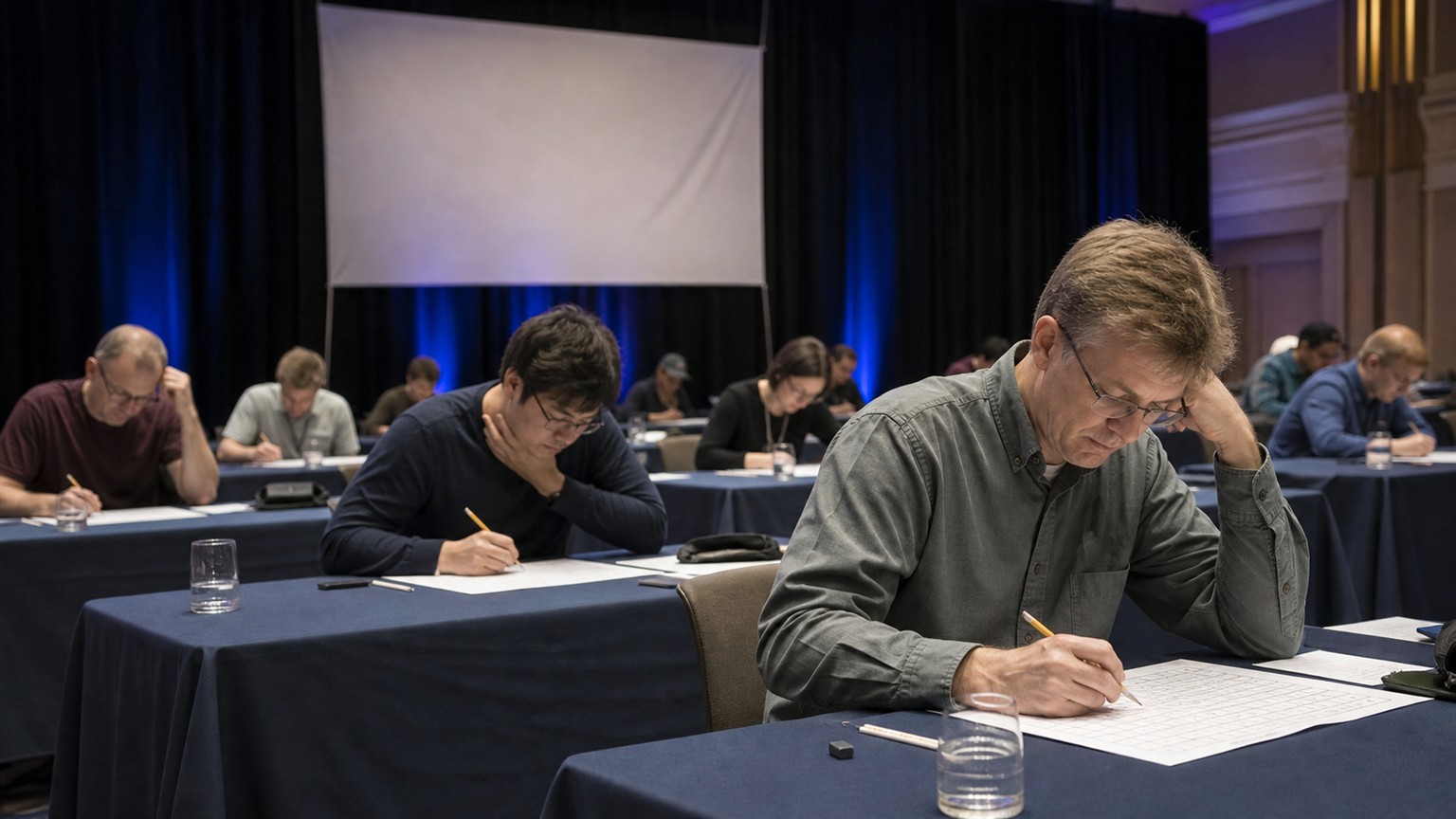
Competitive crossword solving at the tournament level takes a familiar private ritual and places it under time pressure, scoring rules, and public comparison. Solvers still need vocabulary, clue sense, pattern recognition, and cultural knowledge, but they also need composure. A tournament puzzle is not only a grid to complete. It is a performance environment where accuracy matters, speed matters, and nerves can change how even experienced solvers read a clue.
A: Identify the goal, list the given information, and look for the clearest constraint.
A: Testing is useful; unsupported guessing is usually less helpful than narrowing possibilities.
A: Use one after you have tried several fair approaches and no longer have a testable idea.
A: The answer should make earlier clues feel purposeful once explained.
A: Change methods: sort, draw, reread, explain aloud, or step away briefly.
A: Not always. The best puzzle is the one whose difficulty fits the solver and setting.
A: Teams combine observation, memory, organization, and different puzzle habits.
A: Clear goals, fair constraints, useful feedback, and an earned breakthrough.
A: They can practice specific skills, especially when the challenge is varied and sustained.
A: Notice which clues mattered, which assumptions failed, and which method helped most.
The Core Tradeoff Is Speed Versus Accuracy
Tournament crossword solving rewards speed, but only when the grid is correct. This creates the central tension. A solver must move quickly enough to stay competitive while staying careful enough to avoid costly mistakes.
Reckless speed is dangerous because one wrong entry can infect crossings. A clean solver who finishes slightly later may outperform someone who filled the grid faster but left errors behind.
Scoring Rules Shape Strategy
Different tournaments can use different scoring systems, but most make accuracy central. Time, errors, blanks, round difficulty, and division structure all affect strategy. Solvers should read the rules before the event rather than assuming every contest works the same way.
A scoring system tells players what kind of risk is rational. If errors are heavily penalized, the final review pass becomes essential. If time bonuses are significant, efficient skipping matters.
Skipping Is a Competitive Skill
Casual solvers sometimes linger over a stubborn clue because there is no clock. Tournament solvers learn to skip strategically. Moving on can gather crossing letters, preserve momentum, and prevent one clue from dominating the round.
Good skipping is not surrender. It is time management. The solver returns with more information and a calmer mind.
Themes Can Save Time
Recognizing a puzzle's theme can unlock multiple answers at once. Tournament solvers watch for repeated clue patterns, unusual entries, revealer clues, and grid features that suggest a theme mechanism. Once the theme is understood, the puzzle may open quickly.
Theme recognition also carries risk. Guessing the theme too early can lead to confident wrong answers. Strong solvers use the theme as a guide, not a substitute for crossings.
Preparation Is Broader Than Vocabulary
Vocabulary helps, but tournament preparation includes timing, endurance, handwriting or input fluency, error review, constructor variety, and emotional recovery. Solvers need to practice the conditions of competition, not only the content of crosswords.
Timed practice is especially useful because it reveals habits that casual solving hides. A solver may discover that they panic after a slow start or skip too late.
Nerves Change Familiar Clues
Under pressure, an easy clue can look unfamiliar. The clock changes perception. Watching nearby solvers finish can make a steady pace feel too slow. Tournament performance therefore depends on emotional regulation as much as knowledge.
Experienced competitors often use routines: breathe, scan, fill gimmes, skip calmly, and review. The routine keeps the solver from negotiating with panic every round.
Review Passes Win Rounds
A review pass can catch misspellings, tense mismatches, unchecked squares, and entries that looked plausible too quickly. The challenge is making time for review without sacrificing too much speed.
Some solvers review as they go. Others reserve a final sweep. The best method is the one that reliably catches errors under pressure.
Tournament Community Matters
Competitive crossword events are not only scoreboards. They are communities of people who love clueing, constructors, wordplay, and shared challenge. Beginners often find that the social side makes the event less intimidating.
Talking between rounds can also improve learning. Solvers hear how others approached a theme, recovered from a mistake, or handled a brutal section.
How Beginners Should Measure Success
A beginner's first tournament success may not be ranking highly. It may be completing a clean puzzle, surviving a hard round, understanding the scoring, or learning how their solving changes under time pressure.
That experience is valuable. Tournament skill grows through exposure. The first event teaches what practice should focus on next.
The Clock Changes Clue Reading
Under tournament pressure, clue reading becomes more selective. Solvers scan for gimmes, fill obvious crossings, and postpone clues that require a slower cultural or wordplay leap. This scanning rhythm is a learned skill.
The danger is skimming too carelessly. A small clue tense, abbreviation signal, or plural marker can prevent an error. Tournament solvers learn to move fast without ignoring the grammar of the clue.
Clean Grids Require Endgame Discipline
The last few squares can be the most dangerous. A solver may feel close enough to rush, especially if other competitors are finishing. That is when spelling, crossings, and unchecked assumptions need the most attention.
Endgame discipline means taking a breath, checking vulnerable entries, and resisting the urge to submit a grid that only feels complete.
Constructor Familiarity Helps
Different constructors have different clueing voices. Some favor misdirection, some trivia, some wordplay, some clean modern phrasing, and some old-school vocabulary. Practicing across many constructors builds flexibility.
Tournament solvers who know only one publication style may struggle when a round shifts tone. Breadth of practice protects against surprise.
Recovery Between Rounds Matters
A bad round can follow a solver into the next puzzle if they keep replaying it emotionally. Tournament performance includes recovery: drink water, breathe, reset supplies, and let the previous grid become information rather than baggage.
This is easier said than done. Competitive solvers practice emotional reset because the event is a sequence, not one puzzle.
Paper and Digital Formats Feel Different
Paper solving and digital solving place different demands on the body. Paper requires legible writing, erasing discipline, and physical grid navigation. Digital solving requires interface fluency, cursor control, and familiarity with shortcuts if allowed.
Competitors should practice in the format used by the event whenever possible. Familiarity reduces friction when the clock starts.
Divisions Make Events More Welcoming
Many crossword events use divisions or categories so solvers can compete with others at a similar level. This makes tournament play more welcoming because beginners are not judged only against elite veterans. It also gives improving solvers realistic goals.
A division does not make the competition less real. It makes the challenge better matched.
The Puzzle Order Builds Drama
Tournament organizers often vary puzzle difficulty across rounds. Easier rounds let many solvers build momentum, while harder rounds separate the field. A very difficult puzzle can reshape standings because accuracy and recovery become more important.
This order creates drama. Solvers must manage not only one grid, but a sequence of changing demands.
Why Crossings Are Competitive Tools
Crossing letters are not only aids; they are competitive tools. A solver who uses crossings efficiently can confirm uncertain entries without stopping for long. Crossings also help recover from clues outside the solver's knowledge base.
Strong tournament solvers move between across and down answers fluidly. They let the grid teach itself.
Common Knowledge Has a Puzzle Shape
Competitive crossword knowledge is not general trivia in the broadest sense. It is trivia shaped by crossword grids: common short entries, clue conventions, abbreviations, wordplay signals, and cultural references that appear often enough to become familiar.
Studying that puzzle-shaped knowledge can save time. It turns hesitation into recognition.
The Social Side Reduces Intimidation
Tournament rooms can look intense, but many crossword communities are welcoming. Solvers discuss puzzles, laugh about traps, and compare favorite clues. That social context can make competition feel less lonely.
For newcomers, talking to other participants can turn nerves into belonging. The event becomes a gathering, not only a ranking.
How Solvers Build Speed
Speed grows from familiarity and decision discipline. Common entries become automatic, clue signals become easier to read, and solvers learn when to move on. The fastest competitors are not thinking less; they are spending attention where it matters most.
Practice should therefore include review. After a timed solve, look at where time disappeared. Was it vocabulary, a theme misunderstanding, a spelling error, or reluctance to skip?
Accuracy Training Is Separate
Accuracy improves when solvers study their mistakes. Wrong crossings, unchecked squares, and plausible-but-wrong entries each have different causes. A solver who simply starts another puzzle may repeat the same error pattern.
A useful review asks why the wrong answer felt convincing. That question turns an error into future protection.
Managing the Tournament Room
The tournament room itself can be distracting. Papers move, pencils scratch, chairs shift, and nearby solvers finish. Competitors need a way to narrow attention without becoming rigid.
Some solvers use a breathing routine. Others focus on the next clue only. The method matters less than having one.
Why Clean Handwriting Can Matter
In paper events, legibility can affect scoring and self-review. A rushed letter may look like another letter under pressure. Clean entries help both the judge and the solver.
This is an unglamorous skill, but tournaments reward unglamorous skills. The grid has to be understood after it is filled.
Warmups Should Be Light
A warmup puzzle can help the brain enter clue mode, but it should not drain energy before the event. The best warmup is short, confidence-building, and familiar enough to settle nerves.
Solvers should avoid turning the warmup into a second tournament. The goal is readiness, not exhaustion.
Know Your Error Pattern
Different solvers make different errors. Some rush plurals, some miss abbreviations, some overtrust theme guesses, and some leave unchecked crossings vulnerable. Knowing your personal pattern makes review more targeted.
Before an event, review recent mistakes and choose one watchpoint. That single watchpoint can prevent a familiar error from returning under pressure.
Respect the Hard Round
Most tournaments include at least one round that humbles nearly everyone. The goal in that round may be damage control: gather the answers you can, avoid wild errors, and stay emotionally steady for the next puzzle.
A hard round is not a personal insult. It is part of the tournament architecture.
Practice With Realistic Materials
If the tournament uses paper, practice occasionally with paper. If it uses a digital interface, practice with that style of input. The goal is to make the tournament format feel ordinary before the event.
Small material differences matter under pressure. Familiar tools keep attention on clues instead of mechanics.
Learn From Clean Solvers
Watching or reading about clean solvers can be as useful as watching the fastest solvers. Clean solvers show how to verify, skip, and avoid tempting errors. Their habits are often quieter but highly competitive.
Speed built on clean habits lasts longer than speed built on guessing. Tournament growth depends on making fewer expensive mistakes while still moving bravely.
Do Not Chase Every Competitor
Watching faster solvers can be motivating, but chasing them during a round can damage accuracy. A competitor needs to know their own pace and trust it long enough to solve cleanly.
The scoreboard matters after the puzzle. During the puzzle, the next correct square matters more.
Conclusion: Clean Speed Is the Goal
Tournament crossword solving is a blend of language knowledge, pattern recognition, time management, and composure. The grid must be fast, but it must also be right.
For serious solvers, the goal is clean speed: moving with confidence, skipping wisely, reviewing carefully, and treating pressure as part of the puzzle rather than an enemy outside it.