The Brain's Planning System at Work
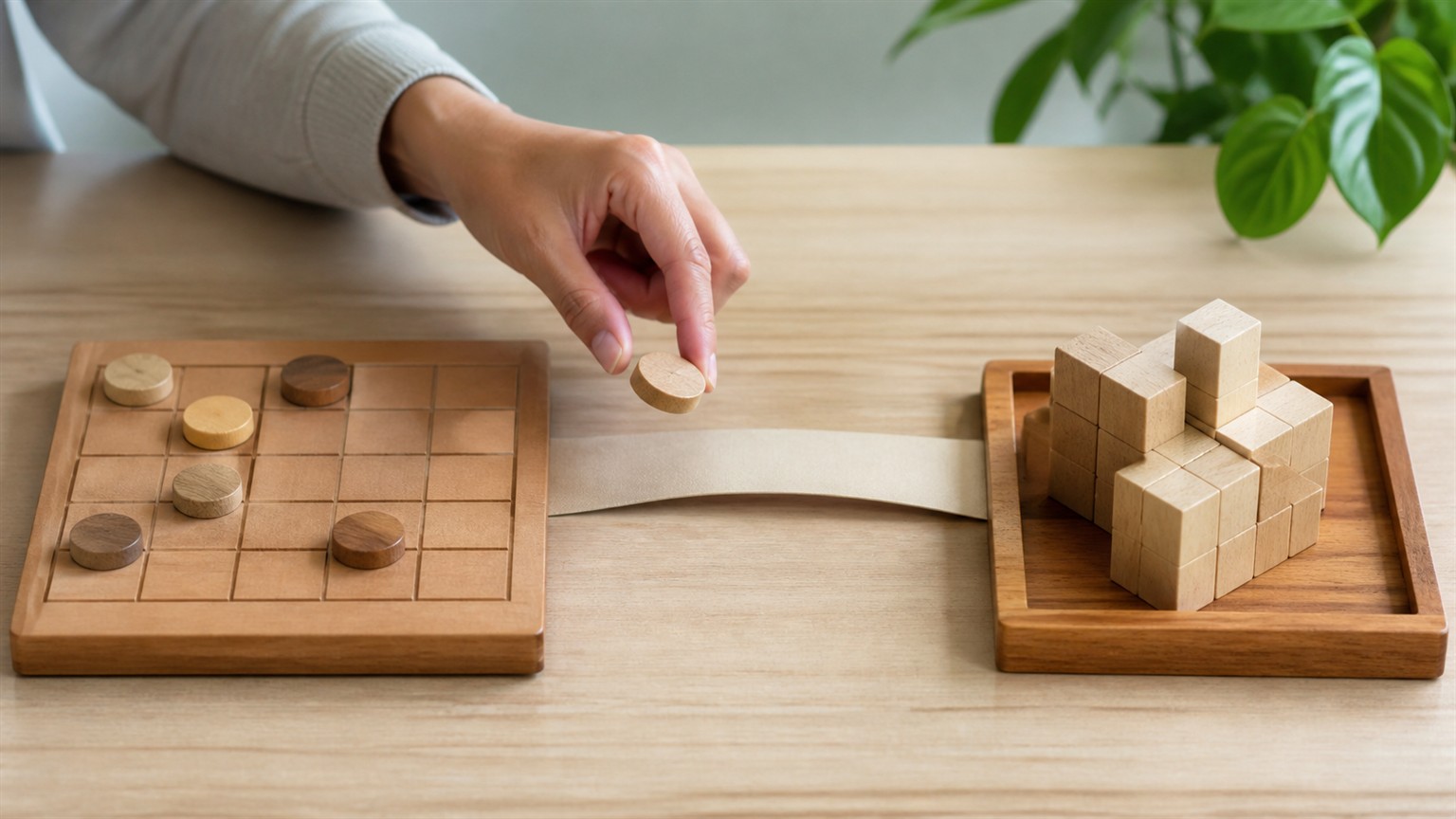
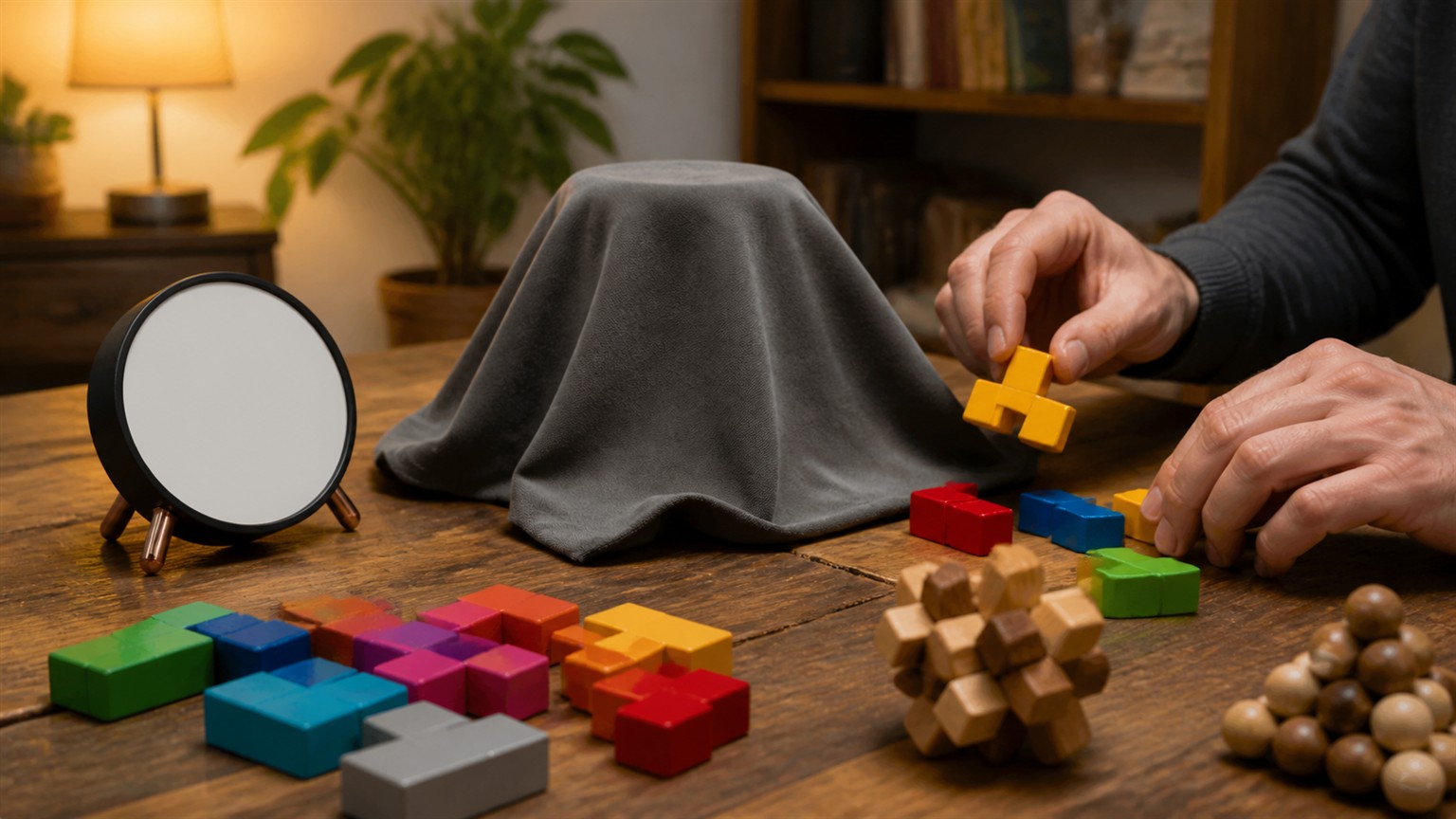
Puzzle solving depends on more than cleverness. It asks the brain to hold goals in mind, compare evidence, resist tempting shortcuts, switch strategies, and check whether an answer actually follows from the clues. The prefrontal cortex is central to many of those executive functions. It does not solve puzzles alone, and it should not be treated as a single magic reasoning center. Still, it plays a major role in the kind of controlled thinking that helps solvers move from scattered information to a defensible answer.
A: No, it coordinates control, planning, and reasoning with memory, perception, language, and reward systems.
A: Notes reduce working-memory load so control can focus on relationships instead of storage.
A: It is the ability to hold back an attractive answer until the evidence supports it.
A: They can practice executive skills within puzzle tasks, though broad claims should stay modest.
A: They demand sustained control, working memory, and error checking over time.
A: Switching prevents a solver from spending all effort on a method that is no longer productive.
A: Logic grids show it plainly because rules, exclusions, and categories must be managed together.
A: No, fast solving can be expert recognition, but it can also hide unchecked assumptions.
A: They can externalize clues with grids, lists, symbols, and short written deductions.
A: A solver can explain why an answer follows from the clues rather than merely naming it.
Why Executive Control Matters
The prefrontal cortex is often discussed in connection with executive control: the ability to guide attention, hold goals, resist distractions, and choose actions according to rules. Puzzle solving leans heavily on those abilities. A solver needs to remember what the puzzle is asking, which clues are confirmed, which options remain possible, and which strategy is worth trying next.
Without control, puzzle solving becomes a string of guesses. The solver may notice details, but the details do not become organized evidence. Executive control turns noticing into a process.
Working Memory as a Puzzle Workspace
Working memory is the mental workspace where temporary information stays active. In a logic puzzle, that might mean holding three categories and two exclusions at once. In a crossword, it might mean keeping clue wording, answer length, and crossing letters in play. In a mechanical puzzle, it might mean remembering what movement was just tested.
This workspace is limited. Good solvers respect that limit by writing things down. External notes do not weaken reasoning; they make reasoning more reliable.
Inhibition: The Power to Not Answer Yet
Many puzzles tempt solvers with answers that almost fit. Inhibition is the skill of not letting that answer take over too early. The prefrontal cortex helps hold back the impulse to settle before the evidence is complete.
Early commitment changes perception. Once a solver loves an answer, every clue may be bent toward it. Inhibition keeps the answer provisional long enough for the puzzle to argue back.
Planning Several Moves Ahead
Some puzzles require planning across multiple steps. A deduction may not solve the grid immediately, but it may prepare the next comparison. A number puzzle may require testing a rule before applying it. A puzzle hunt may ask solvers to preserve outputs for later extraction.
Planning keeps the solver from treating every clue as isolated. It asks what a move will make possible. That forward-looking habit is one reason logical reasoning feels orderly even when the puzzle is complex.
Flexible Strategy Switching
A stuck solver often needs a new method more than more effort. The prefrontal cortex supports flexible switching: moving from scanning to listing, from guessing to elimination, from verbal interpretation to spatial inspection, or from solo thinking to explanation.
Switching does not mean abandoning discipline. It means choosing a better tool for the current obstacle. The strongest solvers can change methods without losing the overall goal.
Error Monitoring and Contradictions
Contradictions are valuable signals. They show that an assumption, note, or deduction has gone wrong. Error monitoring helps the solver notice that the current path cannot be right.
Beginners sometimes treat contradictions as failure. Experienced solvers treat them as information. A contradiction can save time by closing a false route decisively.
How Puzzle Notes Support the Brain
A clear grid, list, or diagram reduces mental clutter. It lets the solver see relationships instead of trying to remember them all. This is especially useful when several clues interact.
Good notes are not decorative. They are extensions of reasoning. A well-marked elimination grid can make a hidden conclusion visible because the structure is no longer trapped in memory.
The Difference Between Recognition and Reasoning
Expert solvers often recognize patterns quickly. That recognition is useful, but controlled reasoning still matters. A familiar-looking clue may belong to a different structure this time.
The prefrontal contribution is partly supervisory. It asks whether recognition is appropriate, whether the evidence fits, and whether the answer can survive checking.
Training Controlled Solving Habits
Solvers can practice controlled reasoning by slowing down at key points. Before entering an answer, ask which clue supports it. Before changing a grid, ask whether the change is deduction or guess. Before quitting, ask whether the strategy has failed or the puzzle simply needs a different representation.
These questions build better habits. They make puzzle solving less dependent on mood and more dependent on method.
Rule Keeping Under Pressure
Logical puzzles often depend on rules that must remain active while the solver manipulates details. A Sudoku rule, a truth-teller condition, or a grid clue about order can be easy to understand in isolation and hard to preserve across several steps. The prefrontal cortex is closely associated with this kind of goal and rule maintenance.
In everyday solving, rule keeping is what prevents drift. The solver does not merely ask what answer looks attractive. They ask whether the answer remains legal under every condition. That discipline is why a puzzle can be difficult and still fair.
Writing rules in short form can support this process. A visible rule reduces the chance that memory will quietly simplify it. The solver can then use control for reasoning rather than repeatedly reconstructing the instructions.
Why Logical Reasoning Is Slower Than Recognition
Recognition can happen quickly. A solver sees a familiar clue type and feels a possible route. Logical reasoning is usually slower because it must preserve relationships and test consequences. The prefrontal contribution is partly this deliberate checking process.
Managing Several Possibilities
Good puzzle solving often requires holding several possibilities without choosing too soon. In a grid, two candidates may remain open. In a riddle, two interpretations may compete. In a sequence, more than one rule may fit the first few examples. The solver has to keep those options alive while searching for evidence.
This is mentally demanding because the mind likes closure. Premature closure feels efficient, but it can hide the correct path. Controlled reasoning lets uncertainty remain organized instead of chaotic. The solver can say, in effect, these are the live options, and here is what would distinguish them.
External Tools Extend Executive Control
A pencil grid, checklist, or diagram is not just a convenience. It extends executive control into the environment. The solver can see what has been decided, what remains possible, and where contradictions appear. This lowers the burden on working memory and makes the reasoning process more auditable.
External tools are especially helpful for beginners. They slow the puzzle down in a good way. Instead of trying to remember every clue and implication, the solver can inspect the state of the problem.
Experts use external tools too, though sometimes more selectively. The principle is the same: put stable information where it can be checked, and reserve mental effort for the next inference.
How Stress Changes Solving
Stress can narrow attention. Sometimes that helps by focusing the solver on the task. Too much stress, however, can reduce flexibility and make it harder to switch strategies. A solver under pressure may repeat a failing method because changing course feels costly.
This is why timed puzzle practice should be used thoughtfully. Timers can train focus, but they can also reward shallow guessing. For reasoning practice, untimed review is often where the most learning happens.
Better Questions for Better Control
The best controlled solvers ask questions that keep reasoning honest. What do I know? What did I infer? Which clue supports this mark? What would prove this answer wrong? These questions sound simple, but they prevent many common mistakes.
They also make solving teachable. A solver who can explain their control questions can help someone else learn the method. Logical reasoning becomes less mysterious when the checkpoints are visible.
From Clues to Mental Models
Logical reasoning depends on building a mental model of the puzzle. The model includes the goal, the known facts, the possible relationships, and the rules that govern them. The prefrontal cortex helps maintain that model while the solver changes one part and watches the consequences spread.
This is why a single clue can matter in several places. A statement about order may affect a grid, a schedule, and a final answer at the same time. The solver needs a controlled way to update the model without losing track of where the update came from.
Why Inference Feels Different From Guessing
Inference has a trail. A solver can explain that because one condition is true and another option is impossible, a conclusion must follow. Guessing skips that trail. It may be useful for exploration, but it should not be mistaken for proof.
Prefrontal control helps preserve the trail. It keeps the solver aware of why a mark was made and whether the conclusion is forced or merely attractive.
The Role of Metacognition
Metacognition is thinking about the thinking. In puzzles, it appears when a solver asks whether their strategy is working, whether they are repeating themselves, or whether they have enough evidence to commit. This monitoring is a quiet but important part of expert solving.
A solver with good metacognition can pause before frustration takes over. They can decide to change notation, reread the rules, ask for a hint, or take a break. The puzzle remains difficult, but the process stays intentional.
Building Reasoning Stamina
Reasoning stamina grows when solvers practice at a level that stretches control without overwhelming it. Too easy, and the puzzle becomes automatic. Too hard, and working memory collapses into noise. The useful zone is effortful but still trackable.
This is why medium puzzles are valuable. They give the prefrontal control system repeated chances to plan, inhibit, update, and check. The glamorous breakthroughs often rest on many ordinary controlled decisions.
Why Solvers Should Slow the Moment of Commitment
Many logical errors happen at the moment of commitment. A solver marks an answer, fills a square, or eliminates a candidate before checking whether the move is forced. Slowing that moment by even a few seconds can prevent a long chain of wrong consequences.
A useful habit is to ask, what would make this move false? If no clue can challenge it, the deduction may be solid. If the answer depends on a preference or hunch, it should stay provisional.
How Complex Puzzles Reward Organized Patience
Complex puzzles are rarely solved by holding everything in mind at once. They reward organized patience: recording small facts, preserving uncertainty, and letting deductions accumulate. This style of solving may look slow from the outside, but it prevents rework.
The prefrontal cortex is well matched to this kind of deliberate coordination. It helps keep the plan alive while the solver moves through details. The puzzle becomes manageable because the process has structure.
Conclusion: Control Makes Cleverness Usable
The prefrontal cortex does not make puzzle solving cold or joyless. It makes cleverness usable. It helps the mind hold goals, compare evidence, resist shortcuts, and switch plans when the puzzle demands it.
For everyday solvers, the takeaway is practical: write things down, keep answers provisional, and let contradictions teach you. Logical reasoning improves when control and curiosity work together.