When Solving Becomes a Calm Kind of Attention
Puzzles can become a mindfulness practice when the solver gives full attention to one small, concrete task. The next piece, clue, pattern, or move becomes a place for the mind to settle. This does not make puzzles the same as meditation, and it does not mean every puzzle session is peaceful. But many puzzle formats naturally invite present-moment attention, steady breathing, sensory grounding, and a balanced challenge that can become flow. When the puzzle is chosen well, focused solving can feel less like escape and more like a gentle way to return to the moment.
A: They can support mindful attention when the solver stays present with the task rather than chasing performance.
A: The most calming puzzle is familiar, clear, tactile or visual, and matched to the day's energy.
A: Not exactly; flow can be deeply absorbing and pleasant even when the task requires effort.
A: Yes, if the challenge remains engaging rather than overwhelming.
A: Pause, lower the difficulty, ask for a hint, or choose a gentler format.
A: No, but fewer distractions can make focused solving easier.
A: Yes, quiet cooperative puzzling can create shared focus without constant talking.
A: No, stopping at a healthy point can be part of the practice.
A: Pick one small section, one clue, or one sort and let that be enough.
A: A sustainable habit feels supportive, flexible, and kind rather than demanding.
Mindfulness Begins With a Narrow Task
A puzzle gives attention a narrow, concrete target. Instead of asking the mind to become empty, it asks the mind to notice one thing clearly. Which piece has this curve? Which clue has this tone? Which symbol changed? That practical focus can make the present moment easier to enter.
This is especially useful for people who find silent meditation difficult. A puzzle provides an object for attention and a reason to return when the mind wanders.
The return is the practice. A distraction appears, the solver notices, and the next piece or clue becomes a gentle way back.
Flow Is Focus With Feedback
Flow often appears when skill and challenge meet. The puzzle is not automatic, but it is also not impossible. The solver knows what progress looks like and receives feedback often enough to keep going.
Jigsaws, crosswords, logic puzzles, and mechanical puzzles can all create this state. The format matters less than the fit between solver and challenge. A puzzle that is too easy may feel dull; one that is too hard may create tension instead of absorption.
The Body Has a Role
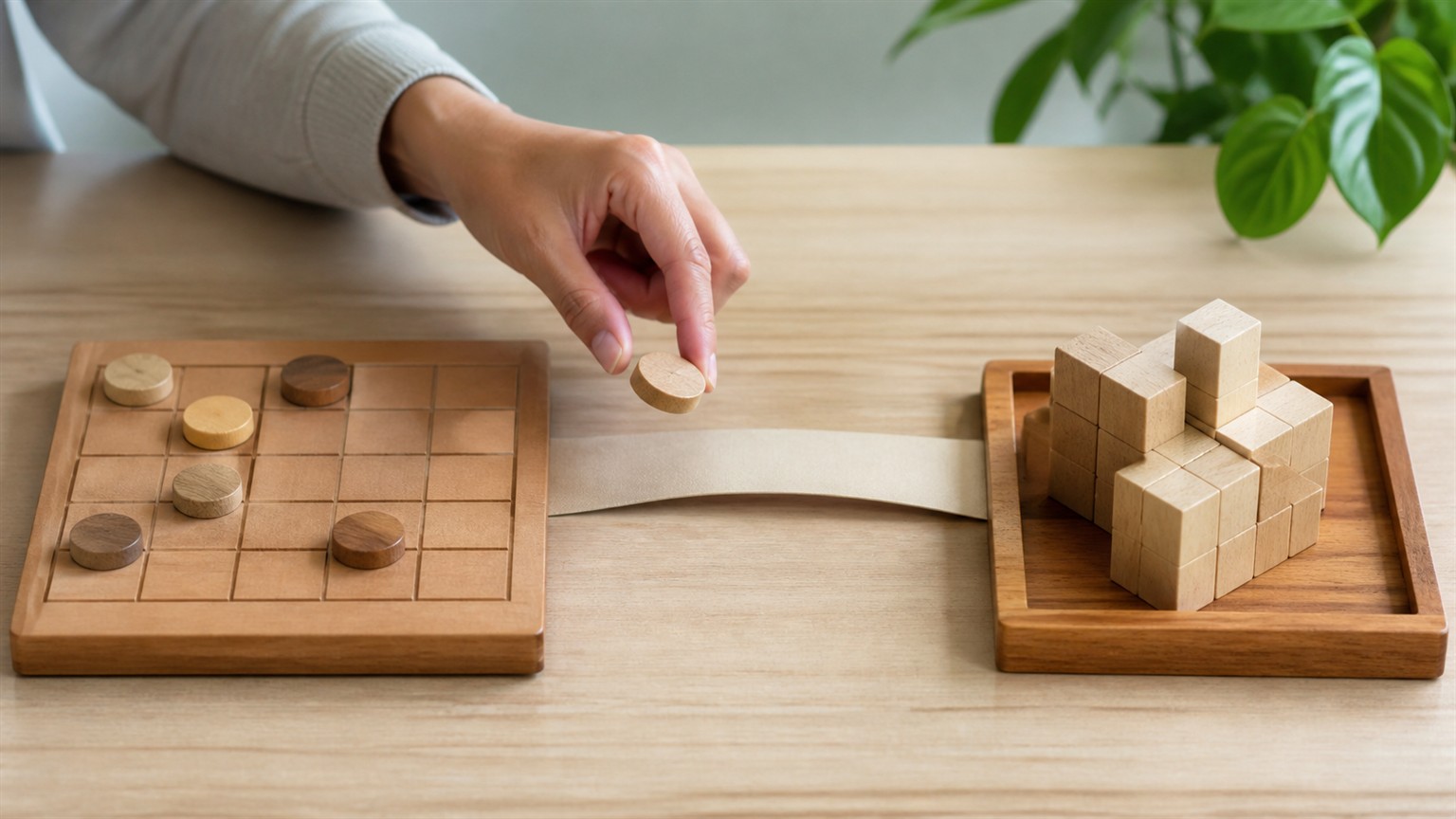
Hands matter in many mindful puzzle sessions. Sorting pieces, turning a tile, writing a candidate answer, or sliding a block gives attention a physical anchor. The body participates in the thinking.
That tactile quality can be grounding. The solver is not only thinking about the puzzle. They are touching, seeing, moving, and adjusting. Those small sensations make the activity feel present rather than abstract.
Choosing the Right Puzzle for the Moment
Mindful puzzling begins with honest choice. If the day is already overloaded, a brutal logic puzzle may not be the best support. A familiar jigsaw, gentle word search, or short crossword may create a better doorway into focus.
On a high-energy day, a harder puzzle may be welcome. The point is not to label one format as universally mindful. The point is to choose the challenge that helps attention settle today.
Mistakes Without Self-Judgment
Puzzles are full of wrong turns. A mindful approach treats those wrong turns as information. The piece does not fit. The word does not cross. The pattern breaks. The solver can notice the result without turning it into a verdict on intelligence.
This is where puzzle solving can become emotionally useful. It gives repeated practice in adjusting without spiraling. The puzzle asks for correction, not shame.
That mindset may need deliberate practice. Many people are used to treating puzzles as tests. A mindfulness approach softens the test and keeps the attention on process.
Building a Simple Practice
A simple practice can be short. Five or ten minutes with a puzzle is enough to create a focused interval. Start by clearing a small space, choosing one manageable task, and deciding that completion is optional.
After the session, notice the effect. Did attention settle? Did the body relax? Did frustration rise? That reflection helps choose the next puzzle more wisely.
When Puzzle Time Becomes Avoidance
Mindful puzzling should not become a way to avoid every difficult emotion or responsibility. Any calming activity can become avoidance if it is used rigidly. The difference is whether the puzzle helps the person return to life or hide from it indefinitely.
Healthy puzzle practice has boundaries. It can offer calm, focus, and restoration, but it should not replace needed conversations, care, rest, or support.
Group Flow and Quiet Company
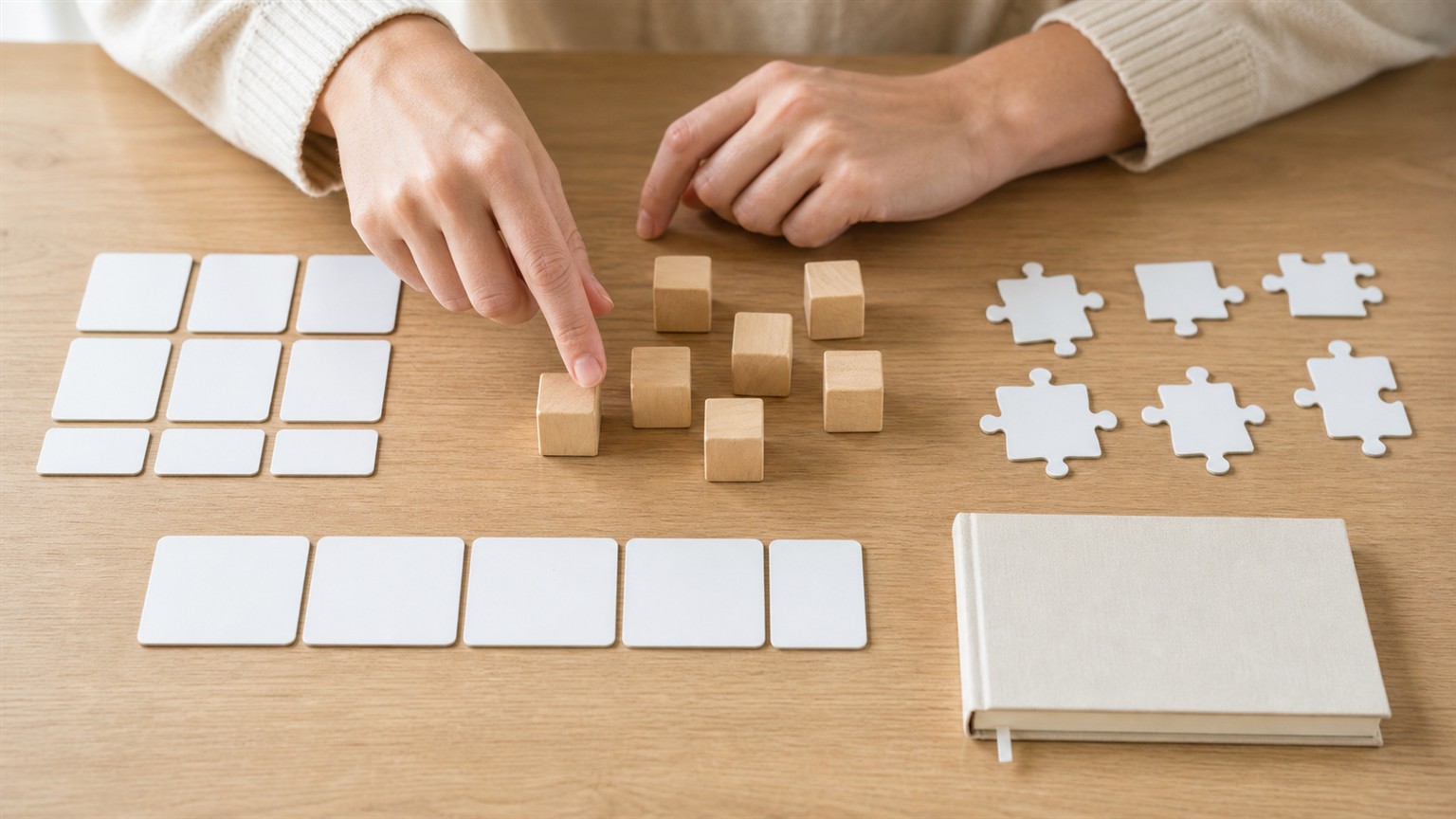
Puzzles can also support shared mindfulness. A group jigsaw table, a cooperative crossword, or a quiet puzzle night can create togetherness without constant conversation. People share attention around a task.
This can be especially gentle for people who want connection but do not want intense social pressure. The puzzle gives everyone something to do and something to notice.
Designing a Calm Puzzle Space
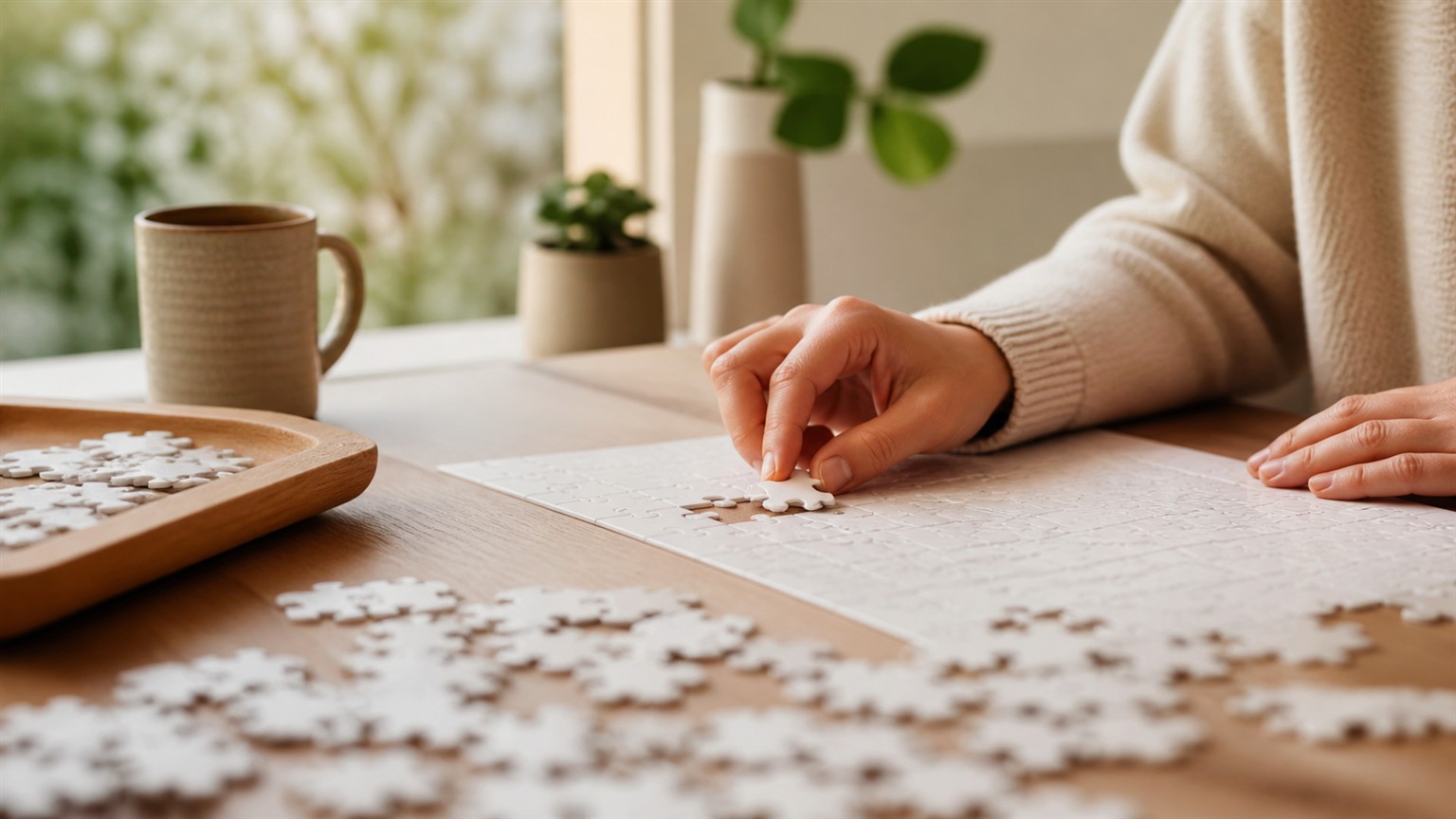
The space around the puzzle shapes the experience. Good light, comfortable seating, enough table room, and fewer interruptions make mindful attention easier. A cluttered or uncomfortable setup can turn a calm activity into friction.
The puzzle space does not need to be elaborate. A tray, a pencil, a small lamp, and a clear surface can be enough. The signal is simple: this is a place for focused play.
The Difference Between Mindful Solving and Escaping
Mindful solving and escaping can look similar from the outside: someone sits quietly with a puzzle and steps away from the noise of the day. The difference is in the relationship to the activity. Mindful solving creates a clear, kind pause that helps the person return to life with more steadiness. Escaping uses the puzzle to avoid everything indefinitely.
This distinction does not mean puzzle time needs to be serious. Enjoyment is part of why it works. The healthy question is whether the puzzle leaves the solver more grounded, more regulated, or more ready to re-enter the day. If the activity becomes rigid or guilt-driven, it may need a softer boundary.
A simple check after the session can help. Ask whether the puzzle supported attention or swallowed it, whether the body feels calmer or tighter, and whether stopping feels possible. Those answers matter more than finishing the puzzle.
How Breath and Pace Enter the Practice
Puzzles often change pace naturally. A solver slows down to compare two pieces, reread a clue, or test a delicate mechanical move. That slower pace can invite calmer breathing without the solver forcing it.
Some people like to begin a puzzle session with one deliberate breath and one small goal. Others prefer to let the activity itself create rhythm. Both approaches can work. The point is to let solving become steady enough that the nervous system is not constantly bracing for the next interruption.
Why Tactile Puzzles Feel Grounding
Tactile puzzles can be especially grounding because they give attention a physical place to land. The solver feels the edge of a jigsaw piece, the weight of a wooden tile, or the movement of a sliding block. Those sensations can interrupt abstract worry and bring awareness back to the hands.
This is one reason a physical puzzle may feel different from a purely mental challenge. The body helps hold the practice. A person can notice the table, the light, the pieces, and the next small action.
For a mindful session, materials should feel pleasant rather than fussy. If pieces are too tiny, sticky, or hard to see, the tactile element becomes frustration instead of support.
Creating a Return Cue
A return cue is a small signal that helps the solver come back to the present task. It might be the phrase one piece at a time, the act of sorting edge pieces, or the habit of touching the pencil before rereading a clue. The cue does not solve the puzzle. It restores orientation.
Return cues are useful because mindfulness is not perfect uninterrupted focus. It is the practice of noticing drift and coming back. A puzzle provides countless chances to rehearse that return without drama.
When Flow Appears and When It Does Not
Flow is satisfying, but it should not be demanded. Some sessions will feel absorbed and smooth. Others will be choppy, distracted, or mildly frustrating. A mindfulness practice can still be useful on those imperfect days.
If flow does appear, notice the conditions. Was the puzzle familiar? Was the room quiet? Was the challenge moderate? Did the session begin with a clear goal? Naming those conditions makes future flow more likely without turning it into a requirement.
A Gentle Closing Matters
Ending a mindful puzzle session is part of the practice. If the solver stops abruptly in irritation, the nervous system may carry that tension forward. A gentle closing can be as simple as placing loose pieces in a tray, marking the next clue, or taking one breath before leaving the table.
This closing ritual teaches the mind that unfinished is acceptable. The puzzle can wait. That acceptance is often what keeps the habit supportive instead of demanding.
Using Difficulty as a Mindfulness Dial
Difficulty can be adjusted like a dial. A low setting supports calm entry, while a higher setting asks for more effort and concentration. Mindful puzzling does not always mean choosing the easiest option. It means choosing the level that keeps awareness engaged without turning the session into a struggle.
This dial can change within the same puzzle. A jigsaw solver might start with edges, then move to a harder texture area. A crossword solver might begin with obvious clues, then return to the subtler ones after attention has warmed up.
Why Repetition Can Be Soothing
Repeating a familiar puzzle ritual can be soothing because the beginning is known. The solver does not have to decide everything from scratch. The hands and eyes recognize the routine, and attention settles more quickly.
Novelty still has a place, but constant novelty can make a practice restless. A mindful puzzle habit often benefits from a mix: familiar formats for grounding and occasional new challenges for curiosity.
Letting the Puzzle Be Enough
Mindful puzzle solving becomes easier when the puzzle is allowed to be enough. The session does not need to produce a dramatic breakthrough, a finished grid, or proof of productivity. It can simply be a period of steady attention.
That permission changes the emotional tone. The solver can value the act of returning to the task, noticing details, and making one careful move. Completion remains satisfying, but it is no longer the only reason the session counts.
A Small Practice Plan
A small practice plan can make mindful puzzling easier to sustain. Choose one puzzle format for calm days, one for curious days, and one for social days. Keep the sessions short enough that starting does not feel like a burden.
At the end of each session, name one thing you noticed. It might be a color, a clue habit, a moment of impatience, or a calmer breath. That tiny reflection keeps the practice connected to awareness rather than only completion.
Noticing the Aftereffect
The aftereffect of a mindful puzzle session is worth noticing. Some solvers feel calmer, some feel more organized, and some simply feel that their attention has stopped scattering for a while. That observation helps the habit stay personal instead of generic.
Conclusion: A Practice of Returning
Puzzles become mindful when they help attention return. The solver returns to the piece, the clue, the pattern, the rule, or the next gentle step. Flow may appear, but even without flow, the practice can still be grounding.
The healthiest approach is flexible. Choose puzzles that support the day you are actually having, let mistakes stay human, and allow the puzzle to be a calm challenge rather than another demand.