A Calm Challenge With a Clear Next Step
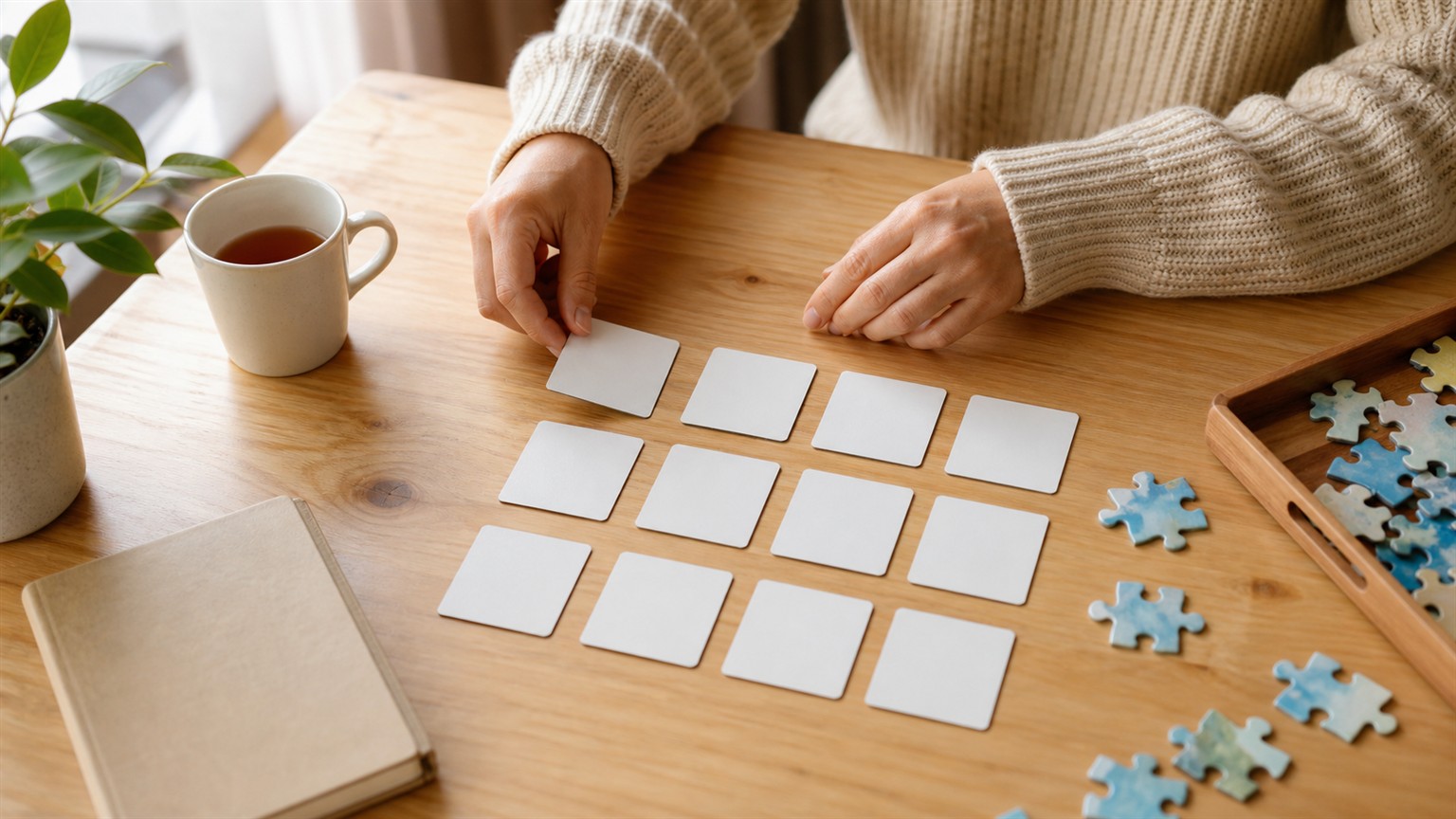
Puzzle solving can support mental health and emotional wellbeing because it offers a calm challenge with a visible next step. A puzzle gives attention somewhere to land, provides feedback, and creates small moments of progress. For many people, that can feel grounding. It is important not to overstate the claim: puzzles are not a substitute for therapy, crisis support, medication, or professional care when those are needed. But as part of everyday wellbeing, puzzle solving can offer focus, routine, confidence, relaxation, and connection in a form that still feels like play.
A: No, puzzles are not treatment by themselves, though they may support everyday coping for some people.
A: They provide structure, focus, feedback, and a manageable goal.
A: The best choice is familiar, clear, and challenging without feeling punishing.
A: They can increase frustration if chosen at the wrong time or tied to self-worth.
A: They create small experiences of effort leading to progress.
A: They can provide low-pressure connection and shared attention.
A: Flow is deep engagement that can occur when challenge and skill feel well matched.
A: No, stopping is healthy when energy, mood, or attention has changed.
A: A professional may use structured activities, but personal puzzling should not replace care.
A: Use puzzles as supportive play, not as a test of intelligence or worth.
Why Focus Can Feel Restorative
Stress often scatters attention. A puzzle gathers attention around a specific, limited task: find the next piece, solve the clue, test the pattern, or complete the corner. That focus can feel restorative because the mind is not asked to solve every life problem at once.
The puzzle does not erase stress, but it can create a pocket of order. For some people, that pocket is enough to breathe, reset, and return to the day with a little more steadiness.
Progress Creates Small Wins
Emotional wellbeing is often supported by small experiences of agency. Puzzles provide these in miniature. A piece fits, a clue unlocks, a grid opens, or a pattern becomes visible. The win is small, but it is real.
Flow and Balanced Challenge
Puzzle solving can create flow when the challenge is neither too easy nor too hard. The solver becomes absorbed in the task, receives feedback, and keeps moving. Time may feel quieter because attention is fully occupied.
Flow cannot be forced, and it should not become another pressure. The conditions are simple: choose a puzzle that fits the moment, reduce unnecessary distractions, and let progress unfold.
Different people find flow in different formats. One person may enter it through a jigsaw, another through a crossword, another through a mechanical puzzle.
Routine Without Rigidity
A puzzle routine can add gentle structure. A morning crossword, an evening jigsaw session, or a weekly puzzle group gives the day a predictable point of engagement. Predictability can be emotionally supportive when life feels unsettled.
The routine should remain flexible. Missing a day is not failure. Choosing an easier puzzle is not regression. Wellbeing routines work best when they are kind enough to survive real moods.
Confidence Through Solving
Puzzles can support confidence because they make effort visible. The solver sees that trying, adjusting, and returning can produce progress. This is different from instant success; it is confidence built through process.
Frustration Can Be Useful or Harmful
A little frustration can create satisfying challenge. Too much frustration can turn a puzzle into a stressor. The difference depends on difficulty, mood, time pressure, and the solver's relationship to mistakes.
Healthy puzzling includes permission to pause. If a puzzle starts to feel like evidence against your intelligence or worth, it is time to step back. The puzzle is supposed to serve wellbeing, not judge it.
Hints, easier formats, or cooperative solving can restore the balance.
The Grounding Effect of Hands-On Puzzles
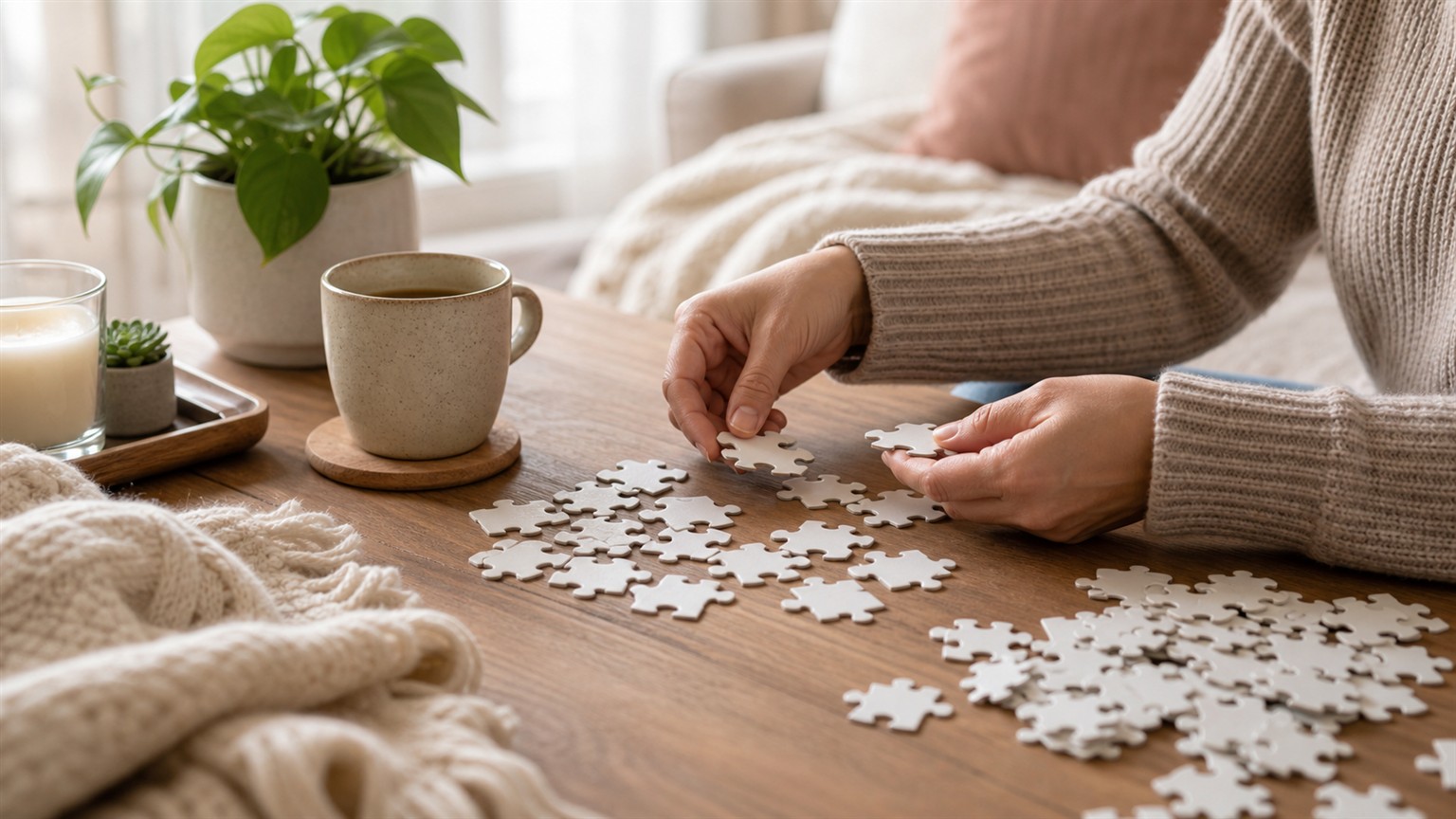
Physical puzzles can feel grounding because they involve touch and movement. Sorting pieces, rotating shapes, or sliding blocks gives the body a role in attention. For some people, that tactile element makes the activity more soothing than a purely mental task.
A comfortable environment strengthens this effect. Good lighting, a clear table, and a puzzle that can remain in progress all reduce friction. The calmer the setup, the easier it is for the puzzle to become a supportive ritual.
Social Puzzling and Belonging
Mental wellbeing is often connected to belonging. Puzzles can create low-pressure social contact because people can share a task without needing constant conversation. A jigsaw table, puzzle night, classroom challenge, or online solving group gives people something to gather around.
When Puzzles Are Not Enough
Puzzles are supportive activities, not replacements for care. If someone is experiencing severe distress, persistent depression, panic, thoughts of self-harm, or difficulty functioning, professional support matters. Puzzles can sit alongside care, but they should not delay it.
This boundary is important because wellbeing advice should not make people feel responsible for solving serious struggles alone. A puzzle can help create calm moments, but people deserve human and professional support when they need it.
The strongest advice is compassionate and realistic: use puzzles when they help, stop when they do not, and reach for care when the need is bigger than a hobby can hold.
Choosing a Puzzle for Your Mood
On a tired day, choose familiar and low-pressure. On a restless day, choose something tactile. On a lonely day, choose a cooperative or community format. On a sharp, curious day, choose a harder logic or word challenge.
Mood-matched puzzling keeps the habit from becoming rigid. The same person may need different puzzles at different times. That flexibility is part of why puzzles can be useful for wellbeing.
Why Predictability Can Be Comforting
Puzzles often have clear boundaries. There is a box of pieces, a grid, a clue list, a rule set, or a visible goal. That predictability can be comforting when the rest of life feels open-ended or uncertain.
The structure does not have to be rigid. In fact, the best wellbeing routines are flexible. The comfort comes from knowing there is a manageable task available: one piece, one clue, one pattern, one next step.
For some people, that small structure can make the day feel less scattered. It gives attention a place to rest without requiring emotional explanation.
The Role of Agency
Mental wellbeing is supported when people experience agency: the sense that their actions can make a difference. Puzzles offer agency in small doses. Sorting pieces, trying a word, or testing a rule changes the state of the problem.
Those changes are visible. The puzzle responds. This can be emotionally valuable, especially during periods when larger life problems feel slow or uncontrollable. A puzzle does not solve those problems, but it can provide a contained experience of progress.
Self-Compassion During Mistakes
Puzzles create many opportunities to be wrong. A piece does not fit. A clue answer fails. A logic assumption collapses. These moments can become small practices in self-compassion if the solver treats them as information rather than personal failure.
This mindset is not automatic. Some people turn puzzles into tests of intelligence and then feel worse when stuck. A healthier approach is to expect wrong turns. The puzzle is designed to require adjustment.
When mistakes become part of play, the emotional tone changes. The solver can stay curious instead of defensive.
Choosing Calming Versus Energizing Puzzles
Different puzzles affect mood differently. A jigsaw may feel calming because it is visual and tactile. A timed word game may feel energizing. A difficult logic puzzle may feel satisfying on a sharp day and draining on a tired one.
Mood matching helps. Choose calming puzzles when the nervous system needs quiet. Choose energizing puzzles when boredom or restlessness is the problem. Choose social puzzles when isolation is the main feeling.
The same puzzle is not right for every emotional state. Flexibility keeps the habit supportive.
When Social Puzzles Reduce Pressure
Social puzzling can reduce pressure when the group is cooperative. No one person has to carry the whole solve. People can contribute small observations, ask questions, or simply sit with the shared activity.
This makes puzzles useful for low-pressure connection. A person who does not feel like intense conversation may still enjoy placing pieces or listening to clue ideas. The puzzle holds the social space gently.
Protecting Wellbeing From Perfectionism
Perfectionism can turn puzzles from supportive play into another source of stress. If every solve has to be fast, flawless, or impressive, the emotional benefit shrinks. The puzzle becomes a judge.
A wellbeing-oriented puzzle habit uses different measures. Did the activity create focus? Did it offer calm? Did it provide connection? Did it help the day feel more manageable? Those questions are kinder and often more useful than scorekeeping.
Ritual Makes the Habit Easier
A small ritual can make puzzle time easier to begin. Clear the table, make a drink, set a timer if that feels helpful, or choose one corner of a jigsaw. The ritual tells the mind that this is a contained, manageable activity.
Ritual also helps protect the ending. Put pieces in a tray, bookmark the crossword, or write down the next clue to try. Ending gently keeps the puzzle from becoming another unfinished burden.
Why Low-Stakes Challenge Helps
Low-stakes challenge is emotionally useful because it lets people practice effort without high consequences. A wrong answer in a puzzle can be corrected. A misplaced piece can move. A failed strategy can be replaced.
That reversibility can be soothing. Life often presents problems that feel permanent or heavy. Puzzles offer a smaller arena where adjustment is allowed and progress remains visible.
The best wellbeing puzzles preserve that low-stakes quality. They invite effort without threatening identity.
Building a Personal Puzzle Menu
A personal puzzle menu can help people choose based on mood. Put calming puzzles in one group, social puzzles in another, confidence puzzles in another, and stretch puzzles in a fourth. Then the choice becomes kinder and more intentional.
This menu prevents the common mistake of choosing the hardest puzzle on the hardest day. Wellbeing support comes from matching the activity to the moment, not from proving endurance.
Puzzles and Mindful Attention
Puzzle solving can resemble mindfulness when the solver attends closely to the present task. The color, shape, clue, or pattern becomes the focus. Wandering thoughts may still appear, but the puzzle offers a gentle place to return.
This is not the same as formal meditation, and it does not need to be. For some people, an active focus is easier than sitting still. The puzzle provides structure for attention without requiring silence or perfection.
Confidence Without Competition
Puzzles can build confidence without requiring competition. A person can improve privately, repeat familiar formats, or work cooperatively. The satisfaction comes from progress rather than beating someone else.
This matters for wellbeing because competition can be energizing for some people and stressful for others. A supportive puzzle habit lets the solver choose the emotional tone.
When to Step Away
Knowing when to stop is part of healthy puzzling. If a puzzle begins increasing tension, self-criticism, or rumination, stepping away is a wise move. The activity can wait. The person matters more than the solve.
A break does not mean failure. It may be exactly what keeps the hobby supportive. Returning later with a softer mindset often makes the puzzle more enjoyable and sometimes easier. This flexibility is part of making puzzle time emotionally safe, gentle, sustainable, and personally supportive.
Conclusion: Supportive Play, Not a Cure
Puzzle solving can support emotional wellbeing by offering focus, progress, routine, confidence, grounding, and connection. Those benefits are meaningful when they are framed honestly.
The healthiest puzzle habit is not about proving brilliance. It is about giving the mind a humane challenge, a clear next step, and a little room to settle.