Why Puzzle Play Builds More Than Answers
Puzzles support cognitive development in children because they turn thinking into hands-on play. A child has to notice shapes, compare possibilities, remember what they tried, plan the next move, and manage frustration when the first answer does not work. The learning is not limited to finishing the puzzle. It includes attention, language, spatial reasoning, memory, flexible thinking, and persistence. When puzzles are age-appropriate and presented without pressure, they can become one of the simplest ways for children to practice problem solving in a concrete, enjoyable form.
A: Very simple shape and inset puzzles can begin early when materials are safe and adult support is present.
A: Yes, many puzzles ask children to compare shape, size, orientation, and location.
A: Usually not; give children time to notice and revise before offering a gentle hint.
A: They can be, but physical puzzles add touch, motor planning, and shared tabletop interaction.
A: It should require effort while still allowing visible progress and a sense of success.
A: Yes, adults can name actions, shapes, positions, categories, and strategies during play.
A: Mild frustration gives children a chance to practice persistence and flexible strategy.
A: Lower the difficulty, shorten the task, or choose a theme that feels more inviting.
A: They can support collaboration, attention, and problem solving when matched to developmental level.
A: The thinking, trying, explaining, and revising that happen during play matter most.
Puzzles Turn Thinking Into Action
Children learn especially well when thinking is connected to action. A puzzle piece can be picked up, turned, tested, rejected, and tried again. That physical feedback makes abstract ideas like fit, shape, sequence, and relationship easier to understand.
This action-based learning is one reason puzzles can feel natural for young children. They do not need a lecture about problem solving. The puzzle creates a small problem that invites exploration.
Spatial Reasoning Starts Early
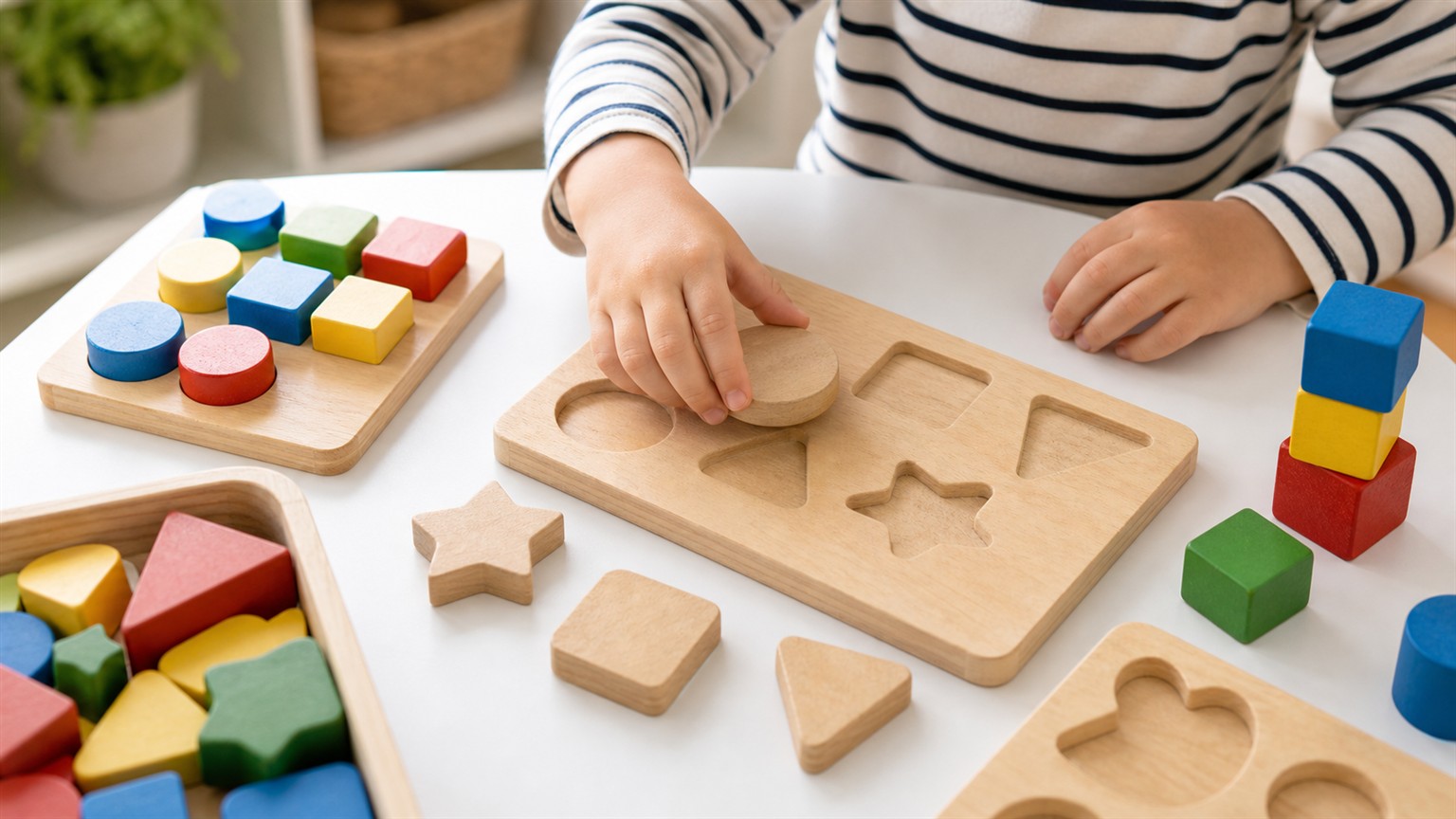
Many children's puzzles ask the child to compare shapes, rotate pieces, and understand how parts make a whole. These are spatial reasoning tasks. A child may not use adult words like orientation or symmetry, but they are practicing those ideas through movement and observation.
Attention Grows Through Visible Goals
A puzzle gives attention a clear target. Find the edge. Match the color. Complete the animal shape. Continue the pattern. Because progress is visible, children can see that attention changes the result.
This is different from being told simply to focus. The puzzle rewards focus with a piece that fits or a pattern that continues. That feedback helps attention feel useful rather than imposed.
Short puzzles are often best for young children because they allow the full cycle of effort, progress, and completion to happen before fatigue takes over.
Memory Works During Play
Children use memory when they remember where a piece was, which shape failed, what the picture should become, or what rule governs the pattern. Matching games make this obvious, but memory appears in jigsaws, mazes, and construction puzzles too.
The memory demand should fit the child. Too little challenge becomes boring. Too much unsupported memory becomes frustrating. Adults can help by organizing pieces and talking through what has already been tried.
Language Can Join the Puzzle
Puzzle play becomes richer when adults add language. Words like above, below, corner, edge, same, different, turn, before, after, and try again give children labels for the thinking they are doing.
Planning and Flexible Thinking
Even simple puzzles invite planning. A child may learn to start with corners, group similar pieces, or test one area before another. When a piece does not fit, they practice flexible thinking by changing the plan.
This is a small but important developmental habit. The child learns that a wrong attempt is information, not a disaster. That lesson can matter far beyond the puzzle table.
Adults can support planning by asking, what could we try next? The question keeps ownership with the child while making strategy visible.
Persistence Without Pressure
Puzzles can build persistence when the challenge is safe. A child tries, fails, adjusts, and tries again. The adult's tone matters here. If every mistake is corrected sharply, the puzzle becomes a performance. If mistakes are treated as part of play, persistence has room to grow.
Praise should focus on effort, strategy, and curiosity. Completion is nice, but the process is where most of the learning happens.
Choosing Developmentally Appropriate Puzzles
A good puzzle should match the child's hands, eyes, attention span, and current understanding. Large pieces, clear images, and short goals suit younger children. Older children may enjoy more complex jigsaws, logic puzzles, word games, and construction challenges.
Social Puzzle Play
Puzzles can become social learning experiences. Children negotiate turns, describe what they see, ask for help, and share discoveries. In classrooms or families, a puzzle can create a shared goal that is quieter than a game but still collaborative.
Adults can model helpful language: I noticed this edge, I wonder where this shape goes, or let's compare these two pieces. Such phrases teach children how to think aloud without taking over.
Social puzzling also lets children see that different people notice different things. That is an early lesson in collaborative problem solving.
Digital Versus Physical Puzzles
Digital puzzles can be convenient and engaging, especially when they are simple, calm, and age-appropriate. Physical puzzles add touch, resistance, motor planning, and shared tabletop space. Both can have a place.
For young children, physical materials often provide a richer developmental experience. They connect vision, movement, and language in one activity. Digital puzzles should be chosen carefully so animation and rewards do not drown out the thinking task.
The Importance of Hands-On Feedback
Children learn from feedback that they can see and feel. A puzzle piece either fits or it does not. A tower stands or falls. A pattern continues or breaks. This immediate feedback helps children connect their actions with results.
Hands-on feedback is especially useful because it does not require long explanation. The material itself teaches part of the lesson. An adult can then add language that helps the child understand what happened: it was too wide, it needed turning, this side matches, or that pattern repeats.
This combination of action and language is powerful. It lets children build concepts through experience rather than memorizing instructions.
How Puzzles Build Comparison Skills
Comparison is one of the quiet foundations of puzzle development. Children compare shapes, colors, sizes, edges, pictures, and positions. They learn that two things can be similar in one way and different in another.
These comparison skills support later reasoning. A child who can compare carefully is better prepared to sort, classify, notice patterns, and explain choices. Puzzles give comparison a concrete purpose: find what fits and explain why.
Why Mistakes Are Developmentally Useful
Mistakes are not interruptions to puzzle learning. They are part of it. When a child tries a piece that does not fit, they receive information about shape, orientation, and strategy. The failed attempt narrows the next attempt.
Adults can protect this learning by avoiding the urge to correct too quickly. A moment of waiting gives the child time to notice. If frustration rises, a hint can guide attention without removing the discovery.
The child learns that mistakes can be useful data. That lesson supports more than puzzles; it supports learning in general.
Puzzle Talk Strengthens Thinking
Talking during puzzle play can strengthen cognitive development. Adults can describe positions, ask what changed, name strategies, and invite predictions. The conversation helps children connect actions to concepts.
The best puzzle talk is not a quiz barrage. It is responsive. If a child is deeply focused, the adult may say little. If the child is searching, the adult might ask whether the piece needs turning or where the same color appears. Language should support the thinking already happening.
Why Cooperative Puzzles Matter
Cooperative puzzles help children practice social cognition alongside problem solving. They may share pieces, explain ideas, wait for a turn, or combine observations. A child learns that another person can see something they missed.
This is valuable because many real problems are social. Children practice listening, negotiating, and contributing without the pressure of a winner and loser. The puzzle gives the group a shared goal that organizes interaction.
In classrooms, cooperative puzzles can also reveal different strengths. One child may notice shapes, another may remember the picture, and another may organize the pieces.
Keeping Challenge in the Learning Zone
The best developmental puzzles live in the learning zone. They are not so easy that the child finishes without thought, and not so hard that the adult has to do the work. The right puzzle invites effort, feedback, and a little stretch.
Adults can adjust the zone by reducing the number of pieces, sorting pieces first, showing the finished picture, or working on one section at a time. These supports do not remove the learning. They make the challenge reachable.
Fine Motor Skills and Cognitive Goals Meet
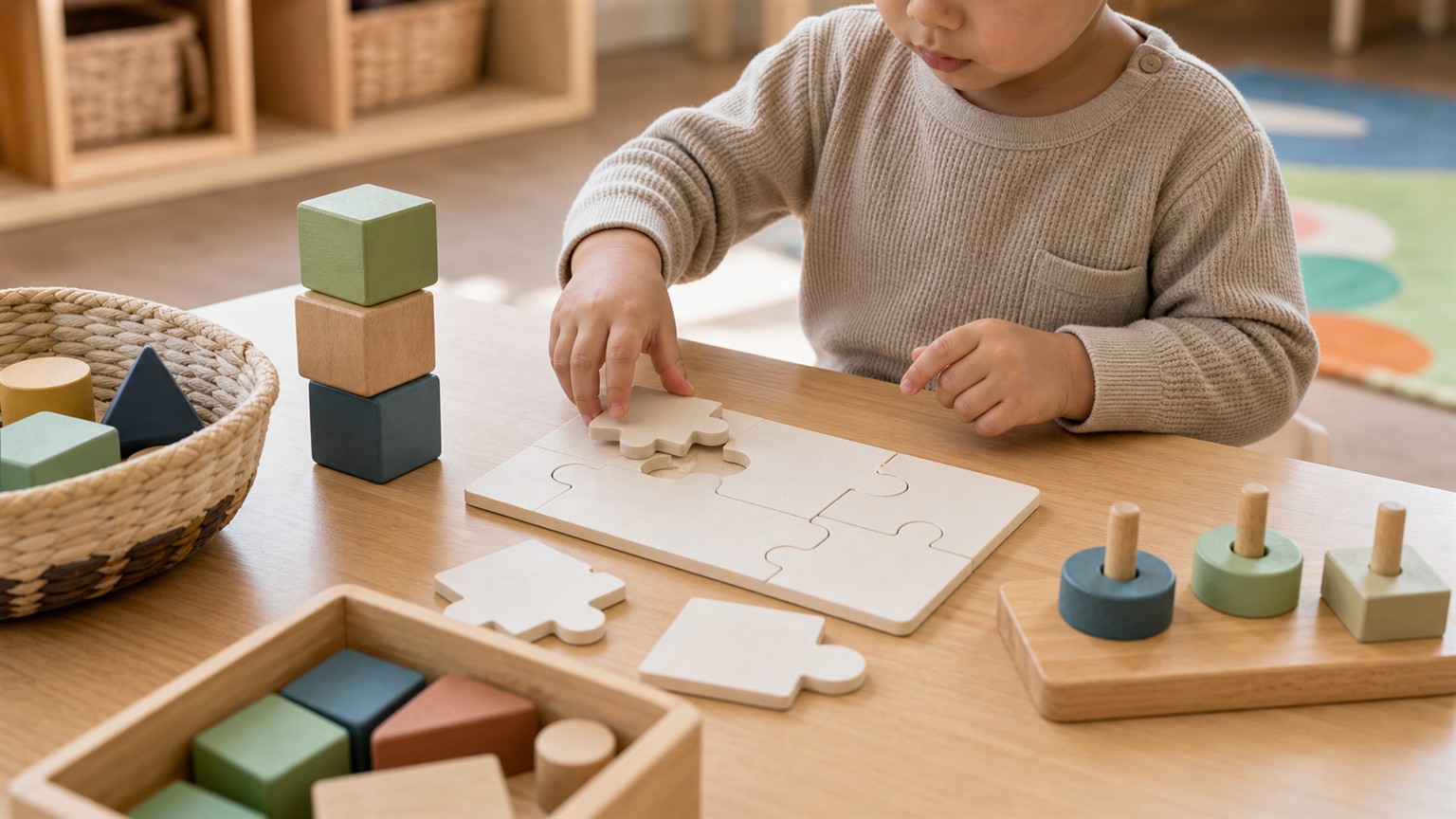
Many early puzzles combine motor development with cognition. A child has to grasp, turn, slide, align, and release pieces while also thinking about shape and location. The hand movement is not separate from the thinking; it is part of how the child tests ideas.
This is one reason physical puzzles remain valuable. They bring perception, action, and reasoning together. A screen can show a puzzle, but a wooden or cardboard piece gives the child information through touch and resistance.
How Adults Can Stretch Without Taking Over
Adults can stretch a child's thinking by adding one small challenge at a time. If a jigsaw is easy, mix the pieces more thoroughly. If shape matching is comfortable, ask the child to describe why a piece fits. If a pattern is familiar, invite the child to predict the next part before placing it.
The adult should still leave the core discovery with the child. Stretching is not the same as performing. The best support makes the next step visible enough to try, not so obvious that the child has nothing left to think through.
This balance is delicate, and it changes by age, mood, and confidence.
What Repetition Teaches
Children often enjoy repeating the same puzzle. Adults may worry that repetition is not challenging enough, but repetition can strengthen memory, confidence, language, and planning. The child may solve faster because they are remembering the structure, not because nothing is happening.
After repetition builds fluency, small variations can add challenge. Change the order of pieces, hide the picture, ask for verbal explanations, or introduce a similar puzzle with a new theme.
Puzzles Support Cause-and-Effect Thinking
Puzzles teach cause and effect in a concrete way. If a child rotates the piece, the fit changes. If they sort by color, searching becomes easier. If they rush, mistakes increase. The child can see that choices affect outcomes.
This is an early form of scientific thinking. The child makes a tiny hypothesis, tests it, observes the result, and revises. Adults can strengthen this by asking what happened and what the child wants to try next.
Using Puzzles Across Developmental Stages
As children grow, puzzle benefits change shape. Toddlers may focus on grasping, matching, and naming. Preschoolers may begin planning, sorting, and explaining. Older children may enjoy logic puzzles, wordplay, construction challenges, and strategy games.
The continuity is problem solving. The materials change, but the child keeps practicing how to notice, compare, remember, plan, and persist. A good puzzle path grows with the child rather than staying fixed at one level.
Signs a Puzzle Is Working Well
A puzzle is working well when the child is engaged, trying ideas, accepting hints, and showing some independence. The child does not need to be perfectly calm every moment. Learning often includes effort. The key is that frustration remains manageable and curiosity returns.
If the child talks about the puzzle later, asks to repeat it, or uses a strategy from one puzzle in another, the activity is doing more than filling time. It is becoming part of how the child thinks.
Conclusion: The Process Is the Point
Puzzles support cognitive development because they give children practice with attention, memory, language, spatial reasoning, planning, and persistence inside play. The finished picture or solved pattern is only part of the value.
The best puzzle experiences are warm, age-appropriate, and curious. Children should feel invited to try, revise, talk, and discover. That process is where development lives.